Key Findings
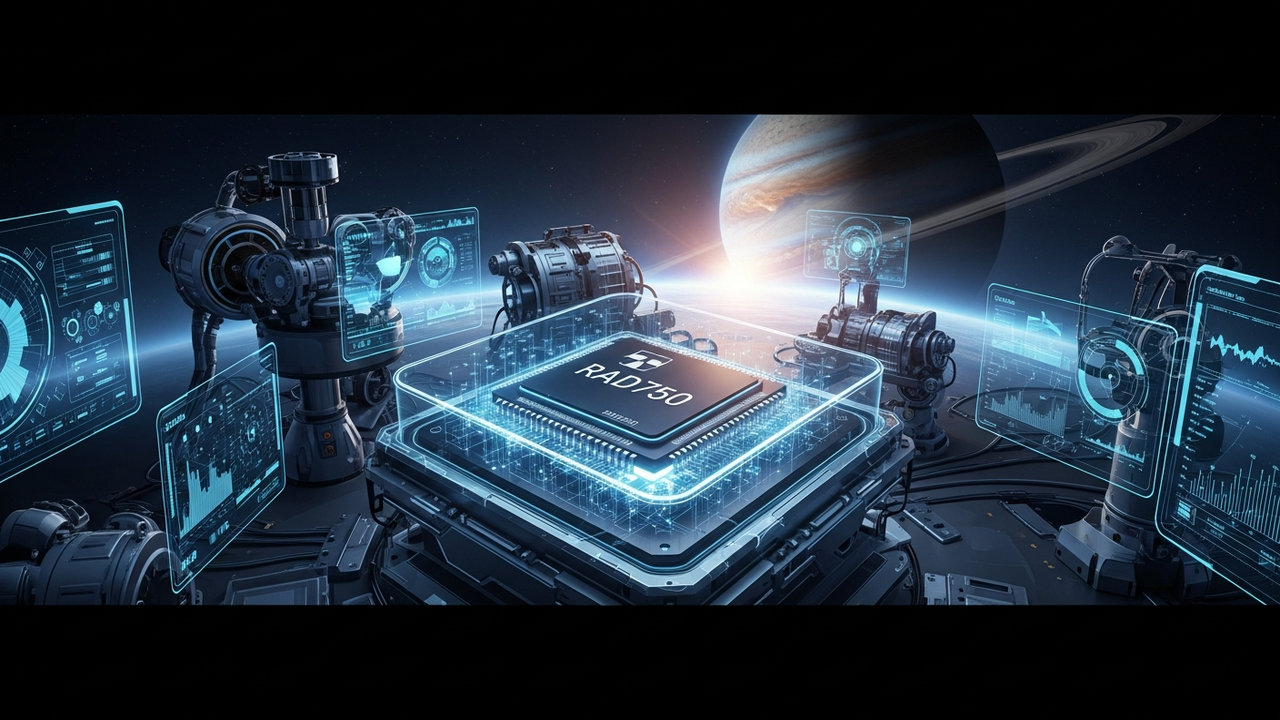
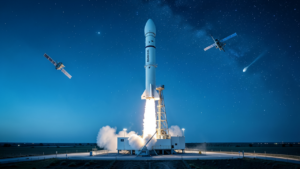
BAE Systems’ radiation-hardened (rad-hard) chip, the RAD750, has been selected as the primary flight computer for several critical deep space missions, including NASA’s Jupiter probe ‘Juno,’ the Mars rover ‘Curiosity,’ and the upcoming ‘Europa Clipper’ mission. This track record unequivocally demonstrates that the RAD750 is a proven technology capable of functioning reliably in the extremely harsh environment of cosmic radiation.
Technical & Product Details
The RAD750 chip employs several advanced design techniques to protect its electronic components from the extreme radiation found in deep space:
- Redundant Transistor Pairs: Each transistor is duplicated, so if one experiences a soft error due to radiation, the other can maintain functionality, thereby enhancing system reliability.
- Guard Ring Structure: Insulators are strategically placed around transistors to physically isolate them and prevent radiation-induced current leakage, known as latch-up.
- Silicon-on-Insulator (SOI) Manufacturing Technology: Transistors are built on a thin insulating layer rather than bulk silicon. This significantly reduces charge accumulation caused by radiation, improving overall radiation hardness.
Through these engineering innovations, the RAD750 exhibits exceptional resilience against both Total Ionizing Dose (TID) and Single Event Effects (SEE), ensuring stable operation even in extreme environments like Jupiter’s intense radiation belts. Rad-hard electronics are estimated to account for approximately 6-9% of the total spacecraft subsystem cost. Their high performance and reliability are directly linked to mission success, making them an indispensable, albeit costly, investment.
Background & Industry Context
Deep space missions, particularly those to planets with strong magnetic fields like Jupiter or to the outer reaches of the solar system, expose spacecraft to significantly higher levels of cosmic radiation compared to Earth-proximate orbits. This radiation can cause malfunctions or permanent damage to electronic equipment, potentially leading to mission failure. Therefore, electronic components such as processors and memory that form the core systems of spacecraft demand exceptionally high radiation-hardening capabilities. BAE Systems’ RAD750 was developed specifically to meet these stringent requirements, and its adoption record signifies the company’s leadership in this niche but critical market.
Strategic Significance & Outlook
The success of the RAD750 suggests that its technology will continue to play a crucial role in future deep space exploration missions, especially those, like the Europa Clipper, that aim to investigate the potential for life. Furthermore, as crewed missions to the Moon and Mars are planned, similar advanced rad-hard technologies will be indispensable for the electronics within astronaut habitats and exploration rovers. The evolution of rad-hard electronics enables the realization of more ambitious and long-duration space missions, expanding humanity’s frontier in space. Technologies like the RAD750 will increasingly prove their importance as unseen heroes supporting the cutting edge of space development.
Source: #
Get our weekly technology intelligence — free
Receive an infographic that lets you judge at a glance whether each field’s analysis report is worth reading.
Subscribe Free — Weekly Tech Intelligence
By subscribing, you’ll receive Troy-Technical’s weekly technology intelligence newsletter.
- Your email and selected fields are used only to deliver the newsletter.
- We never share your information with third parties.
- You can unsubscribe anytime via the link in each email.
See our Privacy Policy for details.
Takes about a minute · Unsubscribe anytime



Comments