Background and Industry Context
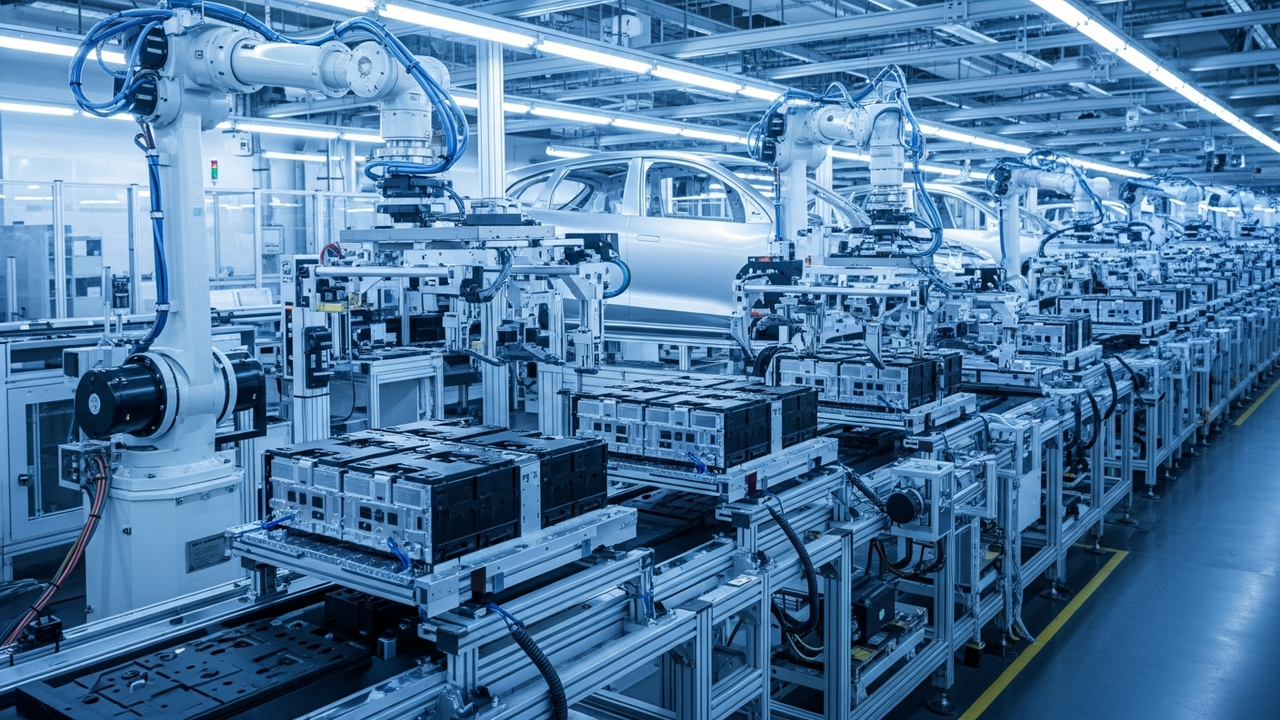
Solid-state batteries are widely hailed as the next generation of energy storage, promising significant advantages over conventional lithium-ion batteries, including vastly higher energy density, enhanced safety, and extended lifespan. Yet, the rapid pace of technological development has also led to a confusing proliferation of terms such as ‘semi-solid,’ ‘quasi-solid,’ and ‘all-solid-state,’ creating considerable ambiguity for market participants and consumers alike. Notably, some products marketed as ‘all-solid-state batteries’ have been found to contain trace amounts of liquid electrolyte, essentially functioning as ‘hybrid solid-liquid batteries’ and potentially misleading consumers. With the implementation of this new national standard, the Chinese government aims to unequivocally resolve this conceptual confusion, bolster technological credibility, and foster greater transparency across the industry.
Key Provisions of GB/T 43568-2026
Effective July 1, 2026, China officially enacted ‘GB/T 43568-2026,’ establishing the world’s first national standard specifically for vehicle solid-state batteries. This landmark regulation is designed to definitively clarify the definition of ‘solid-state batteries’ in the market and provide clear guidelines for technological development. Key stipulations include a stringent liquid electrolyte weight loss threshold of 0.5% or less for batteries to be certified as true solid-state, alongside a mandated energy density of at least 400 Wh/kg for hybrid solid-liquid battery configurations.
Technical Specifications and Market Impact
At the heart of ‘GB/T 43568-2026’ lies its quantifiable definition of the fundamental characteristic of solid-state batteries: the near-complete ‘elimination of liquid electrolytes.’ By setting a precise liquid electrolyte weight loss threshold of 0.5% or less, the standard ensures that only batteries with negligible liquid content can be certified as ‘all-solid-state.’ For hybrid solid-liquid batteries, a class currently making significant strides toward commercialization, the standard mandates a minimum energy density of 400 Wh/kg. This dual approach encourages high-performance development while rigorously upholding safety standards. Ultimately, this framework provides a unified evaluation basis for battery safety, performance, and durability, fostering a common language and clear expectations between battery suppliers and vehicle manufacturers.
Strategic Significance and Global Outlook
The enactment of this national standard is poised to have a profound and far-reaching impact, not just within China’s domestic market but across the entire global landscape of solid-state battery development. By establishing unambiguous definitions and performance benchmarks, research institutions and companies worldwide can now pursue more precise developmental goals, which is expected to significantly accelerate the advancement of truly solid-state battery technologies. Furthermore, consumers will benefit from more reliable product information, enabling informed purchasing decisions and fostering healthier market competition. In the long term, ‘GB/T 43568-2026’ is anticipated to influence international standardization dialogues, playing a pivotal role in shaping the future trajectory of battery technology across the global automotive and energy storage industries.
Source: https://www.sdle.co.il/wp-content/uploads/2026/05/solid-std.pdf
Get our weekly technology intelligence — free
Receive an infographic that lets you judge at a glance whether each field’s analysis report is worth reading.
Subscribe Free — Weekly Tech Intelligence
By subscribing, you’ll receive Troy-Technical’s weekly technology intelligence newsletter.
- Your email and selected fields are used only to deliver the newsletter.
- We never share your information with third parties.
- You can unsubscribe anytime via the link in each email.
See our Privacy Policy for details.
Takes about a minute · Unsubscribe anytime







Comments