Key Findings
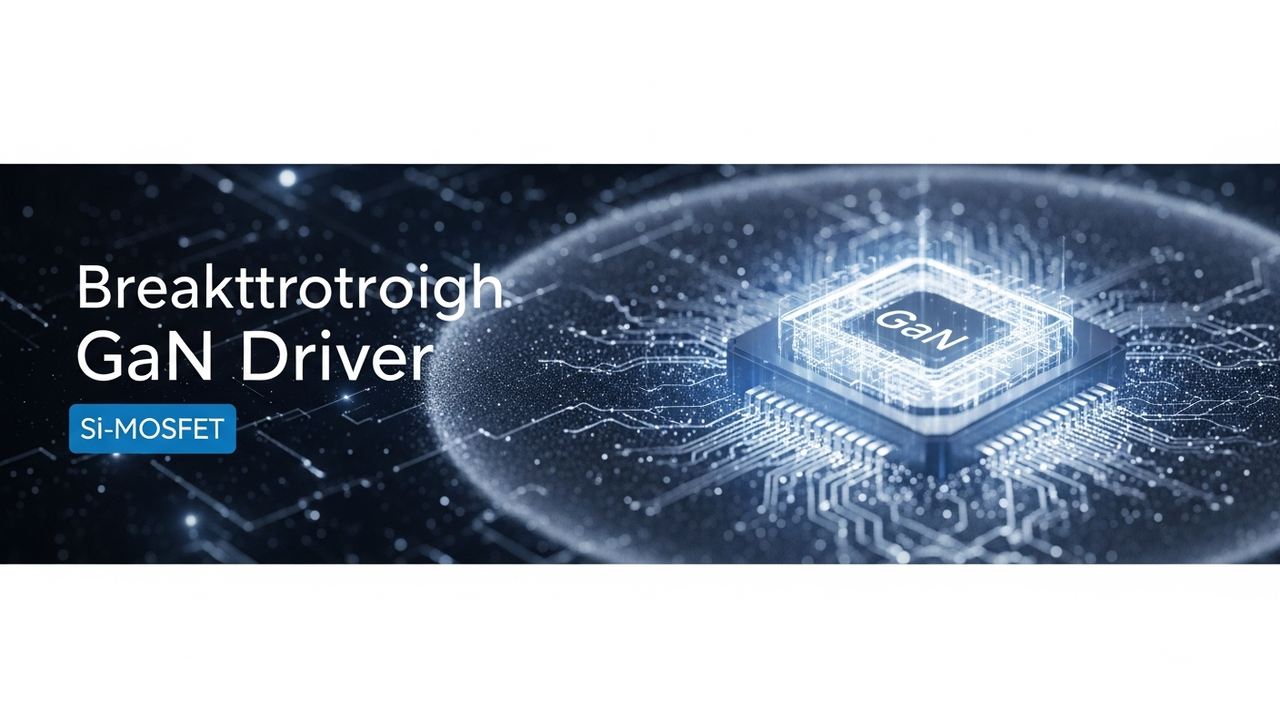
Infineon Technologies has introduced the RIC70115, a radiation-hardened (rad-hard) gallium nitride (GaN) high-electron-mobility transistor (HEMT) driver specifically engineered for satellite and high-reliability space applications. This innovative driver achieves a robust Total Ionizing Dose (TID) immunity of 100 krad(Si), pushing past the inherent physical limitations faced by traditional silicon-based devices in harsh space environments.
Technical & Product Details
The RIC70115 offers the necessary performance margins for stable operation across a spectrum of space environments, ranging from Low Earth Orbit (LEO) to deep space. Historically, rad-hard silicon MOSFETs have reached physical limits in meeting the escalating demands for efficiency, power density, and miniaturization in space hardware. In contrast, GaN HEMTs present superior characteristics including a wider bandgap, enhanced electron mobility, and intrinsic robustness against specific radiation mechanisms. Crucially, GaN’s device structure, lacking an oxide layer to trap charges, provides inherent superior resilience to TID, allowing it to maintain minimal parameter variation even after exposure to radiation exceeding 100 krad(Si). This enables a significant shift towards more compact and efficient power architectures in space systems.
Background & Industry Context
Modern satellite payloads and deep space missions are driving an urgent need for increasingly compact, lightweight, highly efficient, and high-density electronic components. This necessitates a leap in performance for power management systems and other electronics. The rad-hard semiconductor market is experiencing rapid expansion, fueled by the proliferation of satellite constellations, ambitious deep space missions, and defense modernization programs, all demanding advanced materials and architectures. Infineon’s GaN driver is designed to facilitate the transition to GaN-based power architectures, aiming to significantly reduce the number of external components required and, consequently, boost overall system reliability and power conversion efficiency.
Strategic Significance & Outlook
The introduction of rad-hard GaN drivers like the RIC70115 marks a potential paradigm shift in the design of space power systems. This advancement will enable the development of smaller, lighter, and higher-performance satellites and spacecraft, contributing to lower launch costs, extended mission durations, and enhanced on-board data processing capabilities. GaN technology, alongside other cutting-edge rad-hard technologies such as Silicon-on-Insulator (SOI), is poised to be a pivotal trend in enhancing electronics performance in extreme conditions, thereby driving the future evolution of the global space industry and accelerating humankind’s access to and activities in space.
Source: https://www.bisinfotech.com/infineon-launches-radiation-hardened-gan-driver-for-space/
Get our weekly technology intelligence — free
Receive an infographic that lets you judge at a glance whether each field’s analysis report is worth reading.
Subscribe Free — Weekly Tech Intelligence
By subscribing, you’ll receive Troy-Technical’s weekly technology intelligence newsletter.
- Your email and selected fields are used only to deliver the newsletter.
- We never share your information with third parties.
- You can unsubscribe anytime via the link in each email.
See our Privacy Policy for details.
Takes about a minute · Unsubscribe anytime







Comments