Key Findings
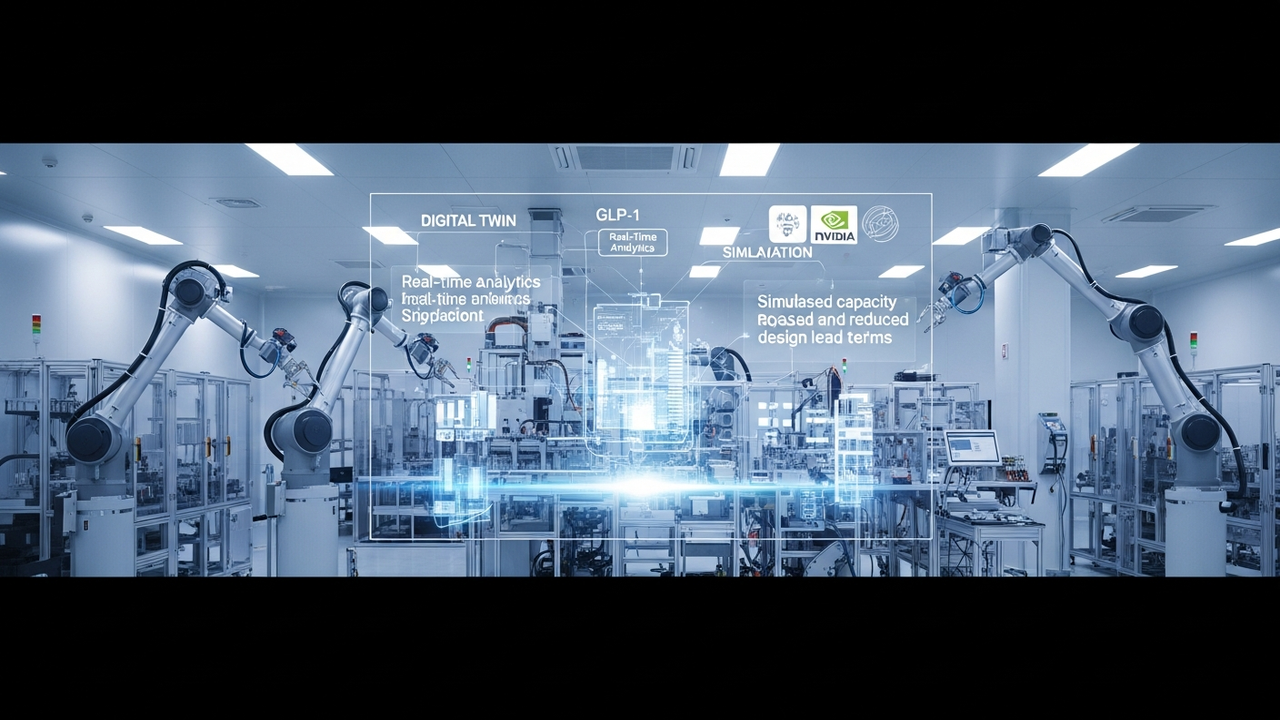
Pharmaceutical giant Roche has announced a pioneering initiative to integrate NVIDIA’s advanced AI and digital twin technologies into its biomanufacturing processes, specifically targeting the production of GLP-1 pharmaceuticals. This strategic deployment is projected to boost factory capacity by 25% to 40% and slash design and validation lead times by 15% to 20%, marking a significant leap in pharmaceutical production efficiency and speed.
Technical / Clinical Details
Roche is leveraging NVIDIA’s BioNeMo AI platform to create sophisticated digital twins—virtual replicas—of critical manufacturing assets such as bioreactors and filling lines. These digital twins can accurately simulate the physical processes, predict future behaviors, and test various ‘what-if’ scenarios in a virtual environment. This capability will accelerate optimization during the development phase, drastically reducing the cost and time associated with physical experimentation in actual manufacturing. For instance, fine-tuning cell culture conditions, predicting product yields, and troubleshooting can be performed efficiently in the virtual realm. This technology is crucial for maintaining consistent quality and maximizing output for complex biologics like GLP-1, where subtle process variations can have profound impacts on product integrity and yield.
Background & Context
The biopharmaceutical manufacturing sector faces persistent challenges in rapidly bringing new drugs to market and meeting escalating patient demand. For high-demand therapeutics such as GLP-1 receptor agonists, expanding and optimizing production capacity is paramount. However, biomanufacturing is inherently complex and multi-staged, making optimization difficult due to the sensitivity of product quality and yield to minor process fluctuations. Digital twin technology, by synchronizing physical and virtual systems in real-time and enabling data-driven optimization, offers a compelling solution to these challenges. The collaboration between Roche and NVIDIA sets a new benchmark for the convergence of AI and biomanufacturing.
Strategic Significance & Outlook
Roche’s substantial investment in AI and digital twin technology holds profound implications for shaping the future of biopharmaceutical manufacturing. As this technology matures, its application is expected to expand to other biologics, driving efficiencies across the entire drug development, production, and supply chain. The long-term vision includes the potential for fully autonomous ‘smart factories,’ which would significantly enhance responsiveness to broad healthcare needs, such as accelerated vaccine production during pandemics and advancements in personalized medicine. For investors and engineers, the long-term impact of this transformative approach on pharmaceutical manufacturing cost structures and lead times will be a key area of focus.
Source: https://intuitionlabs.ai/articles/roche-nvidia-ai-factory-glp-1-digital-twins
Get our weekly technology intelligence — free
Receive an infographic that lets you judge at a glance whether each field’s analysis report is worth reading.
Subscribe Free — Weekly Tech Intelligence
By subscribing, you’ll receive Troy-Technical’s weekly technology intelligence newsletter.
- Your email and selected fields are used only to deliver the newsletter.
- We never share your information with third parties.
- You can unsubscribe anytime via the link in each email.
See our Privacy Policy for details.
Takes about a minute · Unsubscribe anytime






Comments