Key Findings
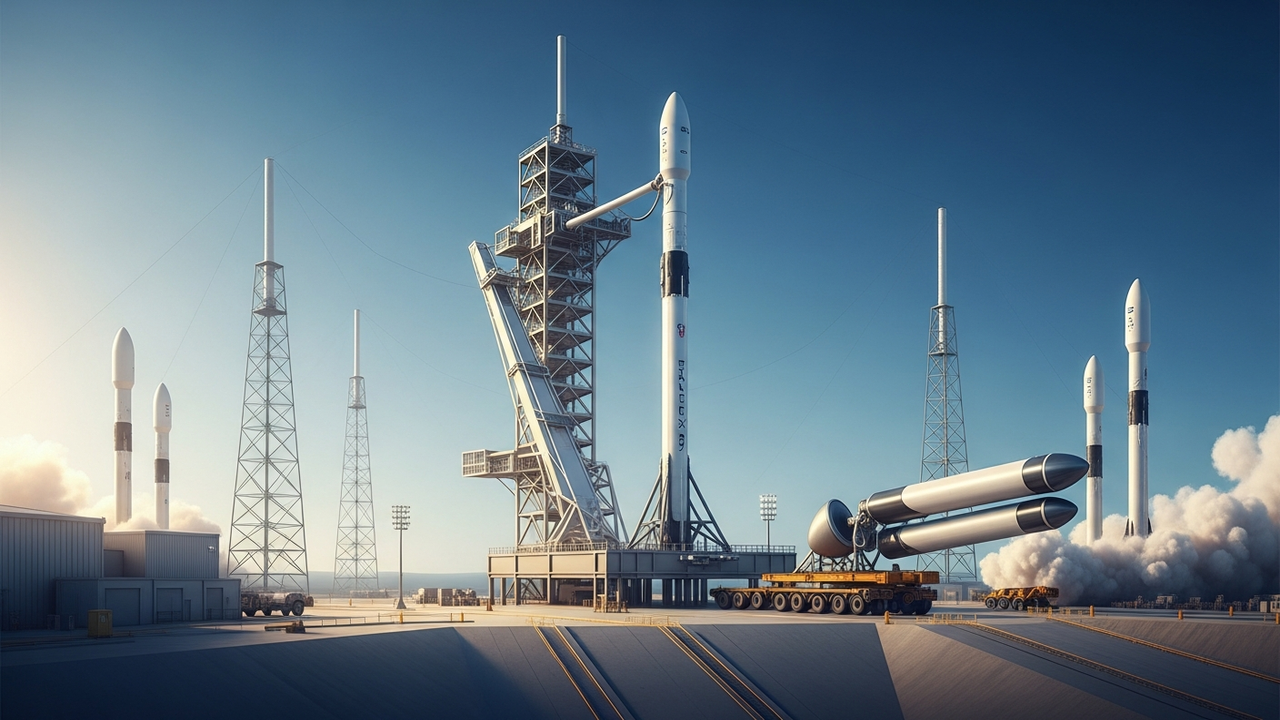
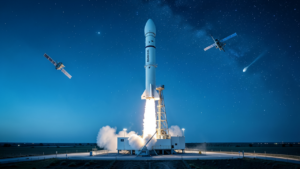
SpaceX’s Falcon 9 rocket successfully completed an astonishing 165 orbital missions in the single year of 2025, cementing reusable rocket technology as a fully established, routine operation within the space industry. This unprecedented achievement marks a dramatic transformation in how access to space is perceived and executed.
Operational Performance Details
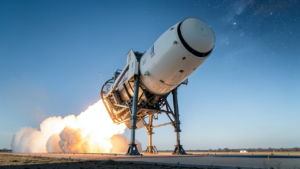
Across its 165 orbital missions in 2025, the Falcon 9 achieved first-stage booster reusability in almost every single flight. This makes it the most frequently flown rocket system in history by a significant margin. Crucially, all these missions were successful, precisely deploying every intended payload into orbit. This exceptionally high success rate unequivocally demonstrates that reusable technology does not compromise reliability; rather, it significantly enhances operational efficiency and cost reduction. SpaceX accomplished this high-frequency operation through the mastery of booster landing techniques, rapid refurbishment processes, and sophisticated flight management systems.
Background & Industry Context
Historically, rocket systems were predominantly ‘expendable,’ meaning they were discarded after a single use. The high manufacturing and operational costs associated with this model were major limiting factors for space access. SpaceX, through the development of the Falcon 9, pioneered and proved the groundbreaking concept of vertically landing and recovering rocket first stages for reuse. This innovation has brought about a profound revolution in the space industry. The 2025 performance record clearly illustrates that this reusable technology is no longer in an experimental phase but functions as a mature, commercial infrastructure. This has accelerated the expansion of new space businesses, including the deployment of mega-constellations, the realization of space tourism, and the reduction of costs for lunar and Mars exploration missions.
Strategic Significance & Outlook
The Falcon 9’s monumental success in 2025 will further solidify SpaceX’s dominant position in the global space launch market. Furthermore, this achievement sends a powerful signal to other players developing reusable rocket technology, such as Blue Origin and various Chinese private space firms, demonstrating that high-frequency and high-reliability operations are commercially feasible. The focus is now expected to shift towards the full reusability of Starship, Falcon 9’s successor, and its capability to transport super-heavy payloads at a fraction of traditional costs. The normalization of reusability established by the Falcon 9 has laid the foundation for space to become a more accessible and utilized frontier for humanity.
Source: #
Get our weekly technology intelligence — free
Receive an infographic that lets you judge at a glance whether each field’s analysis report is worth reading.
Subscribe Free — Weekly Tech Intelligence
By subscribing, you’ll receive Troy-Technical’s weekly technology intelligence newsletter.
- Your email and selected fields are used only to deliver the newsletter.
- We never share your information with third parties.
- You can unsubscribe anytime via the link in each email.
See our Privacy Policy for details.
Takes about a minute · Unsubscribe anytime




Comments