Background
Chile and Uruguay are strategically positioning themselves as frontrunners in the global green hydrogen economy, leveraging their exceptional renewable energy potential, including Patagonia’s strong winds and the Atacama Desert’s abundant solar radiation. Both nations have proactively developed supportive policy frameworks and national strategies to attract significant multi-billion-dollar international investments. Pioneering projects like HIF Global’s Haru Oni facility are already providing crucial proof-of-concept, demonstrating the commercial viability of green hydrogen-derived fuel production and the practical deployment of hydrogen fuel-cell trucks, thereby validating the broader industry’s potential.
Key Findings
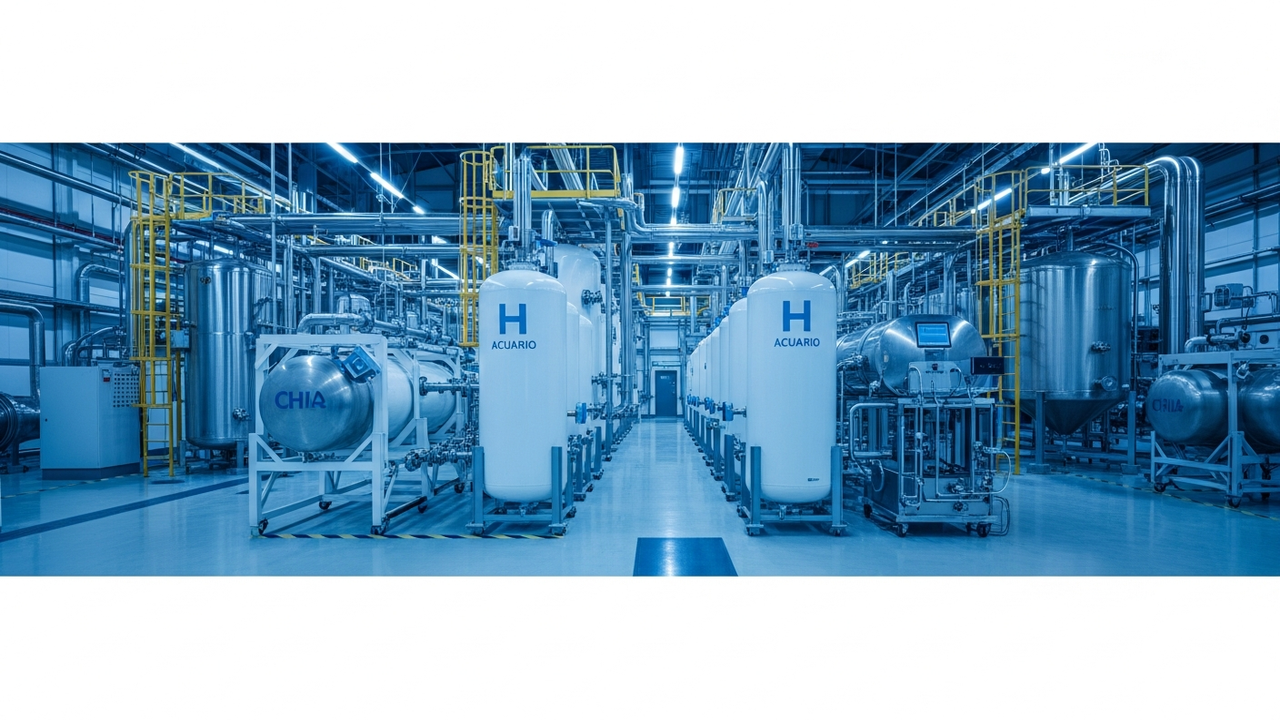
Chile is making significant strides in its green hydrogen and derivative initiatives, highlighted by Consorcio Austral’s submission of the Environmental Impact Assessment (EIA) for its massive $4.7 billion Acuario green ammonia project. This ambitious venture targets a production capacity of 4,100 tonnes of green ammonia daily, underpinned by a co-located 1.73 GW wind farm. Further underscoring this momentum, MAE’s $2.5 billion Volta green ammonia project and HIF Global’s $830 million Cabo Negro e-fuel production facility have successfully secured their environmental approvals, signaling a robust and maturing project pipeline.
Technically, the Acuario project will utilize wind energy to power electrolyzers for green hydrogen production, which is then synthesized into green ammonia via the Haber-Bosch process—a critical ingredient for fertilizers and a potent decarbonized maritime fuel. Similarly, Volta and Cabo Negro harness Chile’s world-class renewable resources, predominantly wind, to produce green hydrogen derivatives. HIF Global’s Cabo Negro specifically targets the production of synthetic fuels (e-fuels), crucial for decarbonizing hard-to-abate sectors such as aviation and heavy-duty road transport.
These large-scale initiatives cement South America’s pivotal role in the global energy transition. Their successful implementation is anticipated to foster regional economic growth, generate employment, and accelerate the adoption of clean energy technologies. Future success hinges on continued improvements in environmental permitting and securing stable, long-term offtake agreements, positioning Chile and Uruguay to be major forces in shaping a sustainable global energy future and influencing international energy markets and supply chains.
Get our weekly technology intelligence — free
Receive an infographic that lets you judge at a glance whether each field’s analysis report is worth reading.
Subscribe Free — Weekly Tech Intelligence
By subscribing, you’ll receive Troy-Technical’s weekly technology intelligence newsletter.
- Your email and selected fields are used only to deliver the newsletter.
- We never share your information with third parties.
- You can unsubscribe anytime via the link in each email.
See our Privacy Policy for details.
Takes about a minute · Unsubscribe anytime