Key Findings
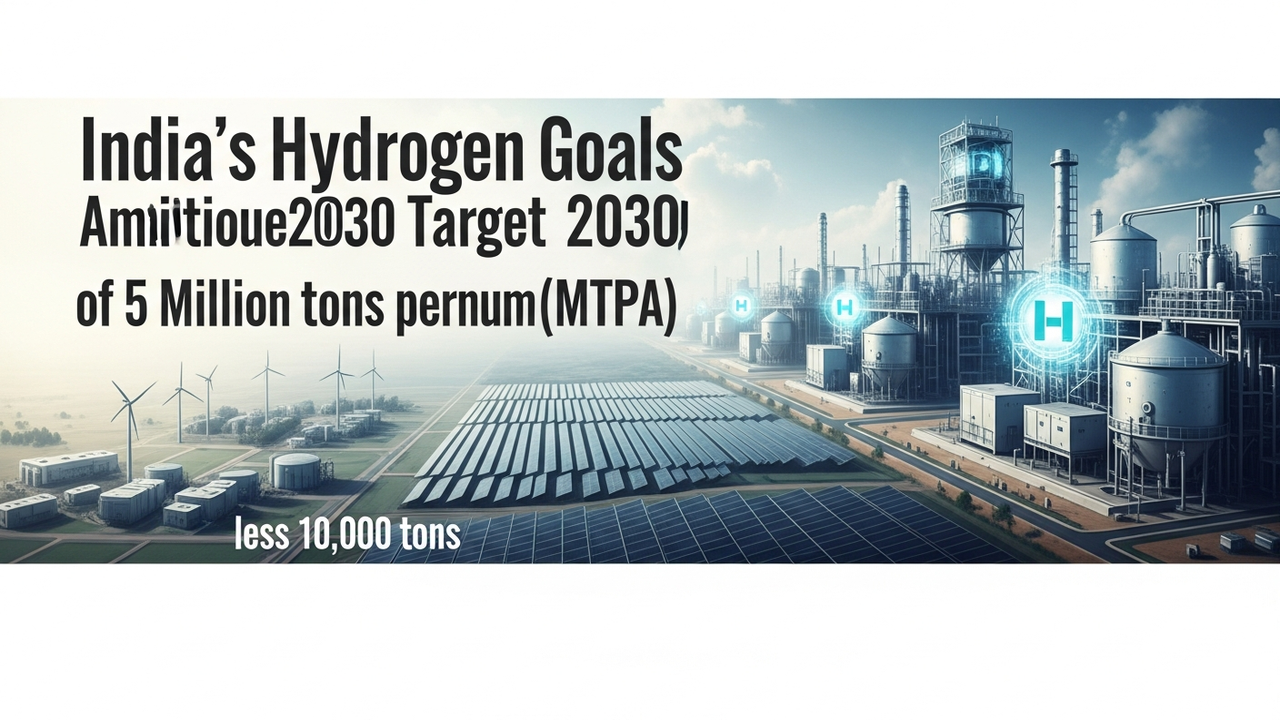
India’s ambitious target of producing 5 million tonnes per annum (MTPA) of green hydrogen by 2030 is facing significant challenges, with current operational capacity remaining below 10,000 tonnes. This stark disparity highlights substantial delays in project implementation and the urgent need for accelerated development to meet national decarbonization and energy security objectives.
Technical & Industrial Details
The primary causes for project delays are multifaceted, including the complexity of integrating nascent green hydrogen technologies, protracted procurement processes for electrolyzers and associated equipment, and slower-than-anticipated construction of critical renewable energy power plants. Developing large-scale renewable infrastructure often encounters hurdles such as land acquisition, permitting, and grid interconnection issues. In response, the Indian government, under its National Green Hydrogen Mission (NGHM), has initiated the SIGHT (Strategic Interventions for Green Hydrogen Transition) scheme. This program aims to auction 1.2 MTPA of green hydrogen capacity and has allocated 17,490 crore (approximately $2 billion) specifically for incentivizing electrolyzer manufacturing and green hydrogen production. This financial commitment is intended to bolster the domestic supply chain and drive down production costs.
Background & Context
India’s green hydrogen strategy is driven by the imperative to enhance energy security, reduce reliance on fossil fuel imports, and contribute to global climate action. However, the gap between aspirations and reality underscores not only technological hurdles but also high upfront capital costs, insufficient demand creation mechanisms, and infrastructure development lags. The government is actively seeking to attract domestic and international investments, facilitate technology transfer, and continuously refine its policy frameworks. Several state governments have also introduced their own hydrogen policies to accelerate regional project development and contribute to national targets.
Strategic Significance & Outlook
The financial incentives provided through the SIGHT scheme and the launch of pilot projects under the NGHM are expected to be crucial catalysts for India to get back on track. By accelerating domestic electrolyzer manufacturing and reducing production costs, India aims to supply green hydrogen at competitive prices both domestically and internationally. However, robust supply chain development, continuous investment in technological innovation, and the establishment of strong demand-side mechanisms are indispensable. Successful implementation of these initiatives could position India as a major global player in the green hydrogen market, leading the energy transition in the coming decades.
Get our weekly technology intelligence — free
Receive an infographic that lets you judge at a glance whether each field’s analysis report is worth reading.
Subscribe Free — Weekly Tech Intelligence
By subscribing, you’ll receive Troy-Technical’s weekly technology intelligence newsletter.
- Your email and selected fields are used only to deliver the newsletter.
- We never share your information with third parties.
- You can unsubscribe anytime via the link in each email.
See our Privacy Policy for details.
Takes about a minute · Unsubscribe anytime