Key Findings
The Green Energy Battery Research Center (BRCGE) at Ming Chi University of Technology in Taiwan is making significant progress in the field of high-voltage and high-safety battery technology. The center is contributing to enhanced safety and performance of next-generation batteries through multifaceted approaches, including the synthesis of 5V-class cathode materials, the development of innovative solvent-free dual-salt solid polymer electrolytes (DS-SPEs) for all-solid-state batteries, and the stabilization of cobalt-free Li-rich cathodes via LaF3 nano-coating. These achievements are crucial for maximizing the potential of batteries in electric vehicles (EVs) and energy storage systems.
Technical / Clinical Details
BRCGE employs several advanced research strategies to push the boundaries of battery technology:
- Synthesis of 5V-class LiNi0.5Mn1.5O4 (LNMO) cathodes: High-voltage cathode materials are key to improving battery energy density. LNMO, with its 5V operating voltage, holds potential for achieving high energy density. BRCGE is optimizing its synthesis methods to enhance performance.
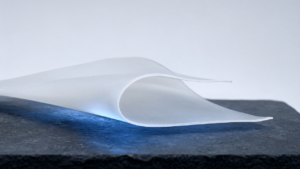
- Development of solvent-free dual-salt solid polymer electrolytes (DS-SPEs) for all-solid-state batteries: Solvent-free solid polymer electrolytes are promising candidates for all-solid-state batteries due to their higher safety compared to traditional liquid electrolytes and their retained flexibility. DS-SPEs optimize ionic conductivity by combining multiple lithium salts, contributing to safety and reduced environmental impact by eliminating solvents.
- Stabilization of cobalt-free Li-rich cathodes via LaF3 nano-coating: Cobalt is a scarce and expensive material, making the development of cobalt-free cathodes vital for cost reduction and sustainability. While Li-rich cathodes offer high initial capacity, they historically faced challenges like structural degradation and voltage fade during cycling. BRCGE’s application of LaF3 nano-coating improves the interfacial stability of these Li-rich cathodes, enabling long-term performance retention.
These developments are supported by In situ DEMS (Differential Electrochemical Mass Spectrometry) analysis. This technique allows for real-time monitoring of electrolyte degradation and electrode structural deterioration, providing deep insights into material degradation mechanisms that are fed back into designing more robust batteries.
Background & Context
The rapid growth of the electric vehicle (EV) market and the increasing demand for stationary energy storage systems driven by renewable energy proliferation have accelerated the development of high-performance and safe battery technologies. Specifically, increasing voltage is crucial for boosting battery energy density, but this simultaneously introduces safety challenges. BRCGE’s multi-pronged research approach represents a significant contribution to overcoming these technical trade-offs and advancing the commercialization of next-generation batteries. Cobalt-free approaches also contribute to stabilizing the supply chain, and DS-SPEs are a major step towards the practical implementation of all-solid-state batteries.
Strategic Significance & Outlook
BRCGE’s research achievements showcase Taiwan’s technological prowess in the high-voltage and high-safety battery sector globally. As these technologies mature and are applied to large-scale production, they are expected to enhance EV range and safety, while reducing costs and improving reliability for stationary energy storage. Solvent-free all-solid-state batteries, in particular, will be a crucial pillar for realizing a sustainable energy society. The continued utilization of in situ analytical methods will enhance the efficiency of future R&D, enabling more rapid technological innovation.
Source: https://www.azocleantech.com/article.aspx?ArticleID=2178
Get our weekly technology intelligence — free
Receive an infographic that lets you judge at a glance whether each field’s analysis report is worth reading.
Subscribe Free — Weekly Tech Intelligence
By subscribing, you’ll receive Troy-Technical’s weekly technology intelligence newsletter.
- Your email and selected fields are used only to deliver the newsletter.
- We never share your information with third parties.
- You can unsubscribe anytime via the link in each email.
See our Privacy Policy for details.
Takes about a minute · Unsubscribe anytime