Key Findings
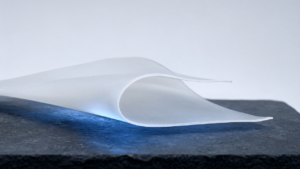
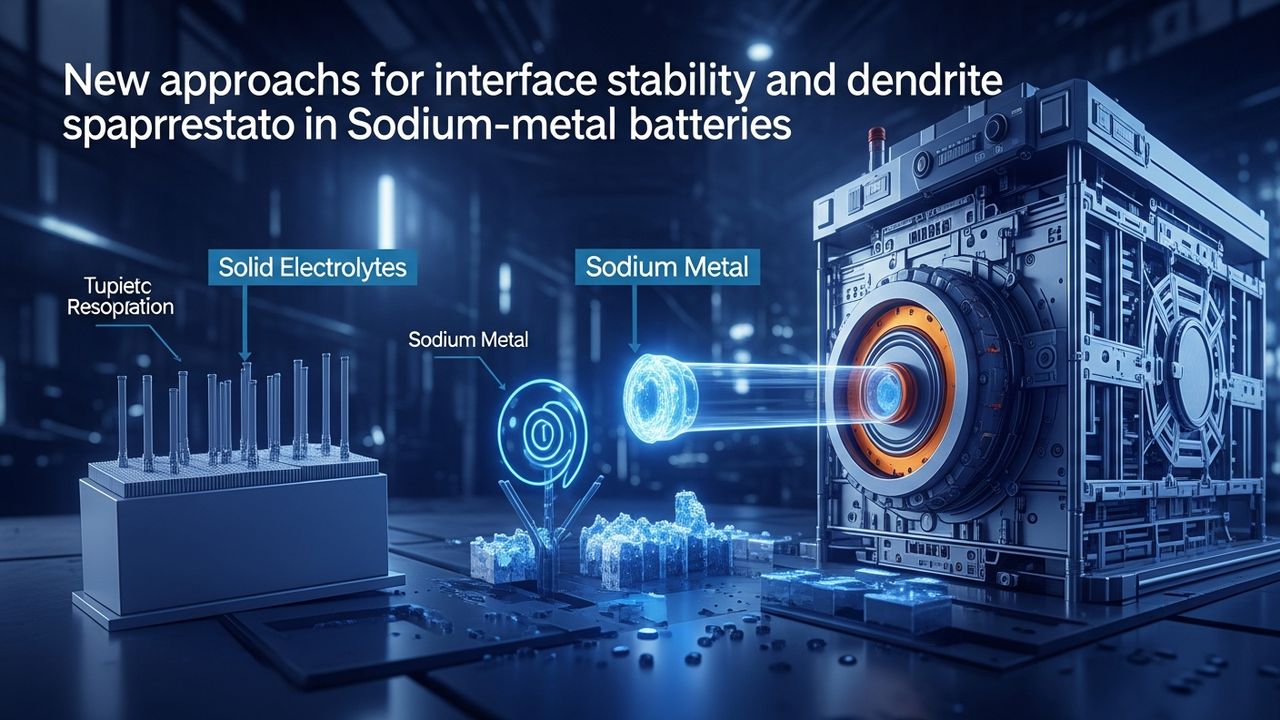
Researchers at the University of Wisconsin-Madison have developed an innovative quasi-solid polymer electrolyte (QSPE) and interfacial engineering strategy to overcome key challenges in sodium-metal batteries (SMBs): low Na+ transport numbers, sodium dendrite growth, and interfacial degradation. They successfully synthesized a highly conductive and flame-retardant poly(1,3-dioxolane) (PDOL) electrolyte via room-temperature in situ polymerization, utilizing GaCl3 as both an initiator and an interface modifier. This process led to the formation of a Ga0/NaCl-rich composition-gradient solid-electrolyte interphase (SEI) film, which effectively reduces the Na+ migration energy barrier and suppresses sodium dendrite formation, paving the way for durable quasi-solid sodium-metal batteries.
Technical / Clinical Details
Sodium-metal batteries (SMBs) are gaining attention as next-generation energy storage devices due to their potential for high energy density and low cost. However, especially in SMBs using liquid electrolytes, dendrite formation on the sodium metal anode has been a primary cause of internal short circuits and reduced safety. The QSPE developed in this study aims to combine the advantages of liquid electrolytes (high ionic conductivity) with those of solid electrolytes (morphological stability). The key lies in the dual function of GaCl3: it not only initiates the in situ polymerization of the PDOL polymer but also simultaneously forms a Ga0/NaCl-rich composition-gradient SEI film on the sodium metal anode surface. This SEI film facilitates Na+ ion permeation, suppresses parasitic reactions between the electrolyte and sodium metal, and critically reduces the Na+ migration energy barrier. This promotes uniform Na+ deposition, effectively inhibiting dendrite growth. Consequently, the battery’s cycling stability and safety are significantly improved, marking a major step towards the practical implementation of SMBs.
Background & Context
Due to concerns over lithium resource constraints and soaring prices, sodium-ion batteries (NIBs) and sodium-metal batteries (SMBs) are accelerating their research and development as promising alternatives to lithium-ion batteries. SMBs, in particular, hold the potential to achieve high energy density by leveraging the high theoretical capacity of sodium metal anodes, similar to lithium metal anodes. However, sodium metal anodes are more prone to dendrite formation than lithium metal anodes, and lower sodium ion mobility has made it challenging to achieve both high performance and safety. The composition-gradient SEI film formed in situ, proposed in this study, represents an innovative approach to resolve these challenges, significantly advancing sodium-based battery technology commercialization.
Strategic Significance & Outlook
The results of this research provide crucial guidance for the development of durable quasi-solid sodium-metal batteries. Future efforts will focus on further optimizing the PDOL electrolyte and the Ga0/NaCl gradient SEI film, scaling up manufacturing processes, and validating long-term cycling stability and safety profiles. If this technology is established, it could accelerate the adoption of safe and cost-effective sodium-metal batteries in a wider range of applications, including stationary energy storage, electric vehicles, and even grid-scale large-capacity storage systems. This is expected to contribute significantly to the realization of a sustainable energy society.
Get our weekly technology intelligence — free
Receive an infographic that lets you judge at a glance whether each field’s analysis report is worth reading.
Subscribe Free — Weekly Tech Intelligence
By subscribing, you’ll receive Troy-Technical’s weekly technology intelligence newsletter.
- Your email and selected fields are used only to deliver the newsletter.
- We never share your information with third parties.
- You can unsubscribe anytime via the link in each email.
See our Privacy Policy for details.
Takes about a minute · Unsubscribe anytime