Key Findings
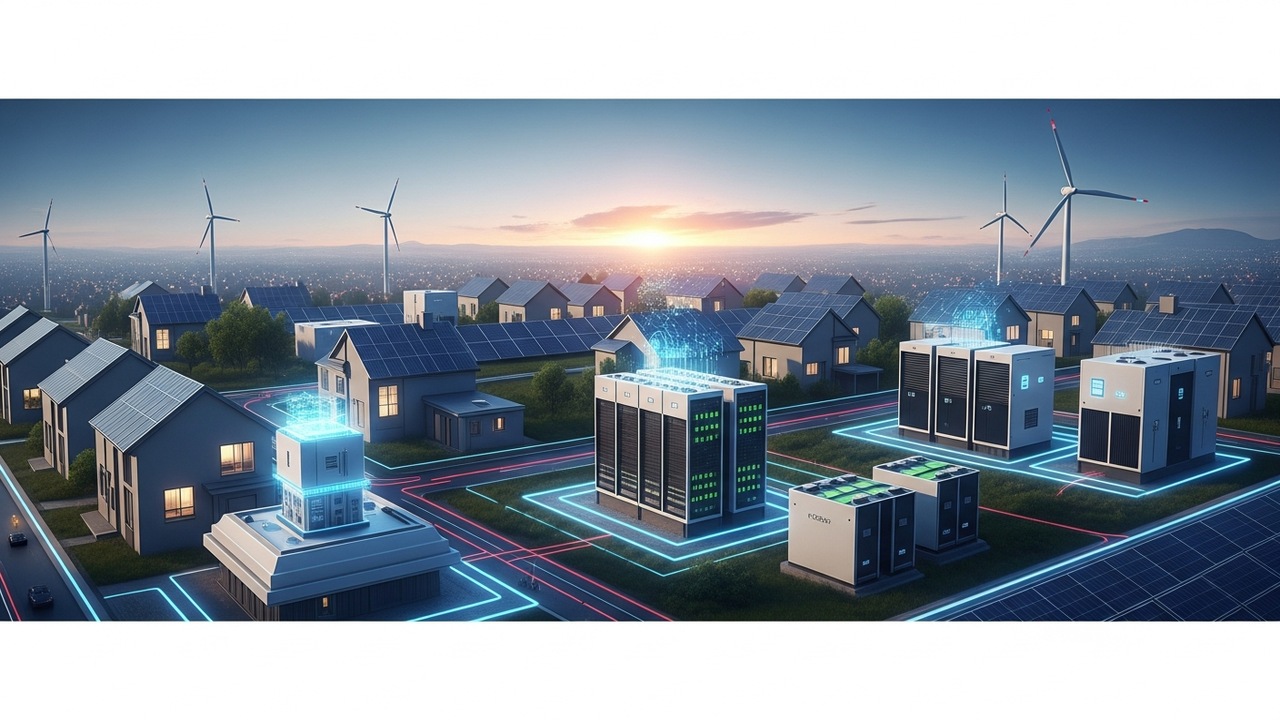
In the United States, advancements in grid modernization are enabling Virtual Power Plants (VPPs), in conjunction with Distributed Energy Resources (DERs), to play a pivotal role in reducing the need for new natural gas-fired power plants. This shift is actively promoting the decarbonization of the U.S. energy supply by enhancing the ability to curtail electricity consumption during peak demand periods and store energy during off-peak times. VPPs achieve this by networking and centrally managing diverse DERs, such as rooftop solar panels, stationary battery storage systems, and electric vehicles (EVs), effectively functioning as alternatives to traditional centralized power generation.
Technical and Business Details
A VPP is a sophisticated system that employs advanced software and communication technologies to coordinate the operation of geographically dispersed DERs. For instance, surplus electricity from rooftop solar panels can be stored in stationary batteries, and during periods of high demand, this stored power can be dispatched to the grid or used for household consumption. EV batteries also contribute to grid stabilization by optimizing their charging and discharging cycles as “vehicle-to-grid” (V2G) storage units within the VPP framework. The system automatically adjusts operations based on real-time electricity prices and grid conditions, ensuring the most efficient and economical energy management.
This decentralized approach offers significant business advantages by circumventing the colossal upfront investments and environmental impacts associated with building large power plants and transmission lines. It also enhances the resilience of electricity supply and optimizes regional power supply-demand balances. Consequently, utilities can respond flexibly to demand fluctuations, alleviate grid congestion, and integrate a greater proportion of renewable energy sources.
Background and Industry Context
As global awareness of climate change and the drive for energy independence intensify, the expansion of renewable energy sources and the concomitant importance of energy storage technologies are growing. Batteries have become indispensable to virtually every aspect of modern society, powering electric vehicles (EVs), stationary energy storage systems (ESS), and portable electronics. However, the uneven distribution of critical resources like lithium and cobalt, coupled with the environmental and social issues associated with their extraction, pose significant challenges to the overall sustainability of the battery industry. Consequently, there is an urgent need to develop new-generation batteries using more abundant and sustainable materials, alongside establishing efficient recycling technologies for existing batteries.
Strategic Significance and Outlook
The growth of VPPs and DERs will continue to transform the U.S. electricity system. The declining trend in new natural gas plant construction demonstrates the efficacy of this technological innovation in decarbonizing the energy mix. Moving forward, it is anticipated that more homes and commercial establishments will be integrated into VPP networks, further expanding their contribution in conjunction with advancements in battery technology. This will empower consumers to reduce energy costs while contributing to grid stability and sustainability, ultimately leading to a more resilient and cleaner energy future.
Source: https://cleantechnica.com/2026/07/28/grid-modernization-energy-storage-vpp-wind-solar-ders/
Get our weekly technology intelligence — free
Receive an infographic that lets you judge at a glance whether each field’s analysis report is worth reading.
Subscribe Free — Weekly Tech Intelligence
By subscribing, you’ll receive Troy-Technical’s weekly technology intelligence newsletter.
- Your email and selected fields are used only to deliver the newsletter.
- We never share your information with third parties.
- You can unsubscribe anytime via the link in each email.
See our Privacy Policy for details.
Takes about a minute · Unsubscribe anytime