Key Findings
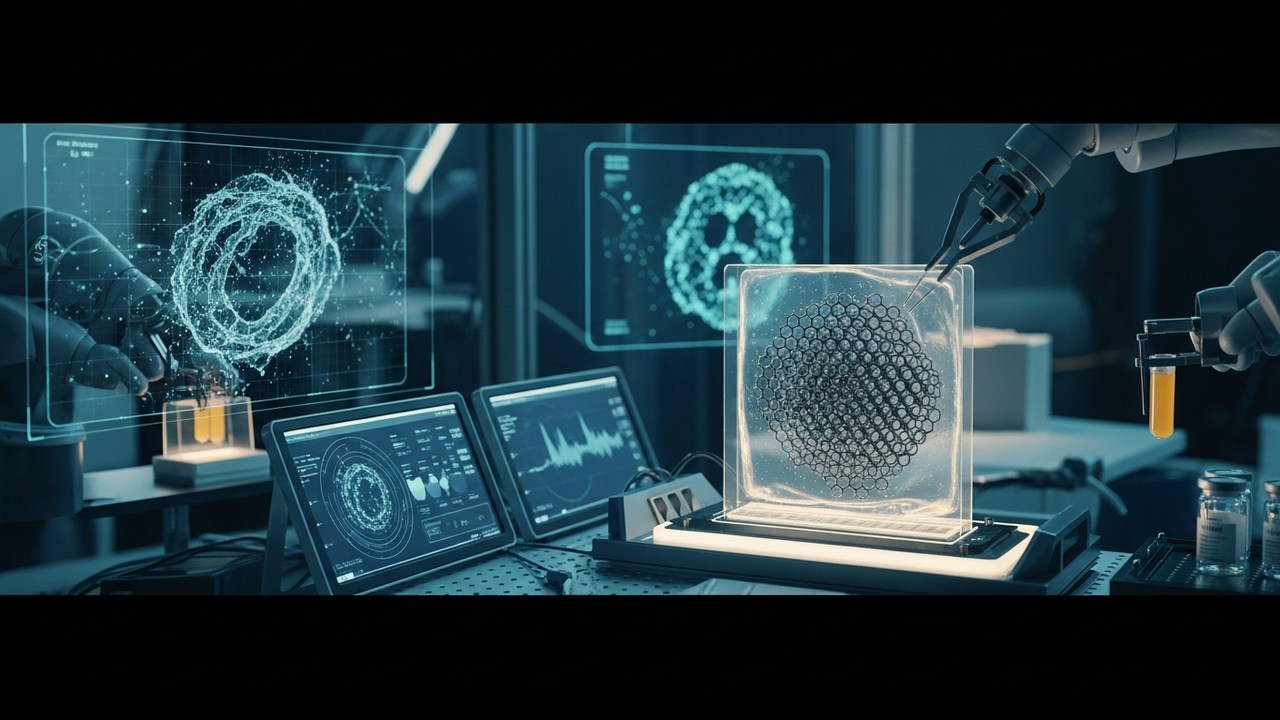
A research team at Drexel University has developed a new hydrogel that dramatically improves graphene-based biosensor technology. This innovative hydrogel, by incorporating graphene quantum dots (GQDs), significantly enhances the sensor’s sensitivity and accelerates signal transmission. This breakthrough enables the highly sensitive and real-time detection of trace analytes such as amyloid proteins (markers for neurodegenerative diseases like Alzheimer’s), DNA mutations, pathogens, and cancer biomarkers. This technology opens new avenues in the fields of early disease diagnosis and continuous health monitoring.
Technical and Clinical Details
The developed hydrogel exhibits unique properties by uniformly dispersing graphene materials (specifically GQDs) within its matrix. GQDs possess fluorescent properties due to their quantum confinement effect, allowing for highly sensitive optical detection of interactions with biomarkers. Simultaneously, graphene’s excellent conductivity improves the efficiency of electrochemical detection. This hydrogel can be easily integrated into flexible Field-Effect Transistor (FET) platforms and electrochemical/fluorescence platforms, with applications in miniaturized handheld electrochemical devices (e.g., commercial glucometers) also being considered. Specific clinical applications include ultra-early diagnosis of neurodegenerative diseases like Alzheimer’s by detecting amyloid proteins from non-invasive samples such as saliva and urine. Furthermore, as a DNA sensor, it holds promise for rapid detection of specific genetic mutations and pathogens, as well as various cancer diagnoses including breast cancer-related biomarkers (HER2, CA15-3) and oral cancer detection. Integration into real-time glucose monitors, smart patches, and implantable sensors will enable patients to continuously track their health status in daily life.
Background and Industry Context
Early disease diagnosis is crucial for improving treatment success rates and patient prognoses. However, many current diagnostic methods are invasive, time-consuming, and require expensive specialized equipment. Graphene-based biosensors have garnered attention as promising candidates for next-generation diagnostic technologies due to their high sensitivity, stability, and versatility, but have faced challenges with biocompatibility and large-scale production. The development of this novel hydrogel addresses these challenges, enhancing the performance and practicality of graphene-based sensors. Particularly, biomarker detection from non-invasive samples (saliva, urine) significantly reduces patient burden and allows for broader screening, holding great significance from a public health perspective. This technology will accelerate the progress of preventive medicine, personalized medicine, and telemedicine.
Strategic Significance and Outlook
This hydrogel developed by Drexel University is expected to further unleash the potential of graphene-based biosensors, promoting a wide range of innovations in the medical field. Future developments will likely include multiplexed sensors capable of simultaneously detecting multiple biomarkers, applications in self-powered devices, and advanced data analysis through integration with AI/machine learning. This could lead to ultra-early disease detection, more precise diagnostics, and personalized therapeutic interventions. For commercialization, long-term stability, optimization of large-scale manufacturing processes, regulatory approval, and validation through large-scale clinical trials will be crucial steps, but this technology holds immense potential to transform the future of smart healthcare and precision diagnostics.
Get our weekly technology intelligence — free
Receive an infographic that lets you judge at a glance whether each field’s analysis report is worth reading.
Subscribe Free — Weekly Tech Intelligence
By subscribing, you’ll receive Troy-Technical’s weekly technology intelligence newsletter.
- Your email and selected fields are used only to deliver the newsletter.
- We never share your information with third parties.
- You can unsubscribe anytime via the link in each email.
See our Privacy Policy for details.
Takes about a minute · Unsubscribe anytime