Key Findings
A collaborative effort between Yale University, Pacific Northwest National Laboratory (PNNL), and Microsoft AI has led to the discovery of a revolutionary solid-state electrolyte, N2116, which can reduce lithium consumption by up to 70%. This discovery is particularly notable as AI designed a novel battery material previously considered unattainable by traditional chemical principles. This breakthrough has profound implications for energy storage, promising significantly enhanced performance for next-generation batteries.
Technical / Clinical Details
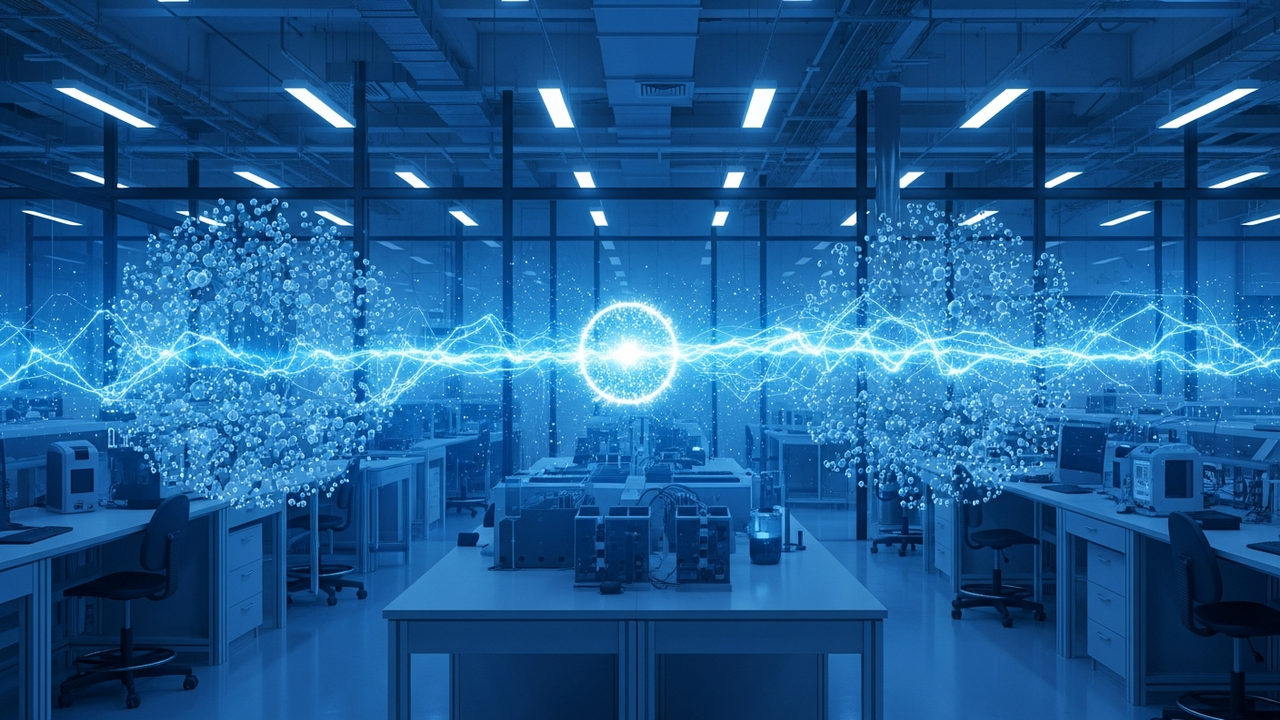
The research leveraged an integrated approach combining advanced AI and high-performance computing (HPC) to screen an astounding 32 million potential material candidates in just one week, culminating in the material’s development in less than nine months. This acceleration represents a dramatic shift from conventional materials science discovery timelines. In autonomous lab settings, machine learning algorithms designed experiments, robotic systems executed them, and AI analyzed results in real-time, forming a seamless, human-bypassed workflow. The resulting N2116 electrolyte enables batteries with substantially lower lithium content while maintaining high energy density, improved safety profiles, and rapid charging capabilities compared to current lithium-ion technologies. Further analysis highlighted that physics-informed AI models sustained 90-92% physical output validity, demonstrating robust performance in material design.
Background & Context
The escalating demand for advanced battery technologies in electric vehicles and grid-scale energy storage systems underscores the urgent need for high-performance and sustainable materials. Lithium, a critical and finite resource, is central to current battery chemistries. Reducing its dependency directly translates to cost savings, supply chain resilience, and a smaller environmental footprint. The successful integration of AI-driven material design and autonomous experimentation, as demonstrated in this study, showcases the transformative potential of data-driven approaches within materials informatics. This paradigm significantly cuts down on the time, cost, and resource expenditure typically associated with trial-and-error material discovery.
Strategic Significance & Outlook
The discovery of N2116 by AI represents a potential game-changer for battery technology. The drastic reduction in lithium use enhances the sustainability of battery manufacturing and mitigates geopolitical supply risks. This AI-powered methodology is poised to accelerate breakthroughs not only in batteries but across diverse materials science domains, including catalysts, semiconductors, and polymers. Continued advancements in autonomous laboratories and refinement of AI models are expected to further compress the timeline from material discovery to commercial deployment, ushering in a new era of industrial innovation. This approach provides a concrete framework for accelerating the entire materials lifecycle, from theoretical prediction to experimental validation and optimization.
Get our weekly technology intelligence — free
Receive an infographic that lets you judge at a glance whether each field’s analysis report is worth reading.
Subscribe Free — Weekly Tech Intelligence
By subscribing, you’ll receive Troy-Technical’s weekly technology intelligence newsletter.
- Your email and selected fields are used only to deliver the newsletter.
- We never share your information with third parties.
- You can unsubscribe anytime via the link in each email.
See our Privacy Policy for details.
Takes about a minute · Unsubscribe anytime