Key Findings
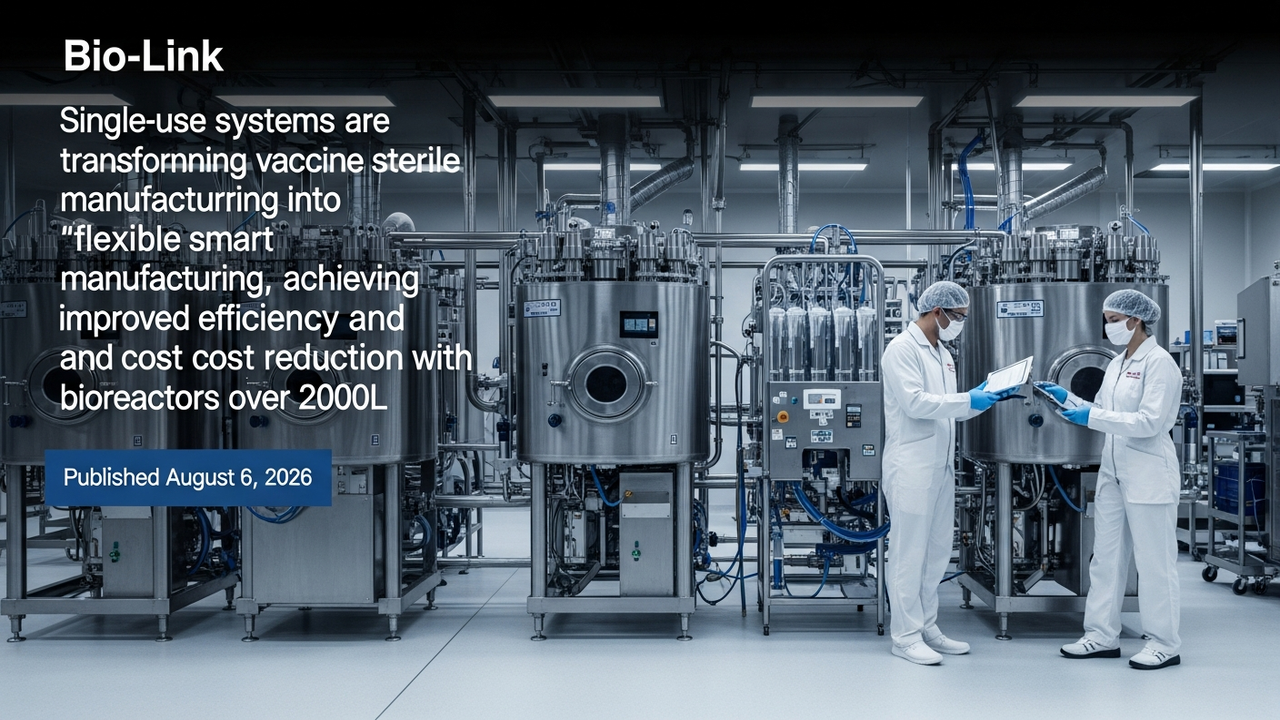
According to Bio-Link’s analysis, single-use systems (SUS) are fundamentally transforming vaccine sterile manufacturing processes, accelerating the shift from traditional fixed-facility production to ‘flexible smart manufacturing.’ This technology delivers significant benefits, including cost reduction, expedited technology transfer, and a substantial increase in manufacturing efficiency.
Technical / Clinical Details
Single-use systems (SUS) comprise plastic components (bags, tubing, filters, sensors, etc.) used once in biomanufacturing processes and then discarded. The primary advantages and applications of SUS in vaccine manufacturing are as follows:
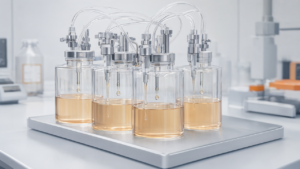
- **Upstream Cell Culture**: Single-use bags are utilized in cell culture stages within rocking systems and mixing bioreactors up to and exceeding 2000L. This enables efficient, large-scale cell proliferation, particularly suitable for both adherent and suspension cell cultures.
- **Closed-System Operation**: SUS allows the entire system to operate in a closed environment, significantly reducing the risk of external contamination. This is paramount for sterile manufacturing compliant with Good Manufacturing Practice (GMP) standards.
- **Sterile Supply**: Single-use components are supplied pre-sterilized by gamma irradiation, eliminating the need for complex and time-consuming cleaning and sterilization validation processes required for traditional reusable equipment.
- **Rapid Changeover**: The ability to quickly switch between new products or batches enhances manufacturing line flexibility, enabling efficient production of multiple products.
- **Product and Personnel Protection**: Closed systems enhance operator safety when handling highly potent biohazardous materials and protect product quality and integrity.
These technical characteristics contribute to shortening vaccine manufacturing lead times and improving cost-efficiency.
Background & Context
Vaccine manufacturing consistently faces high demands, driven by the need for rapid responses to pandemics and the development of new vaccines against diverse infectious diseases. Traditional manufacturing using stainless steel equipment entails high initial investment and time-consuming, labor-intensive cleaning and sterilization processes, limiting production flexibility and speed. Single-use systems overcome these challenges, proving superior particularly for small-batch or multi-product manufacturing. The global biomanufacturing industry is accelerating the adoption of SUS, a trend that is extending to the production of biopharmaceuticals, cell, and gene therapy products. This also facilitates technology transfer between manufacturing sites, contributing to the resilience of global supply chains.
Strategic Significance & Outlook
Single-use systems are expected to continue establishing their position as the standard technology for sterile vaccine manufacturing and to further expand their application scope. In particular, integration with continuous production and automation systems is anticipated to further enhance the efficiency and robustness of manufacturing processes. The evolution of this technology will strengthen future pandemic response capabilities and serve as a critical foundation for the rapid development and supply of vaccines against a wider range of infectious diseases. Investors are closely monitoring investment opportunities in related companies, as SUS contributes to cost reduction and shortened time-to-market in biomanufacturing.
Get our weekly technology intelligence — free
Receive an infographic that lets you judge at a glance whether each field’s analysis report is worth reading.
Subscribe Free — Weekly Tech Intelligence
By subscribing, you’ll receive Troy-Technical’s weekly technology intelligence newsletter.
- Your email and selected fields are used only to deliver the newsletter.
- We never share your information with third parties.
- You can unsubscribe anytime via the link in each email.
See our Privacy Policy for details.
Takes about a minute · Unsubscribe anytime