Background
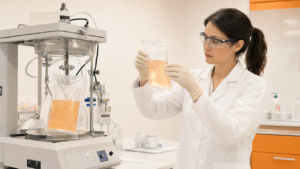
Monoclonal antibodies (mAbs) are critical biopharmaceuticals, indispensable in treating a diverse range of conditions including cancer, autoimmune disorders, and infectious diseases. However, their manufacturing processes are inherently complex and costly, constantly presenting challenges in optimizing yields, particularly at large scales. Conventional bioreactors frequently contend with non-uniform dissolved oxygen distribution, especially in larger volumes, and can subject delicate cells to excessive shear stress, ultimately diminishing productivity. Consequently, the biopharmaceutical industry urgently seeks more efficient and scalable bioreactor technologies. This novel bioreactor design emerges as a promising solution to these long-standing challenges, poised to enhance the stable supply and reduce the production costs of mAb therapeutics.
Key Findings
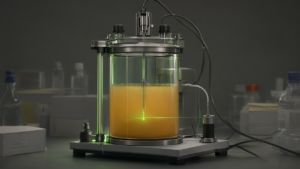
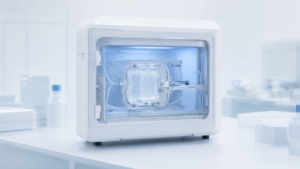
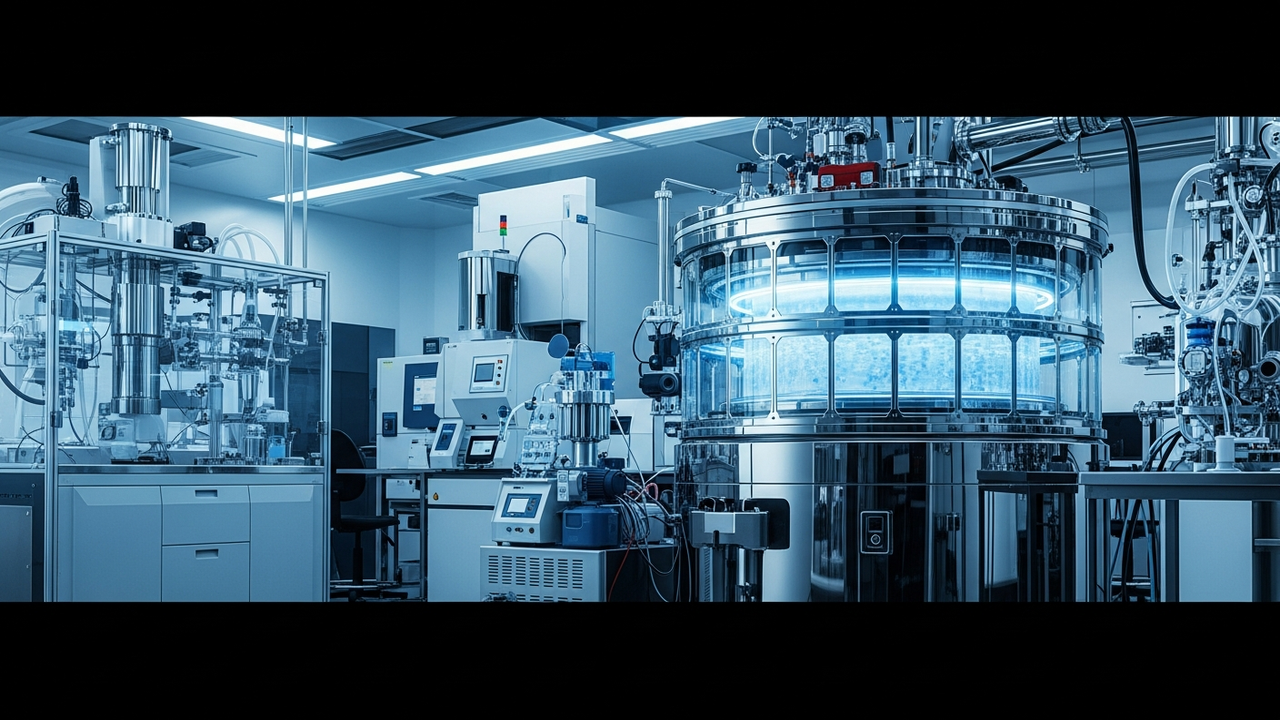
Researchers at the Italian National Agency for New Technologies, Energy and Sustainable Economic Development (ENEA) have engineered an innovative rotating drum bioreactor that demonstrates significant potential to boost monoclonal antibody (mAb) production yields. This novel bioreactor design is specifically tailored to maximize the availability of dissolved oxygen uniformly throughout the entire fermentation cycle. By ensuring optimal cell health and fostering high productivity, this technology promises to revolutionize the efficiency and output of biopharmaceutical manufacturing.
Technical Details
The newly developed rotating drum bioreactor presents several distinct advantages over conventional stirred-tank bioreactors. Its most significant innovation resides in its capacity to maintain uniformly high and sustained levels of dissolved oxygen (DO) concentration within the culture medium. This mechanism leverages the slow, controlled rotation of the drum, which ensures continuous and gentle contact between the culture broth and the gas phase. This facilitates highly efficient oxygen transfer into the medium while simultaneously promoting effective carbon dioxide removal. Mammalian cells, notably Chinese Hamster Ovary (CHO) cells—the workhorses of monoclonal antibody production—exhibit high oxygen demands; consequently, insufficient DO levels can severely impede cell proliferation and antibody synthesis.
Key engineering elements contributing to the enhanced yields observed with this bioreactor design include:
- Optimized Dissolved Oxygen: The uniform mixing and significantly enhanced gas exchange efficiency facilitated by the rotating drum ensure that cells are consistently cultured under optimal oxygen levels. This maximizes cellular metabolic activity and profoundly boosts antibody production capabilities.
- Reduced Shear Stress: The gentle, rotational mixing mechanism inherently minimizes shear stress, a critical factor detrimental to fragile mammalian cells. This feature is particularly crucial for reducing cell death, preserving cell viability, and improving the long-term stability of biopharmaceutical cultures.
- Homogeneous Environment: By maintaining uniform temperature, pH, and nutrient concentrations throughout the entire culture broth, the system ensures consistent performance across the cell population and significantly reduces batch-to-batch variability, crucial for robust manufacturing.
These synergistic technical features are projected to lead to a substantial improvement in monoclonal antibody production yields compared to traditional bioreactors.
Strategic Significance & Outlook
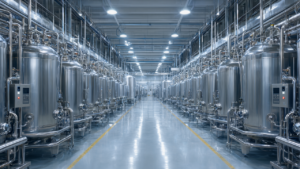
The successful commercialization of this rotating drum bioreactor holds the potential to significantly reshape the biopharmaceutical manufacturing landscape. Specifically, the combination of higher production yields and optimized culture conditions translates directly into reduced manufacturing costs for monoclonal antibodies, thereby potentially expanding patient access to these life-saving medicines. Looking ahead, this innovative technology could be broadly applied to the production of other biopharmaceuticals, including cell therapies and recombinant proteins, fostering overall efficiency and driving innovation across the biomanufacturing sector. Moreover, its design is expected to contribute to more sustainable bioproduction practices, aligning with the industry’s broader goals for environmental responsibility. Future development plans involve extensive demonstration and optimization within large-scale manufacturing facilities to prepare for industrial adoption.
Get our weekly technology intelligence — free
Receive an infographic that lets you judge at a glance whether each field’s analysis report is worth reading.
Subscribe Free — Weekly Tech Intelligence
By subscribing, you’ll receive Troy-Technical’s weekly technology intelligence newsletter.
- Your email and selected fields are used only to deliver the newsletter.
- We never share your information with third parties.
- You can unsubscribe anytime via the link in each email.
See our Privacy Policy for details.
Takes about a minute · Unsubscribe anytime