Key Findings
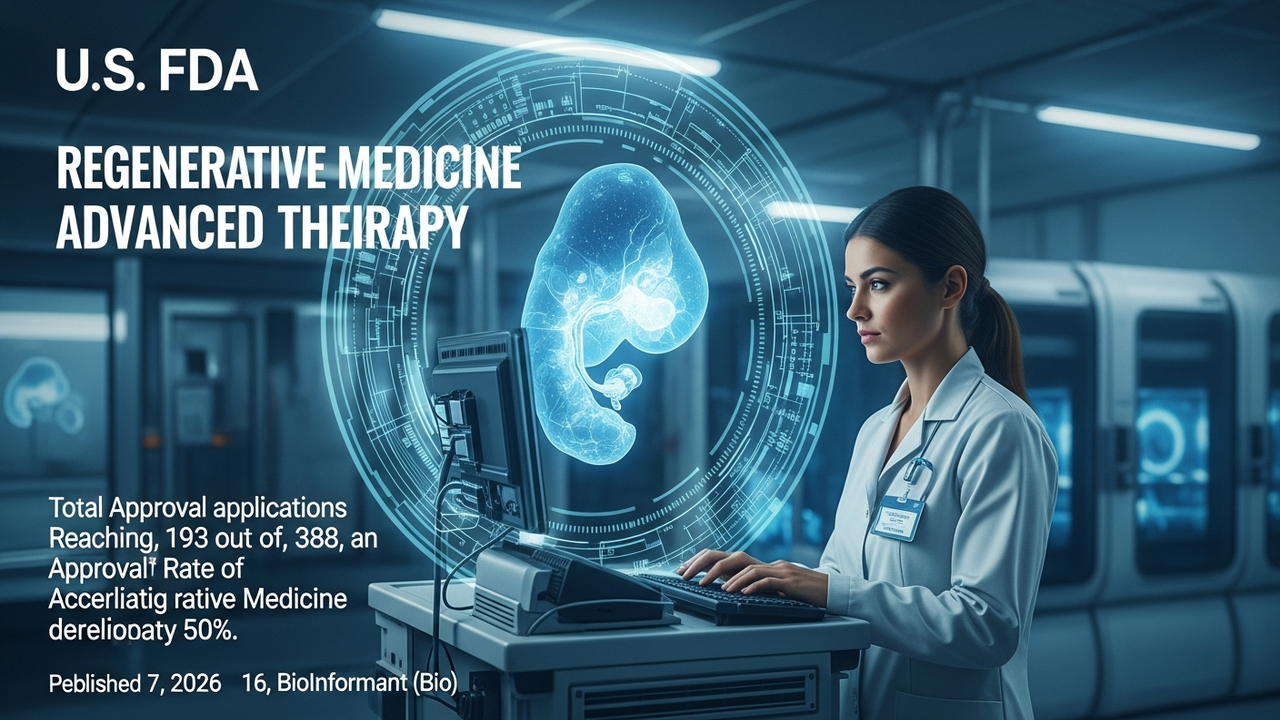
As reported by a BioInformant blog post, the U.S. Food and Drug Administration (FDA) has announced the approval of 193 out of 388 total applications submitted for Regenerative Medicine Advanced Therapy (RMAT) designation. This data reveals an RMAT application approval rate of approximately 50%, clearly highlighting the FDA’s strong commitment to accelerating the development and approval of regenerative medicine products for serious diseases. This high approval rate reflects the increasing innovation and anticipation for clinical applications within the regenerative medicine sector.
Technical / Clinical Details
The Regenerative Medicine Advanced Therapy (RMAT) designation was introduced in 2016 as part of the 21st Century Cures Act. This designation is granted to regenerative medicine products (including cell therapies, gene therapies, tissue-engineered products, and combination products) intended to treat serious or life-threatening diseases, provided that preliminary clinical data demonstrate a clinically significant improvement compared to existing therapies. Products receiving RMAT designation benefit from enhanced FDA dialogue, priority review, and rolling review (a process allowing for submission and review of completed sections of an application), which can shorten product development timelines and accelerate patient access. The 193 approvals announced are presumed to include innovative therapies across diverse disease areas such as oncology, neurodegenerative diseases, cardiovascular diseases, and autoimmune disorders.
Background & Context
The field of regenerative medicine has seen rapid advancements in recent years due to its innovative nature and the potential benefits it offers to patients. However, as a new modality, it has also faced unique regulatory challenges compared to conventional pharmaceuticals. The RMAT designation system was designed to address these challenges and ensure that promising regenerative medicine products reach patients quickly. An approximately 50% approval rate suggests that while the FDA maintains a rigorous review process for RMAT designations, it actively supports the development of truly promising technologies. This acts as an incentive for investment in the regenerative medicine sector and encourages pharmaceutical and biotechnology companies to develop new therapies. Particularly in disease areas with high unmet needs, RMAT designation becomes a critically important element in a product’s market entry strategy.
Strategic Significance & Outlook
The high approval rate for RMAT designations suggests that the pipeline for regenerative medicine products will continue to expand, with more innovative therapies likely to progress through clinical trials and gain approval. Companies are expected to prioritize obtaining RMAT designation as a key milestone in their development strategies, focusing on generating promising early clinical data. This will optimize development costs and shorten time to market. Moving forward, as RMAT-designated products achieve commercial success, the effectiveness of this system will be further validated, accelerating the overall growth and development of the regenerative medicine sector. The FDA’s continued engagement and support will be a crucial factor in ensuring a future where more therapeutic options are available to patients.
Get our weekly technology intelligence — free
Receive an infographic that lets you judge at a glance whether each field’s analysis report is worth reading.
Subscribe Free — Weekly Tech Intelligence
By subscribing, you’ll receive Troy-Technical’s weekly technology intelligence newsletter.
- Your email and selected fields are used only to deliver the newsletter.
- We never share your information with third parties.
- You can unsubscribe anytime via the link in each email.
See our Privacy Policy for details.
Takes about a minute · Unsubscribe anytime