Key Findings
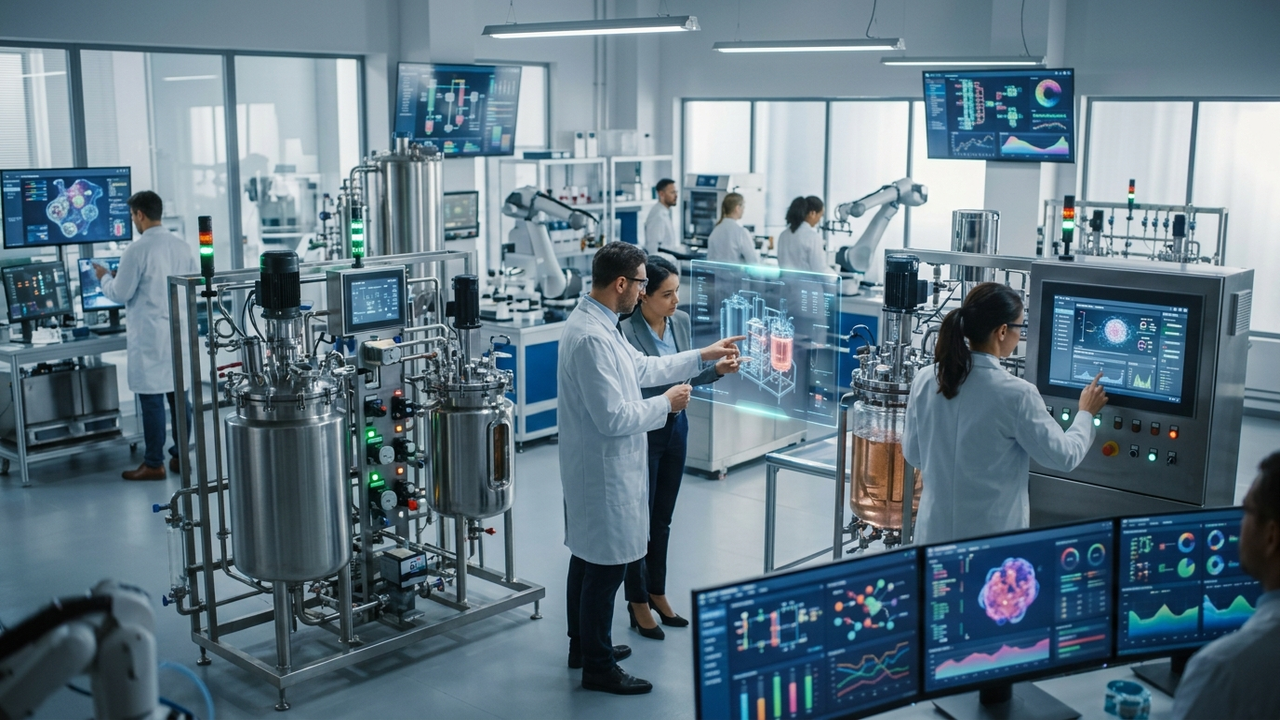
The integration of digital twin technology, advanced bioreactor design, and artificial intelligence (AI) is dramatically improving the energy efficiency and sustainability of bioprocessing facilities. AI has become a central technology in revolutionizing the entire bioprocess, from early-stage research like enzyme discovery, protein engineering, and strain engineering, to optimizing fermentation conditions and real-time process monitoring and control.
Technical and Clinical Details
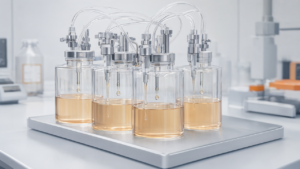
A digital twin functions as a real-time virtual replica of a bioreactor, integrating sensor data, mechanistic models, and machine learning algorithms. This allows researchers to simulate operational scenarios, optimize production schedules, and forecast performance. For example, in microbial lipid fermentations, doctoral research is progressing on building chemometric and physics-informed machine learning models that combine data from online spectroscopy and bioreactor sensors to achieve real-time process optimization and control. AI also facilitates rapid genomic sequencing, protein structure prediction, synthetic biology, bioinformatics, and broader bioprocess optimization, thereby improving manufacturing accuracy and decision-making capabilities. Integrated Process Analytical Technology (PAT) tools continuously monitor key attributes in real-time, working in conjunction with AI-driven control algorithms to maintain peak performance.
Background and Industry Context
The biopharmaceutical manufacturing industry faces challenges including increasing product complexity, cost reduction pressures, and demands for reduced environmental impact. AI and digital twin technologies are emerging as powerful tools to address these challenges. Compared to traditional trial-and-error development processes, AI significantly shortens development cycles and reduces manufacturing errors and waste. Companies like Thermo Fisher Scientific are actively recruiting data scientists to lead digital twin model development for CHO cell culture and upstream bioprocess workflows, emphasizing hybrid modeling approaches that combine mechanistic understanding with AI, machine learning, and Bayesian optimization. Educational institutions such as MIT Professional Education and Binghamton University are also offering specialized courses on applying AI and machine learning to biomanufacturing data analytics, fostering the development of specialized talent in this rapidly evolving field.
Future Outlook
The continued integration of AI and digital twin technologies is set to accelerate the ‘green shift’ in bioprocessing, establishing a more sustainable and efficient manufacturing ecosystem. In the future, these technologies are expected to be applied across the entire manufacturing value chain, from initial bioprocess design and quality control to supply chain optimization. This will further accelerate the development and commercialization of new bioproducts, potentially delivering innovative therapies and bio-based materials to patients and markets faster and more cost-effectively. Addressing challenges related to data privacy and algorithmic bias will also be crucial for the widespread adoption and trustworthiness of these technologies.
Get our weekly technology intelligence — free
Receive an infographic that lets you judge at a glance whether each field’s analysis report is worth reading.
Subscribe Free — Weekly Tech Intelligence
By subscribing, you’ll receive Troy-Technical’s weekly technology intelligence newsletter.
- Your email and selected fields are used only to deliver the newsletter.
- We never share your information with third parties.
- You can unsubscribe anytime via the link in each email.
See our Privacy Policy for details.
Takes about a minute · Unsubscribe anytime