Background & Context
The burgeoning electric vehicle (EV) market is critically dependent on continuous advancements in battery technology. Key development challenges for battery packs revolve around extending driving range, reducing charging times, and ensuring uncompromised safety. Overheating in battery systems can lead to severe performance degradation and, in worst-case scenarios, catastrophic thermal runaway. Consequently, efficient and robust thermal management is not merely beneficial but indispensable. DuPont’s latest material innovation directly addresses these critical issues, positioning itself as a strategic enabler for the development of high-performance and safe next-generation EV battery systems.
Key Findings
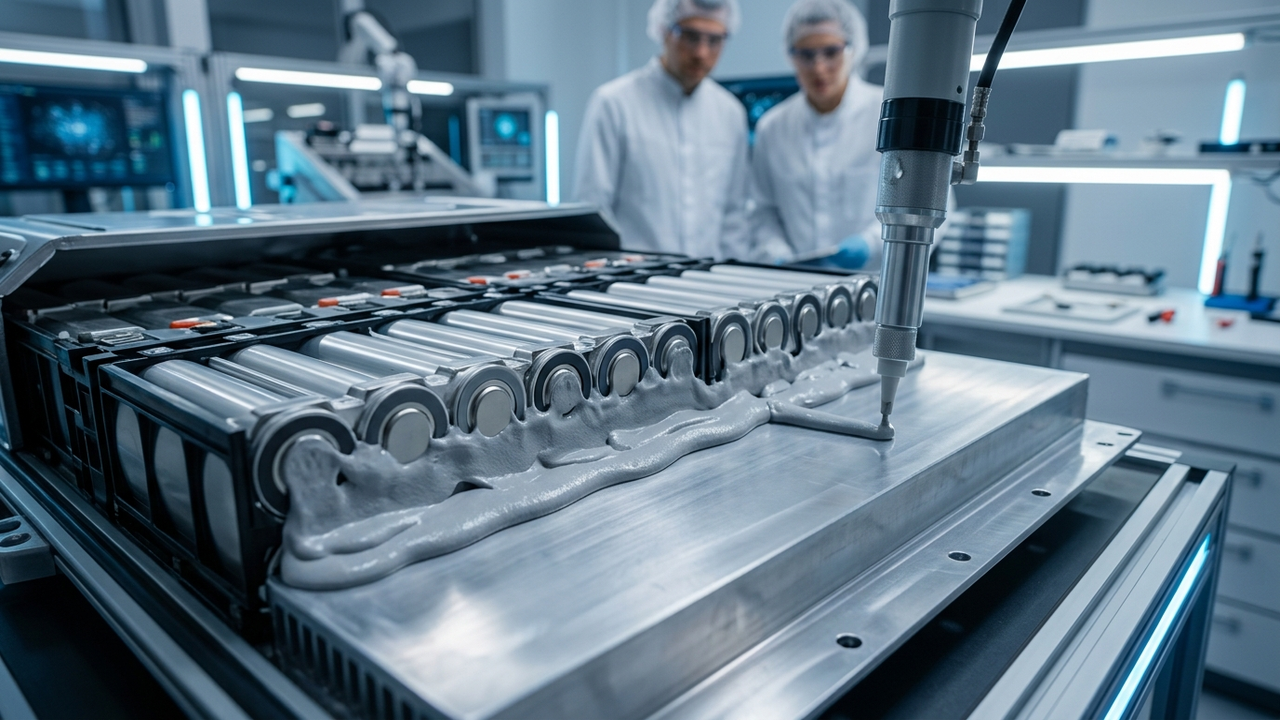
DuPont has launched an innovative, silicone-free thermal gap filler material engineered to significantly elevate thermal management performance within next-generation electric vehicle (EV) battery packs. This novel product promises a substantial reduction in the risk of thermal runaway and an extension of battery operational life, while simultaneously boosting manufacturing efficiency in high-volume production environments.
Technical Details
- Silicone-Free Composition: This material is formulated to be entirely free of silicone compounds, which are known to potentially degrade sensitive electronic components over time. This makes it exceptionally well-suited for high-reliability EV battery systems, specifically mitigating the risk of contact failure and contamination frequently associated with volatile silicone components in critical electronic assemblies.
- Elevated Thermal Conductivity: Designed to optimize heat transfer from battery cells to cooling plates, this gap filler exhibits very high thermal conductivity. While specific numerical values have not been disclosed, this represents a significant performance enhancement crucial for effective thermal dissipation. This capability ensures a more uniform temperature distribution throughout the battery pack, effectively preventing localized hot spots that could otherwise compromise both battery performance and safety.
- Superior Conformability and Streamlined Application: The material boasts high flexibility and conformability, allowing it to tightly adhere even within microscopic gaps between battery cells and cooling plates, thereby establishing an efficient thermal pathway. Its robust compatibility with automated manufacturing lines facilitates easy and precise dispensing, directly contributing to reduced cycle times and enhanced cost efficiency in high-volume EV battery production.
Strategic Significance & Outlook
Beyond its primary application in EVs, this advanced thermal gap filler is also anticipated to serve as a critical thermal management solution for stationary energy storage systems and other high-power electronic devices. DuPont reaffirms its commitment to providing innovative material technologies that drive the development of energy-efficient solutions, ultimately contributing to the realization of a sustainable and mobile society.
Source: https://www.dupont.com/news/2026/thermal-gap-filler-ev
Get our weekly technology intelligence — free
Receive an infographic that lets you judge at a glance whether each field’s analysis report is worth reading.
Subscribe Free — Weekly Tech Intelligence
By subscribing, you’ll receive Troy-Technical’s weekly technology intelligence newsletter.
- Your email and selected fields are used only to deliver the newsletter.
- We never share your information with third parties.
- You can unsubscribe anytime via the link in each email.
See our Privacy Policy for details.
Takes about a minute · Unsubscribe anytime