Key Findings
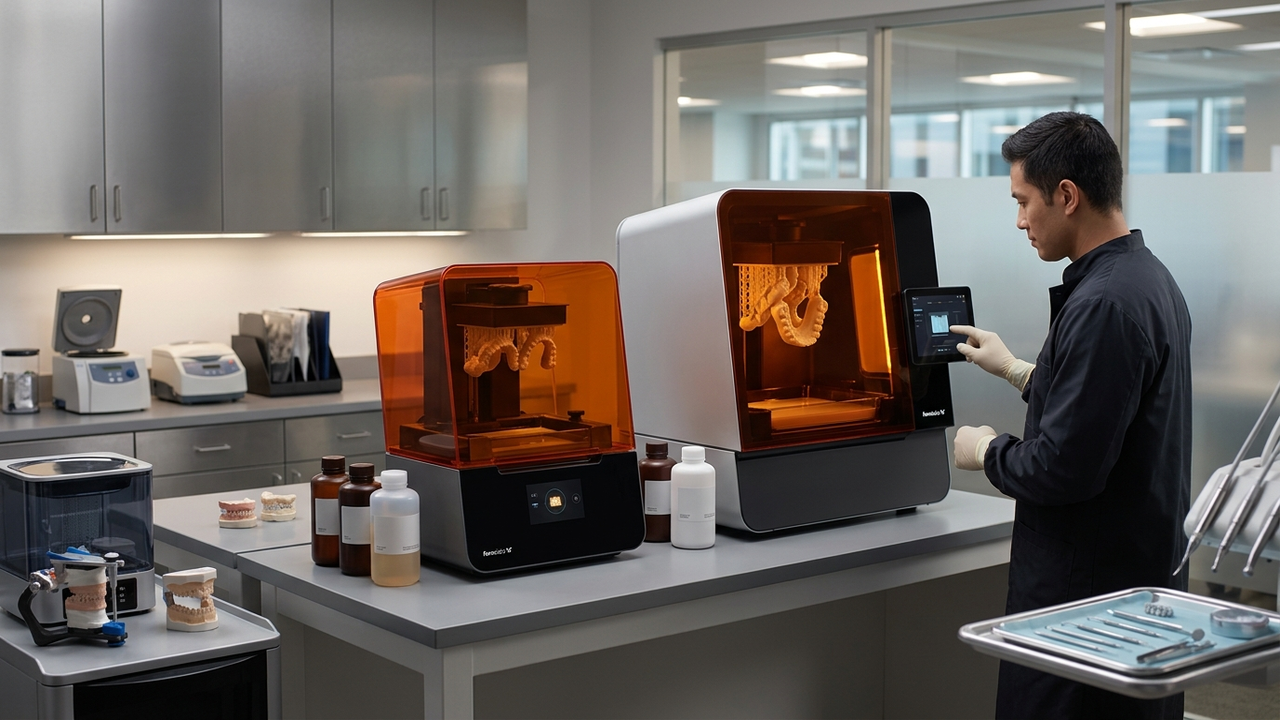
Formlabs has announced the introduction of ‘Open Material Mode (OMM)’ for its dental 3D printers, the Form 4B and Form 4BL. This feature allows users to utilize a wide range of third-party dental photopolymer resins in addition to Formlabs’ proprietary materials, significantly expanding material choice flexibility for dental professionals.
Technical / Clinical Details
The Open Material Mode (OMM) functionality enables Formlabs’ SLA printers to be compatible with most photopolymer resins that cure at 385nm and 405nm wavelengths. This capability allows dental laboratories and clinics to leverage their existing material inventory or choose from a broader spectrum of resins with properties specifically optimized for particular clinical or aesthetic requirements. OMM is delivered via firmware and software updates, providing users with the flexibility to adjust printing parameters such as exposure time, layer thickness, and curing profiles for third-party resins. This maximizes the potential of the materials, allowing for the fabrication of highly accurate dental restorations, models, or surgical guides.
Background & Context
The adoption of 3D printing in the dental industry is rapidly accelerating, with digital dentistry becoming an indispensable tool for manufacturing prosthetics, orthodontic appliances, and surgical guides. Traditionally, many 3D printer manufacturers have restricted their systems to proprietary materials to ensure quality control and ease of support. However, this has often limited users’ material choices, preventing them from utilizing materials optimized for specific applications or more cost-effective alternatives. Formlabs’ introduction of OMM responds to these industry needs, marking a significant step towards fostering a more open ecosystem.
Strategic Significance & Outlook
The implementation of Open Material Mode is expected to have a substantial impact on the dental 3D printing market. Material suppliers will now be able to offer their innovative dental resins to Formlabs’ extensive user base, stimulating market competition. This is anticipated to accelerate advancements in material performance, drive cost reductions, and facilitate the development of new applications. With more flexible material options, dental professionals will be able to provide optimized treatment solutions for individual patients, further expanding the possibilities of digital dentistry. This strategy by Formlabs is likely to promote the wider adoption of its SLA technology and foster innovation across the entire industry.
Get our weekly technology intelligence — free
Receive an infographic that lets you judge at a glance whether each field’s analysis report is worth reading.
Subscribe Free — Weekly Tech Intelligence
By subscribing, you’ll receive Troy-Technical’s weekly technology intelligence newsletter.
- Your email and selected fields are used only to deliver the newsletter.
- We never share your information with third parties.
- You can unsubscribe anytime via the link in each email.
See our Privacy Policy for details.
Takes about a minute · Unsubscribe anytime