Key Findings
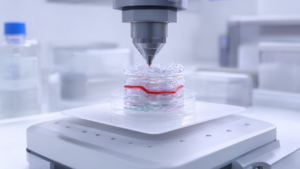
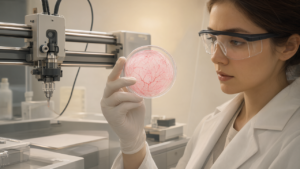
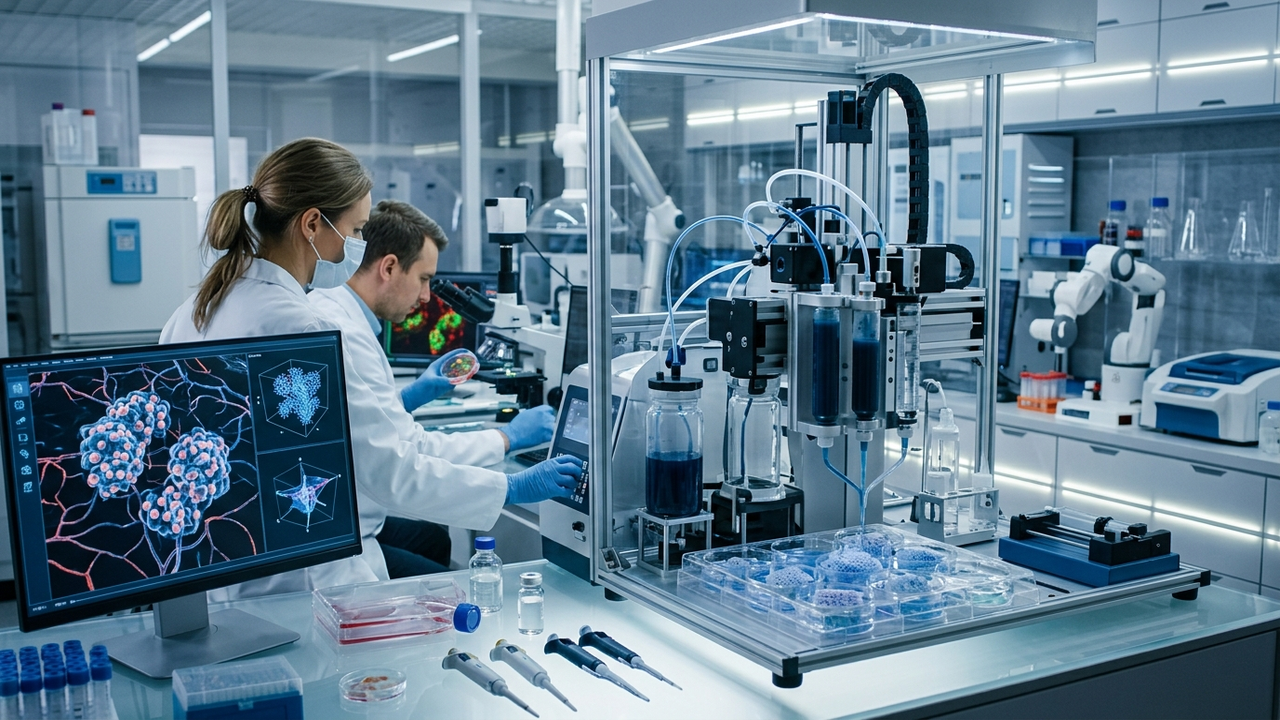
Innovations in next-generation bioinks within 3D bioprinting technology are opening new frontiers in tissue engineering and regenerative medicine. These advanced bioinks enable the precise layer-by-layer deposition of cells, biomaterials, and bioactive molecules, providing optimal microenvironments that effectively support cell adhesion, proliferation, differentiation, and ultimately, maturation into functional tissues and organs. This progress is creating unprecedented opportunities across diverse fields, including organoid production, drug discovery, toxicity testing, and personalized medicine.
Technical / Clinical Details
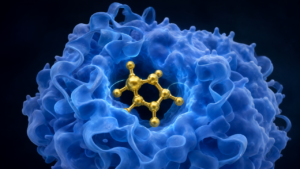
Next-generation bioinks are designed to offer improved mechanical properties, biocompatibility, and the necessary biochemical cues for cell growth and function. This includes the use of combinations of natural polymers (e.g., collagen, fibrin, alginate) and synthetic polymers (e.g., PLA, PCL), or hybrid materials. Crucially, these materials must maintain cell viability during the printing process and possess the ability to guide cell fate post-printing. Recent advancements feature the development of ‘smart’ bioinks with properties such as shear-thinning, self-healing, and photo-crosslinkability, which enable the construction of more intricate 3D architectures and the engineering of functional tissues. These bioinks are particularly valuable in the production of organoid models, creating more in vivo-like environments that significantly enhance the accuracy of drug screening.
Background & Context
For many years, conventional 2D cell cultures and animal models have faced limitations in accurately replicating human physiological responses and disease mechanisms. 3D bioprinting has emerged as a promising technology to bridge this gap, gaining significant attention in regenerative medicine and drug discovery research. Bioinks form the core of 3D bioprinting, with their performance directly influencing the biological function and stability of the printed constructs. Therefore, the development of next-generation bioinks that combine biomimicry, mechanical strength, and cellular compatibility is indispensable for advancing this field. Current market demands emphasize multi-functionality, customizability, and compatibility with GMP (Good Manufacturing Practice) production.
Strategic Significance & Outlook
The continued development of next-generation bioinks will further broaden the scope of 3D bioprinting applications, making the engineering of more complex tissues and even entire organs a tangible reality. Significant contributions are anticipated in personalized medicine, enabling the creation of patient-specific disease models. Furthermore, their utilization as high-throughput drug screening platforms will reduce the cost and time of new drug development and improve the accuracy of toxicology testing. Future challenges include ensuring the long-term stability of bioinks, achieving scalable manufacturing, and meeting regulatory requirements for clinical application. Overcoming these hurdles will position next-generation bioinks as a pivotal component in shaping the future of regenerative medicine and drug discovery.
Get our weekly technology intelligence — free
Receive an infographic that lets you judge at a glance whether each field’s analysis report is worth reading.
Subscribe Free — Weekly Tech Intelligence
By subscribing, you’ll receive Troy-Technical’s weekly technology intelligence newsletter.
- Your email and selected fields are used only to deliver the newsletter.
- We never share your information with third parties.
- You can unsubscribe anytime via the link in each email.
See our Privacy Policy for details.
Takes about a minute · Unsubscribe anytime