Key Findings
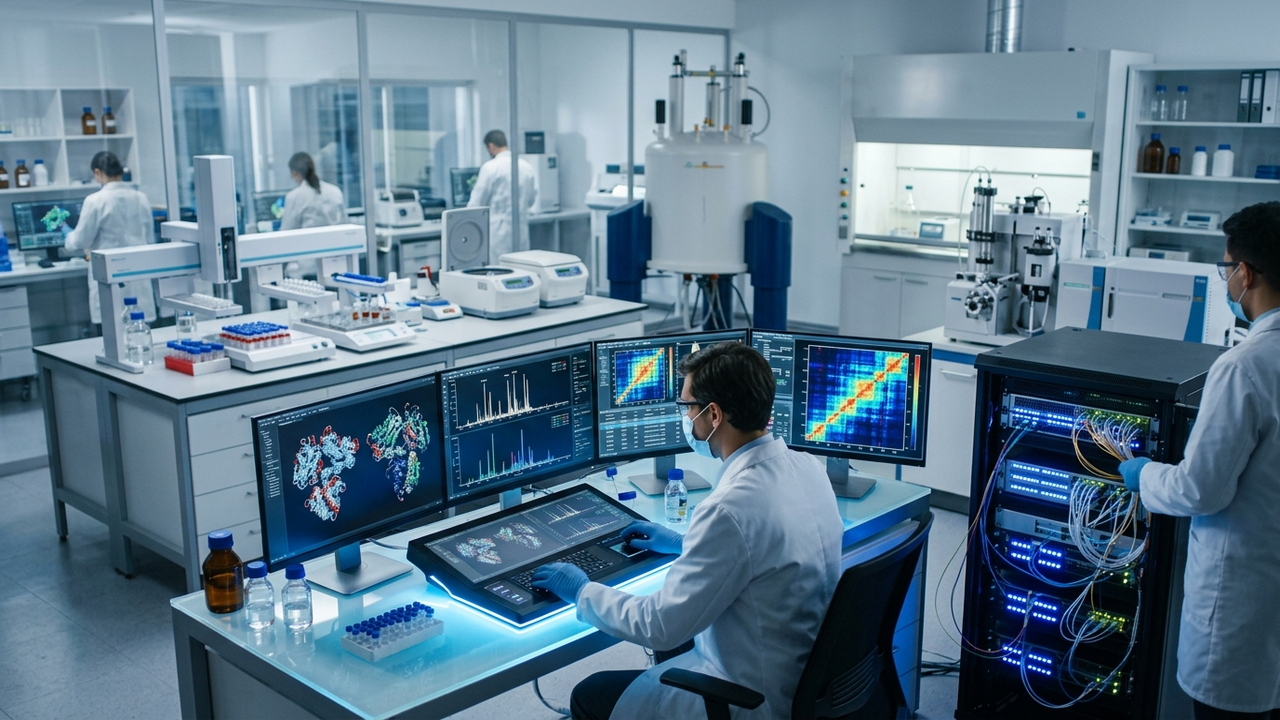
The application of Artificial Intelligence (AI) in biosimilar development is dramatically accelerating the comparability assessment process. Machine learning algorithms are being trained to precisely detect sub-nanometer, subtle higher-order structural changes from complex datasets generated by advanced analytical techniques such as Hydrogen Deuterium Exchange Mass Spectrometry (HDX-MS) and 2D-NMR. This AI-driven approach holds the potential to overcome bottlenecks in biopharmaceutical development, significantly reducing time and cost to market.
Technical & Clinical Details
Biosimilars must demonstrate high similarity to their reference biopharmaceutical product in terms of quality, safety, and efficacy. Establishing this ‘comparability’ involves rigorous evaluation of structural and functional equivalence across multiple lots and against the reference product. Detecting subtle differences in higher-order structures has traditionally been particularly challenging.
- Evolution of AI in Data Analysis: Historically, spectral data from methods like HDX-MS and 2D-NMR required time-consuming and labor-intensive manual analysis by experts. AI can automatically process these vast datasets, identifying subtle patterns and differences that might be overlooked by human observation. This improves the objectivity and speed of analysis.
- Precise Detection of Higher-Order Structural Changes: Machine learning models are optimized to predict and detect changes at the nanometer scale, such as protein folding, modifications, and aggregation. For instance, by analyzing subtle differences in hydrogen-deuterium exchange rates in specific peptide regions between a reference product and a biosimilar candidate, AI can identify clinically relevant structural discrepancies.
- AI-Driven Digital Twins: AI is indispensable for constructing digital twins in biosimilar development. This involves creating a virtual model of the entire manufacturing process to predict the impact of raw material batch variations, minor changes in process parameters, or scale-up on product quality. Iterative simulations in this virtual environment reduce the need for physical experiments and shorten development timelines.
- Bioprocess Optimization: AI can optimize bioreactor culture conditions (e.g., pH, temperature, dissolved oxygen, media feed rates) in real-time to suggest optimal strategies for achieving maximum yield and quality. It is also applied to contamination detection and predictive quality control, enhancing the robustness of manufacturing processes.
Background & Industry Context
The biosimilar market is rapidly expanding due to its potential for healthcare cost reduction and improved patient access. However, its development involves complex analytical evaluations and extensive data management, leading to high costs and long development timelines. The adoption of AI is a crucial strategic measure to address these challenges and accelerate the market entry of biosimilars.
Strategic Significance & Outlook
The application of AI will not only enhance the efficiency of biosimilar development but also become an indispensable tool for strengthening quality assurance and regulatory compliance processes. This will enable more biosimilars to enter the market, allowing patients to access high-quality biopharmaceuticals at more affordable prices. For researchers, it facilitates insights from complex data; for engineers, it advances process automation and optimization; and for investors, it promises reduced development risk and improved market competitiveness. Ultimately, AI holds the potential to establish a new standard for biopharmaceutical development.
Get our weekly technology intelligence — free
Receive an infographic that lets you judge at a glance whether each field’s analysis report is worth reading.
Subscribe Free — Weekly Tech Intelligence
By subscribing, you’ll receive Troy-Technical’s weekly technology intelligence newsletter.
- Your email and selected fields are used only to deliver the newsletter.
- We never share your information with third parties.
- You can unsubscribe anytime via the link in each email.
See our Privacy Policy for details.
Takes about a minute · Unsubscribe anytime






Comments