Key Findings
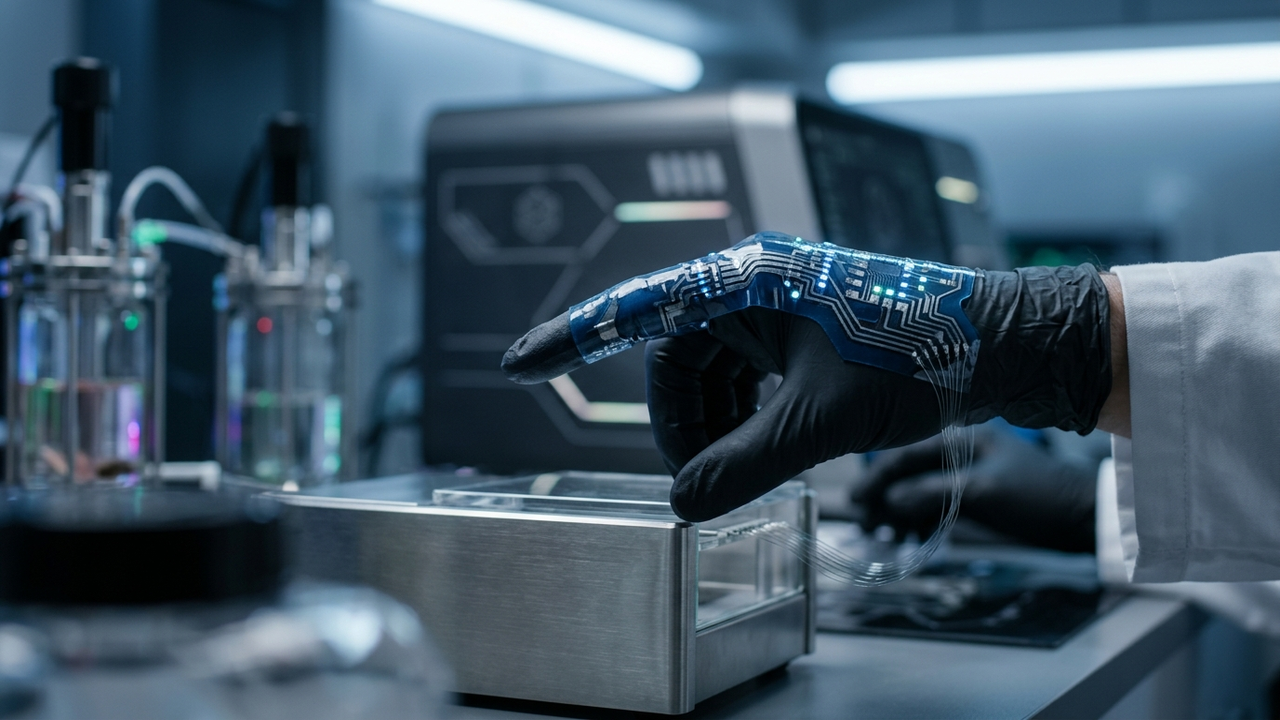
Self-healable flexible sensors are advancing significantly, moving beyond simple crack closure to achieve coordinated recovery of mechanical integrity, adhesion, and electrical conductivity. This review highlights polyurethane-based sensors as a focal point, demonstrating how molecular engineering, dynamic network formation, and conductive pathway reconstruction can integrate multifunctional properties such as self-adhesion, shape memory, antibacterial, and antifouling capabilities.
Technical / Clinical Details
This progress is achieved through precise molecular-level design of polyurethane, particularly via the formation of dynamic covalent and non-covalent networks. These dynamic networks enable the material to reconnect and restore its original structure and function after damage. Furthermore, by controlling the proper dispersion and rearrangement of conductive fillers (e.g., carbon nanotubes, metal nanoparticles), the reconstruction of conductive pathways after damage is optimized. This brings closer the realization of devices like epidermal electronics and soft robotics that can withstand complex movements and deformations while autonomously self-healing. For example, a damaged sensor could autonomously repair itself, maintaining continuous bio-signal monitoring or robotic functionality.
Background & Context
In the fields of flexible electronics and soft robotics, device durability and reliability have consistently posed challenges. Conventional materials often suffer from mechanical damage and degradation due to repeated use, leading to shorter device lifespans. The introduction of self-healing functionalities aims to overcome this issue, contributing to reduced operational costs and improved sustainability. Moreover, the integration of multiple functionalities opens up new application opportunities across various sectors, including healthcare, industrial, and consumer products.
Strategic Significance & Outlook
The advancements in self-healable polyurethane-based flexible sensors are critical for shaping the future of smart materials. Further deepening the systematic understanding between molecular design and device-level performance will lead to the development of even higher-performing and more reliable self-healing multifunctional sensors. This promises innovations across various domains, such as extended lifespan for wearable healthcare devices, development of damage-resistant soft robots, and the realization of environmentally friendly electronics. Investors and engineers should pay close attention to the business opportunities presented by these materials, including extended product life, reduced maintenance costs, and the creation of novel user experiences.
Source: https://pubs.acs.org/doi/10.1021/acsnano.6b05421
Get our weekly technology intelligence — free
Receive an infographic that lets you judge at a glance whether each field’s analysis report is worth reading.
Subscribe Free — Weekly Tech Intelligence
By subscribing, you’ll receive Troy-Technical’s weekly technology intelligence newsletter.
- Your email and selected fields are used only to deliver the newsletter.
- We never share your information with third parties.
- You can unsubscribe anytime via the link in each email.
See our Privacy Policy for details.
Takes about a minute · Unsubscribe anytime





Comments