Key Findings
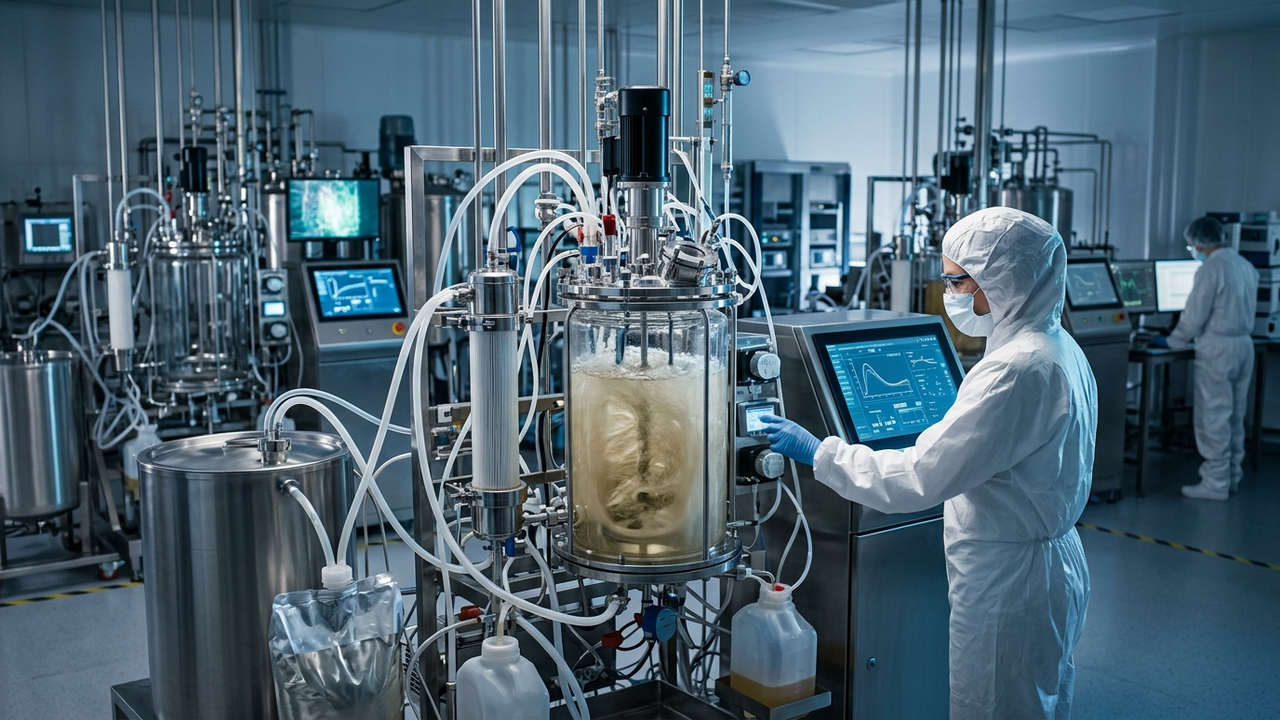
While fed-batch culture remains the industry standard for monoclonal antibody (mAb) production, dynamic perfusion culture is presenting an extremely attractive opportunity to dramatically improve product quality, production yield, and facility utilization. This advanced technology achieves high productivity by optimizing cell proliferation and metabolism with a precisely controlled volumetric media feed rate. Continuous innovation in perfusion bioprocessing, despite inherent challenges such as process complexity and maintaining sterility over long durations, is vigorously advancing the optimization of perfusion media and enhancing process scalability. This further strengthens the fundamental advantages of continuous biomanufacturing, including its compact design, operational flexibility, and high productivity, positioning it as a critical element shaping the future of biopharmaceutical manufacturing.
Technical / Clinical Details
Dynamic perfusion culture is a process that maintains high cell densities within a bioreactor while continuously removing waste products and supplying fresh, nutrient-rich media. This ensures that cells consistently proliferate and metabolize in an optimal environment, leading to improved cell viability and extended production durations. Unlike traditional fed-batch cultures, where productivity often declines in the latter stages of cell growth due to nutrient depletion and waste accumulation, perfusion culture enables stable, high-density production over prolonged periods. Specifically, the ‘dynamic’ approach involves real-time adjustment of media feed rates based on cellular metabolic activities (e.g., respiration rate, glucose consumption) to optimize the physiological state of the cells. This can lead to increased product titers (amount of target protein produced) and potentially improved product quality attributes, such as glycosylation patterns. Technical challenges include filter fouling, maintaining sterility, and the complexity of process monitoring and control. However, these challenges are being steadily overcome with the adoption of advanced single-use technologies and automated systems.
Background & Context
With the rapid growth of the biopharmaceutical market, improving manufacturing efficiency and reducing costs are paramount concerns across the industry. Particularly, as demand for expensive monoclonal antibody drugs increases, establishing rapid and economical supply chains becomes critical for competitive advantage. While fed-batch culture offers a long track record of reliability, it requires significant capital investment and has productivity limitations. The shift to continuous biomanufacturing holds the potential to achieve high productivity with smaller equipment footprints, reducing both initial investment and operating costs. It is also expected to enhance product quality consistency, potentially simplifying regulatory approval processes and shortening time-to-market. This technology aligns with the global trend towards sustainability and agility in biopharmaceutical manufacturing, with CDMOs and major pharmaceutical companies actively adopting it.
Strategic Significance & Outlook
Continuous biomanufacturing, with dynamic perfusion culture at its core, is poised to become the de facto standard in the production of monoclonal antibodies and other complex biologics within the next few years. Further technological innovations are expected in areas such as:
- Integration of Advanced Process Analytical Technology (PAT) and AI: Maximizing process robustness through precise real-time monitoring and predictive control of cell states.
- Optimization of Media Composition and Feed Strategies: Further enhancing productivity through the development of customized media tailored to the specific needs of each cell line.
- Full Continuous Integration: Maturation of technologies to seamlessly integrate all steps from upstream (cell culture) to downstream (purification and formulation), improving end-to-end efficiency.
- Collaboration with Regulatory Authorities: Further clarification of regulatory guidance on quality assessment and approval of continuous manufacturing processes, reducing adoption barriers.
These advancements will reduce manufacturing costs, improve quality, and ultimately enable life-saving treatments to reach more patients. The transition to continuous biomanufacturing represents not just a process change, but a strategic transformation of the entire biopharmaceutical industry.
Source: #
Get our weekly technology intelligence — free
Receive an infographic that lets you judge at a glance whether each field’s analysis report is worth reading.
Subscribe Free — Weekly Tech Intelligence
By subscribing, you’ll receive Troy-Technical’s weekly technology intelligence newsletter.
- Your email and selected fields are used only to deliver the newsletter.
- We never share your information with third parties.
- You can unsubscribe anytime via the link in each email.
See our Privacy Policy for details.
Takes about a minute · Unsubscribe anytime







Comments