Key Findings
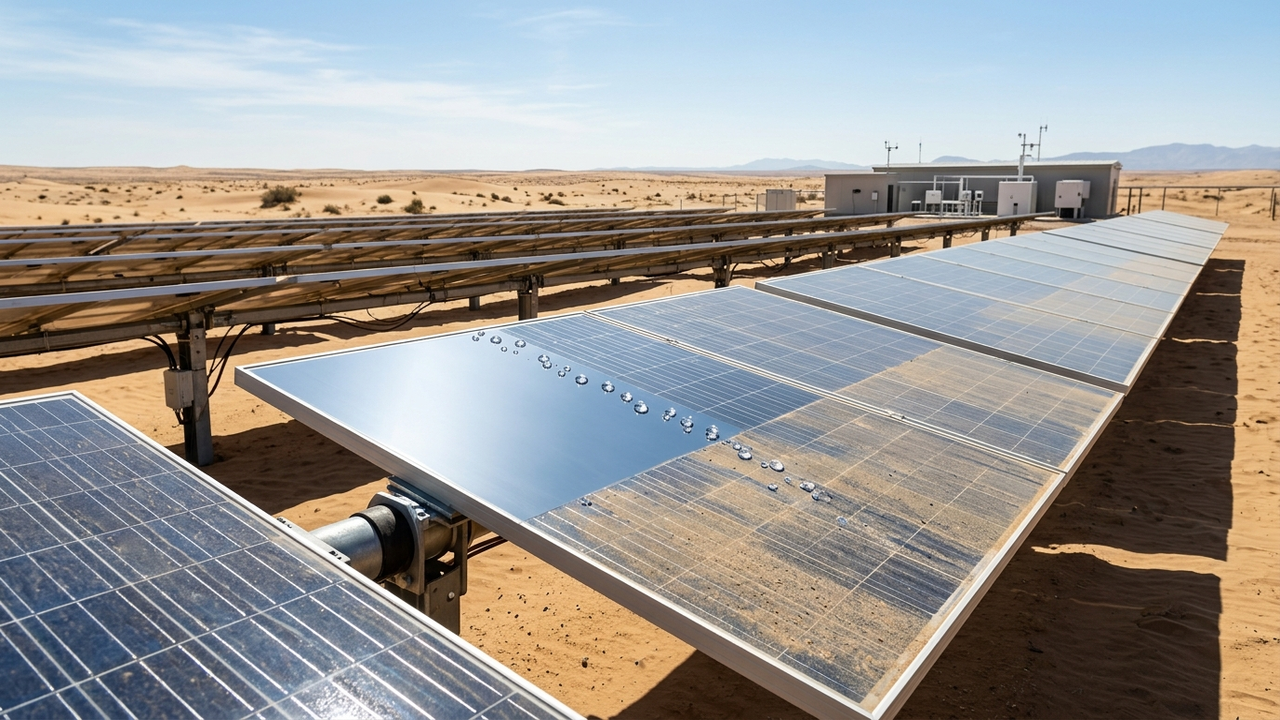
The Fraunhofer Institute for Solar Energy Systems (Fraunhofer ISE) in Germany has developed and announced the practical utility of a groundbreaking, durable superhydrophobic self-cleaning coating designed to maintain the power generation efficiency of solar panels over extended periods. This innovative coating possesses the ability to naturally remove accumulated dirt from the panel surface using only rainwater, thereby preventing performance degradation of photovoltaic systems, particularly in harsh environments like desert regions.
Technical / Clinical Details
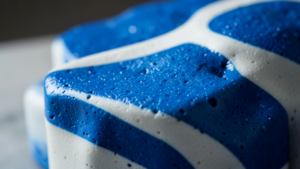
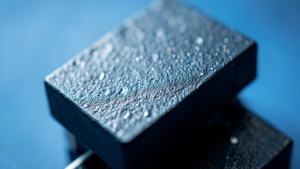
When dust, sand, bird droppings, or other contaminants adhere to the surface of solar panels, the transmittance of sunlight significantly decreases, leading to a substantial loss in power generation efficiency. Traditionally, removing these contaminants required manual cleaning or robotic washing, posing challenges of increased operational costs and water consumption. The superhydrophobic self-cleaning coating developed here achieves extremely high water repellency through nanoscale surface structures. When water droplets contact the surface, they roll off as spheres with minimal contact, effectively carrying away surface dirt (the ‘Lotus effect’). In addition to this ‘self-cleaning’ function, a notable feature is the significant improvement in the coating’s durability, achieved through the introduction of polymer materials applying aerospace-grade materials technology. Conventional hydrophobic coatings suffered from poor resistance to abrasion and UV degradation, leading to a short-lived effect. However, Fraunhofer ISE’s technology has demonstrated sustained water repellency and cleaning efficacy over several years of outdoor exposure and sand abrasion tests. This effectively prevents the decrease in power generation for solar farms, especially in hard-to-clean, dirty desert regions and urban high-pollution environments.
Background & Context
Solar power generation is being widely adopted globally as a major source of renewable energy, but its efficiency is highly dependent on panel cleanliness. Particularly in arid regions with limited water resources and areas with severe air pollution, such as PM2.5, panel soiling has been a primary cause of reduced power output. Frequent manual cleaning is inefficient, and automated cleaning systems also face issues of high cost and water consumption. Therefore, the development of cost-effective, long-lasting self-cleaning coating technology has been an indispensable factor for the further widespread adoption and efficient operation of solar power.
Strategic Significance & Outlook
This durable superhydrophobic self-cleaning coating has the potential to bring significant economic and environmental benefits to the solar power industry. Long-term maintenance of power generation efficiency directly translates to improved profitability for power producers, while reduced cleaning costs and water consumption accelerate the realization of sustainable generation models. Future challenges will include optimizing coating technology for large-scale panels, further enhancing durability, and demonstrating performance under various climatic conditions. This technology is expected to solve operational challenges faced by solar power and become a fundamental technology essential for the widespread adoption of renewable energy.
Source: #
Get our weekly technology intelligence — free
Receive an infographic that lets you judge at a glance whether each field’s analysis report is worth reading.
Subscribe Free — Weekly Tech Intelligence
By subscribing, you’ll receive Troy-Technical’s weekly technology intelligence newsletter.
- Your email and selected fields are used only to deliver the newsletter.
- We never share your information with third parties.
- You can unsubscribe anytime via the link in each email.
See our Privacy Policy for details.
Takes about a minute · Unsubscribe anytime


Comments