Key Findings
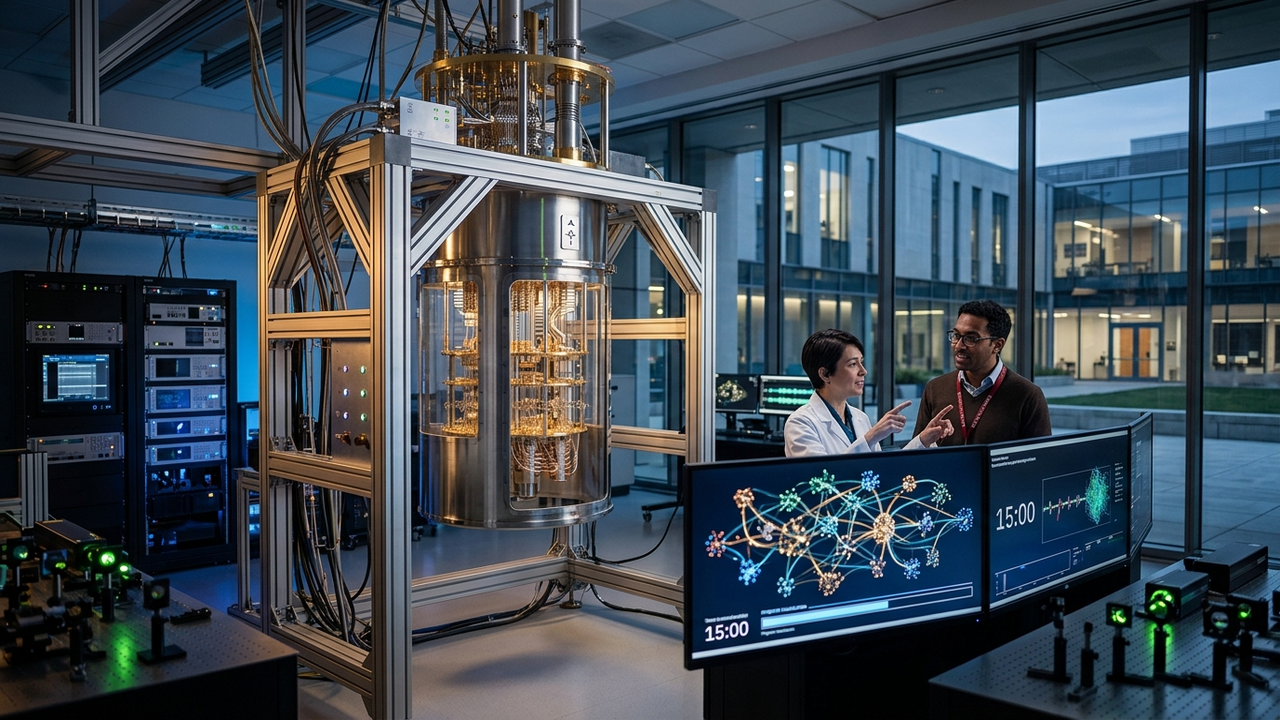
IBM, in a collaborative project with researchers from the University of Chicago, has demonstrated that a quantum computer equipped with 70 logical qubits can process a specific computational problem, effectively intractable for current classical computers, in just 15 minutes. This pioneering achievement is highly regarded as meeting a key criterion for ‘quantum advantage’ through reliable quantum computation, significantly broadening the real-world applicability of quantum computing.
Technical Details
The demonstration utilized IBM’s high-performance superconducting quantum processors, where multiple physical qubits were combined to form 70 error-corrected logical qubits. The problem solved was a complex random circuit sampling task, far exceeding the computational capabilities of classical computers, with classical simulations estimated to take millions of years. The research team achieved this feat by combining high connectivity between qubits with low-error-rate quantum gate operations. Crucially, the integration of error correction techniques significantly enhanced the reliability of the computational results, indicating that quantum computers are evolving beyond mere noisy devices.
Background & Context
The concept of quantum advantage (or quantum supremacy) refers to a quantum computer’s ability to outperform classical computers on specific tasks. While Google previously demonstrated quantum supremacy, there were debates about its practical utility and the reliability of the results. However, this latest achievement by IBM and the University of Chicago emphasizes ‘reliable quantum computation,’ with the use of error-corrected logical qubits dramatically increasing the trustworthiness of the outcomes. This advancement is poised to encourage a shift towards more practical quantum application development across the entire quantum computing industry and marks a significant milestone in IBM’s quantum technology roadmap.
Strategic Significance & Outlook
The ability to solve a classically intractable problem in a short time with 70 logical qubits strongly suggests quantum computers’ potential to offer innovative solutions across various fields, including drug discovery, materials science, financial modeling, and artificial intelligence. This technological progress further solidifies the path towards achieving larger-scale fault-tolerant quantum computers and will accelerate the commercialization of quantum technology. Collaborations between IBM and academic institutions foster the bridge from fundamental to applied quantum computing research, expected to significantly impact future scientific and technological development.
Get our weekly technology intelligence — free
Receive an infographic that lets you judge at a glance whether each field’s analysis report is worth reading.
Subscribe Free — Weekly Tech Intelligence
By subscribing, you’ll receive Troy-Technical’s weekly technology intelligence newsletter.
- Your email and selected fields are used only to deliver the newsletter.
- We never share your information with third parties.
- You can unsubscribe anytime via the link in each email.
See our Privacy Policy for details.
Takes about a minute · Unsubscribe anytime









Comments