Key Findings
QuEra Computing has unveiled a groundbreaking roadmap for achieving fault-tolerant quantum computing, setting ambitious goals to reach ‘megaquop’ logical performance with hundreds of logical qubits by 2028, followed shortly by ‘gigaquop’ logical performance with 1,000 logical qubits. This definitive timeline underscores the company’s confidence in neutral-atom quantum computing as a rapid pathway to practical, error-corrected quantum systems, providing a clear trajectory for the future of the technology.
Technical / Clinical Details
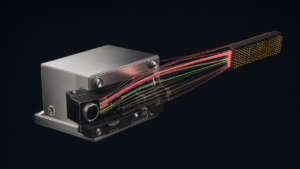
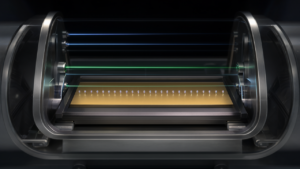
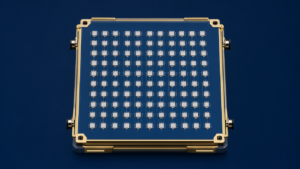
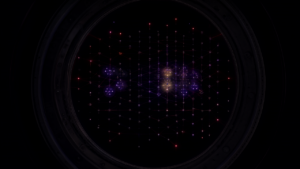
QuEra Computing’s approach relies on neutral-atom quantum computing, a method that uses optical tweezers to trap individual neutral atoms and manipulate them with lasers to function as qubits. This architecture offers significant advantages, including long coherence times and inherent scalability, allowing for the arrangement and interaction of a large number of qubits. The roadmap emphasizes that the neutral-atom platform is particularly well-suited for efficiently managing the physical qubit overhead necessary for constructing error-corrected logical qubits and achieving fault tolerance. With the capability to operate hundreds to thousands of logical qubits, QuEra anticipates solving complex problems currently intractable for classical computers in areas such as materials science, drug discovery, financial modeling, and machine learning. The company is actively inviting organizations to co-design quantum applications, fostering an ecosystem of early adopters and industry-specific solutions.
Background & Context
A central challenge in quantum computing development is simultaneously increasing qubit count and drastically reducing error rates to achieve fault tolerance. Various quantum architectures—superconducting, trapped-ion, photonic, and neutral-atom—are locked in a fierce development race. Neutral-atom systems, due to their high scalability and relatively long coherence times, have emerged as a strong contender for fault-tolerant quantum computing. QuEra’s roadmap provides a tangible timeline for this technology to achieve practical logical qubit counts within a few years, serving as a critical benchmark that will undoubtedly accelerate overall industry technological development.
Strategic Significance & Outlook
The detailed roadmap presented by QuEra Computing suggests that fault-tolerant quantum computing is not a distant future technology but one on the horizon. The goal of achieving megaquop performance by 2028 provides a clear, near-term milestone for researchers, engineers, and investors. The realization of this technology promises to dramatically enhance the precision of chemical simulations, accelerate drug discovery processes, and enable the development of more efficient logistics and financial trading algorithms. By offering opportunities for organizations to co-design quantum applications, QuEra aims to broaden the quantum computing ecosystem and drive early adoption across various industries, positioning itself as a key player in the commercial deployment of quantum technologies and attracting significant strategic investment.
Get our weekly technology intelligence — free
Receive an infographic that lets you judge at a glance whether each field’s analysis report is worth reading.
Subscribe Free — Weekly Tech Intelligence
By subscribing, you’ll receive Troy-Technical’s weekly technology intelligence newsletter.
- Your email and selected fields are used only to deliver the newsletter.
- We never share your information with third parties.
- You can unsubscribe anytime via the link in each email.
See our Privacy Policy for details.
Takes about a minute · Unsubscribe anytime