Key Findings
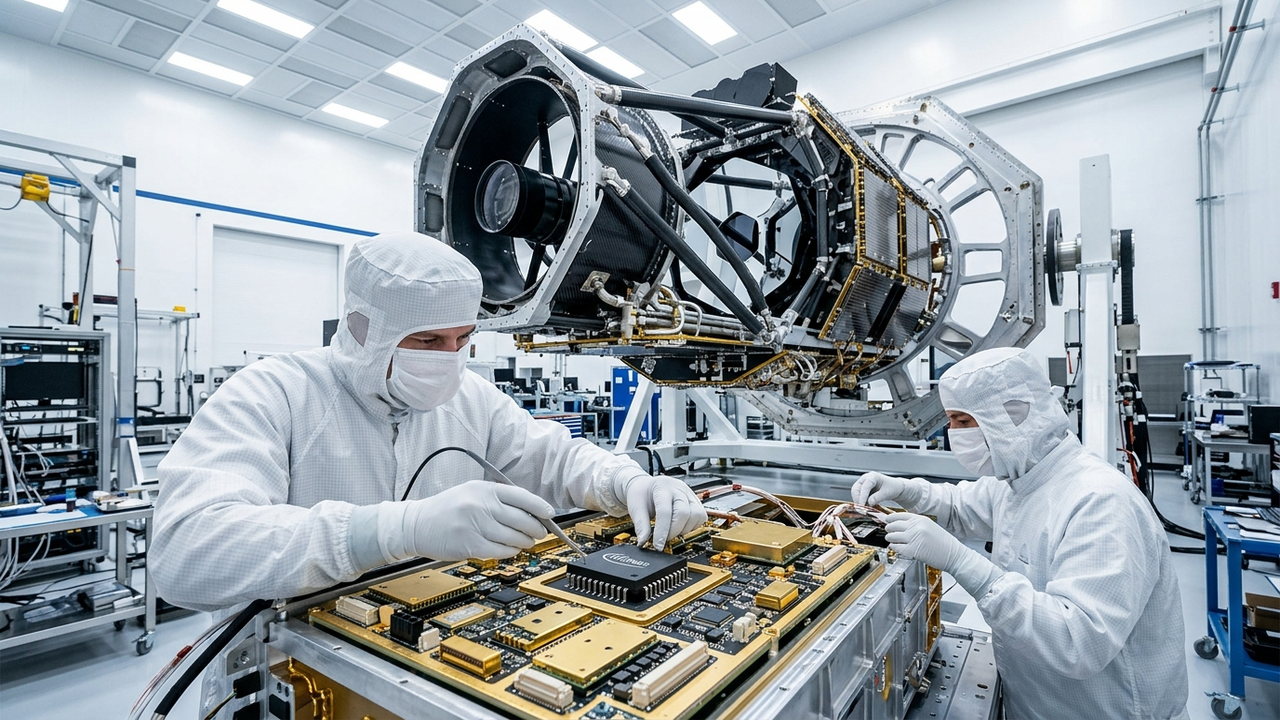
Infineon Technologies AG, in collaboration with NASA, has integrated advanced radiation-hardened power semiconductor components into the next-generation Nancy Grace Roman Space Telescope. This innovative solution guarantees a stable power supply for the telescope’s high-performance astrophysical data processing systems, even within the harsh radiation environment of deep space.
Technical Details
- Radiation-Hardened Design: While traditional space missions often rely on heavy physical shielding to protect electronics from radiation, the Infineon and NASA solution employs semiconductor architectures specifically designed to withstand radiation degradation at the component level. This approach significantly reduces the need for heavy shielding, contributing to increased payload capacity and greater mission flexibility.
- Mission Objective: The Nancy Grace Roman Space Telescope is expected to deliver groundbreaking discoveries in the exploration of dark energy, dark matter, and exoplanets, thanks to its wide-field observation capabilities. Achieving these scientific objectives necessitates long-term stable, high-performance computing and power delivery.
- Semiconductor Technology: Although specific details of the semiconductor technology were not provided, radiation-hardened semiconductors typically involve specialized materials (potentially including wide-bandgap semiconductors like SiC or GaN), advanced design processes (such as Silicon-On-Insulator, SOI), and specific manufacturing techniques (e.g., doping control, layout optimization).
Background & Industry Context
In deep-space exploration missions, electronic components face an immense threat from high-energy particle radiation—such as solar flares and galactic cosmic rays—due to their location outside Earth’s protective magnetosphere. Radiation can cause performance degradation, malfunctions, and even permanent damage to semiconductor devices. Consequently, space-grade electronic components demand exceptionally high radiation hardness, and technological innovation in this field is critical for enabling space telescopes and probes to operate with longer lifespans and greater reliability.
Strategic Significance & Outlook
The integration of Infineon’s radiation-hardened power semiconductors into the Nancy Grace Roman Space Telescope establishes a new standard for enhancing the reliability and performance of electronics in deep-space missions. This technology will play a vital role in enabling the design of more powerful and lighter spacecraft for future missions to the Moon, Mars, and beyond, while also extending the operational life of scientific instruments. Improved data collection capabilities from space telescopes are expected to yield new insights into the origins of the universe and the search for life, deepening humanity’s understanding of the cosmos.
Source: https://electronics-usa.com/news/114188-radiation-hardened-semiconductors-for-space-telescopes
Get our weekly technology intelligence — free
Receive an infographic that lets you judge at a glance whether each field’s analysis report is worth reading.
Subscribe Free — Weekly Tech Intelligence
By subscribing, you’ll receive Troy-Technical’s weekly technology intelligence newsletter.
- Your email and selected fields are used only to deliver the newsletter.
- We never share your information with third parties.
- You can unsubscribe anytime via the link in each email.
See our Privacy Policy for details.
Takes about a minute · Unsubscribe anytime





Comments