Key Findings
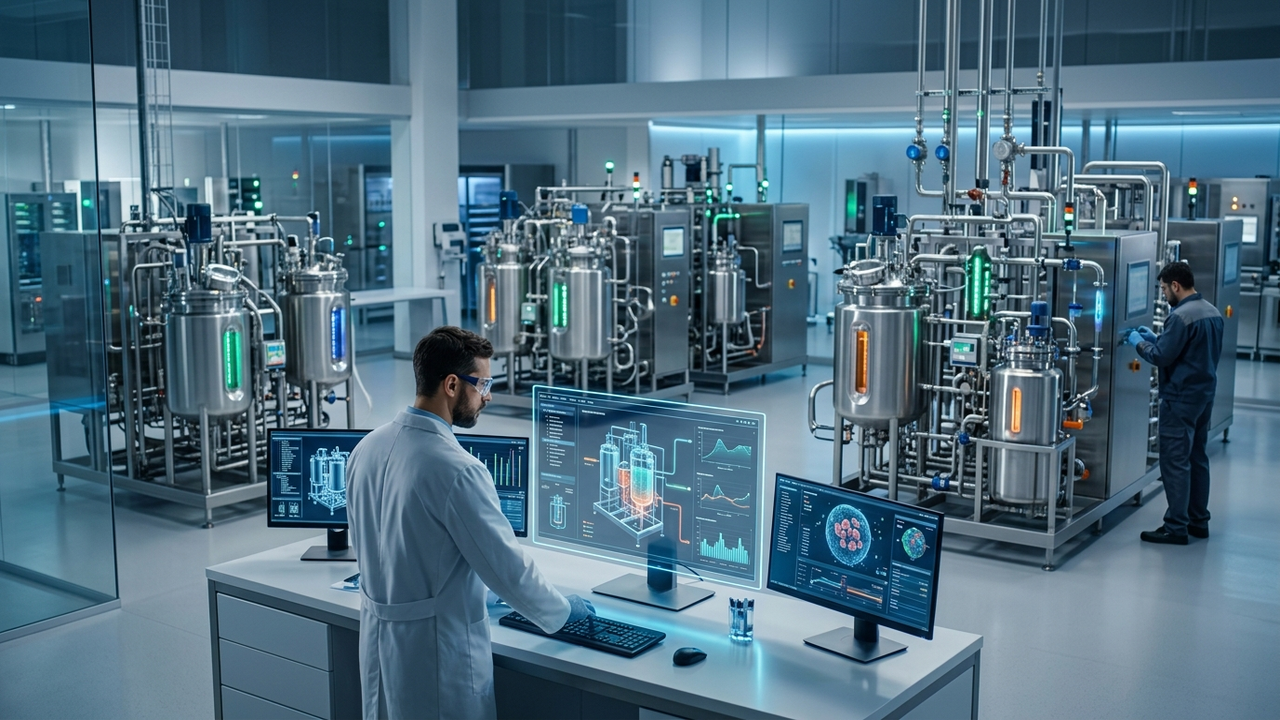
Modular bioprocessing technology is undergoing a transformative evolution, with digital control and artificial intelligence becoming standard, fundamentally reshaping biopharmaceutical manufacturing. This advancement redefines traditional manufacturing skids into sophisticated data nodes for process functions, significantly enhancing production transparency and efficiency. A pivotal outcome is the integration of digital twins, which leverage live data to detect equipment wear and predict potential failures, leading to a substantial reduction in unplanned downtime.
Technical / Clinical Details
In this next generation of modular bioprocessing, skids are no longer merely physical apparatus but intelligent units integrated with digital control and AI. They function as optimized data nodes for specific process functions, automating data collection, analysis, and decision-making. Digital twin technology precisely replicates the physical manufacturing process in a virtual environment, continuously comparing it with live sensor data to assess process health in real time. This capability enables early detection of subtle anomalies, such as unusual pump vibrations or filter pressure increases, facilitating predictive maintenance. This proactive approach prevents production halts due to equipment failure, maximizing manufacturing line uptime. Furthermore, single-use bioreactors are fully leveraging modular design benefits, allowing for rapid setup and minimal engineering overhead. The modular architecture facilitates highly precise temperature control for individual process modules, optimizing cell culture conditions and ensuring product quality consistency.
Background & Context
The biopharmaceutical manufacturing industry faces mounting pressure to reduce development timelines, cut costs, and manage increasing product complexity. Traditional fixed-facility manufacturing approaches have struggled to address these challenges effectively. Modular bioprocessing emerged as a solution to enhance manufacturing flexibility and enable rapid scale-up and scale-out. The addition of digital control and AI, particularly digital twins, elevates this beyond mere hardware modularization, enabling intelligent optimization of the entire process. This shortens the design and validation phases during development and reduces risks and operational costs in commercial production, allowing pharmaceutical companies to bring high-quality medicines to market more swiftly.
Strategic Significance & Outlook
The future of modular bioprocessing is deeply intertwined with the continued evolution of digitalization and AI. Digital twin technology is expected to form the backbone for optimizing the entire biopharmaceutical lifecycle, from process development to manufacturing and supply chain management. This could lead to accelerated development timelines for new therapies, enhanced manufacturing flexibility, and improved supply chain resilience, especially during disruptions. As industry-wide adoption gains pace, it is anticipated that access to biopharmaceuticals will improve, ultimately benefiting patients. In the long term, these modular systems are projected to evolve into fully autonomous ‘smart factories,’ further eliminating human error and enabling more sustainable manufacturing processes.
Source: #
Get our weekly technology intelligence — free
Receive an infographic that lets you judge at a glance whether each field’s analysis report is worth reading.
Subscribe Free — Weekly Tech Intelligence
By subscribing, you’ll receive Troy-Technical’s weekly technology intelligence newsletter.
- Your email and selected fields are used only to deliver the newsletter.
- We never share your information with third parties.
- You can unsubscribe anytime via the link in each email.
See our Privacy Policy for details.
Takes about a minute · Unsubscribe anytime







Comments