Key Findings
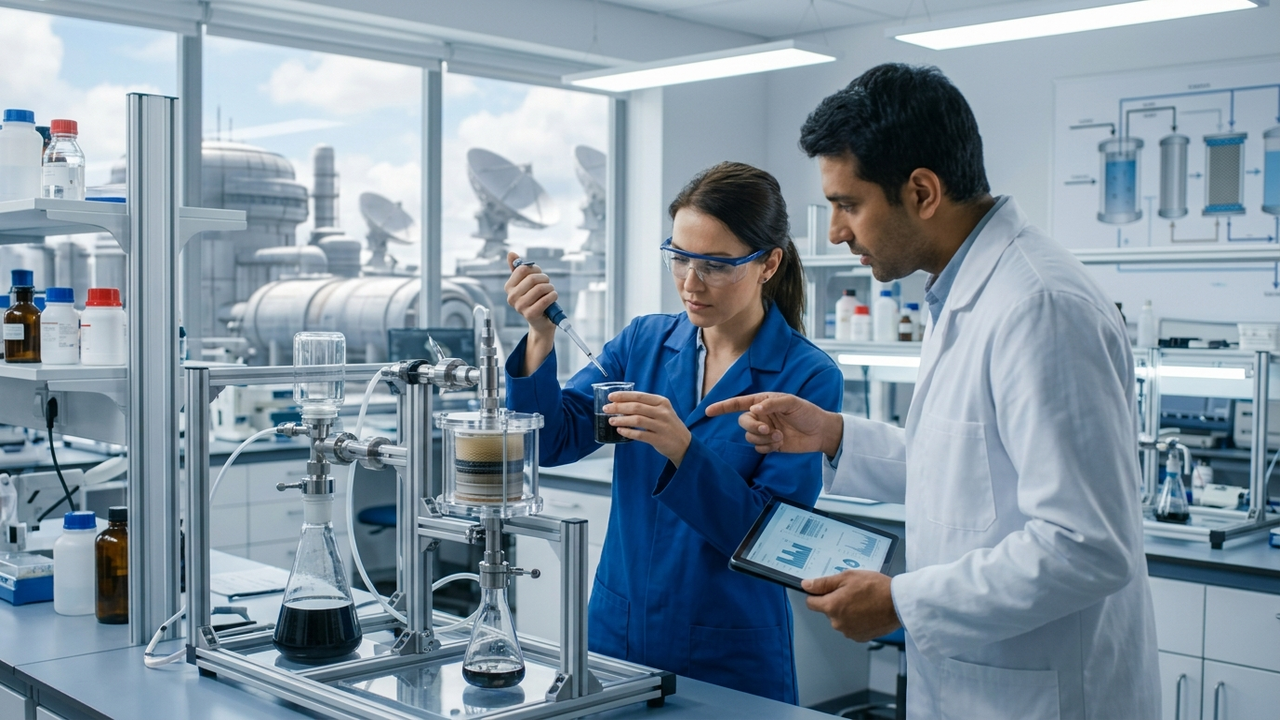
Researchers at NASA’s Johnson Space Center have unveiled a groundbreaking technology that dramatically improves water filtration performance. This innovative method effectively loads pure graphene nanoparticles onto existing filtration media substrates, maximizing the superior filtration properties of graphene.
Technical / Clinical Details
The developed technology is primarily designed for flow-through packed bed filtration systems and features the following characteristics:
- Graphene Nanoparticle Loading: Pure graphene nanoparticles are uniformly loaded onto the surface and within the internal structure of the filtration media.
- Leveraging Mesoporous Properties: Graphene’s predominantly mesoporous (mid-pore) structure enables the capture of fine particles and contaminants that traditional filters might miss, significantly boosting filtration efficiency.
- Applicability to Diverse Substrates: This loading method allows graphene to be integrated into various materials, including ion exchange resins, polymer foams, and other filtration substrates. This versatility makes it adaptable to a wide range of filtration needs.
- Extended Filter Media Lifespan: The enhanced filtration capacity provided by graphene reduces the load on the filtration media, consequently decreasing filter replacement frequency and extending operational lifespan.
This technology effectively integrates the benefits of graphene, such as its high specific surface area, excellent adsorption capabilities, and antimicrobial properties (which inhibit microbial growth), into practical filtration systems.
Background & Context
Securing safe drinking water is an essential challenge for both Earth-based and space missions. In space environments, resource recycling and system miniaturization and weight reduction are critically important. NASA’s technology was developed with the aim of increasing the efficiency and reliability of water recycling systems for astronauts. Simultaneously, this technology holds significant potential as a solution to terrestrial water scarcity and pollution problems. As global challenges such as the removal of emerging contaminants like microplastics, PFAS (per- and polyfluoroalkyl substances), and heavy metals intensify, the demand for high-performance filtration technologies utilizing nanomaterials like graphene is on the rise.
Strategic Significance & Outlook
This graphene-loaded filtration technology developed by NASA not only enhances the sustainability of space exploration but is also poised to significantly impact the global water purification industry. Future efforts will focus on commercial-scale up, performance validation under various water quality conditions, and optimization of cost-efficiency. Specifically, if advancements are made in reducing graphene manufacturing costs and developing integration technologies for large-scale systems, this innovative filtration method is expected to be commercialized across a broad range of sectors, including municipal drinking water supply, industrial wastewater treatment, and improving access to safe water in developing countries, thereby making a substantial contribution to solving global water problems.
Source: https://technology.nasa.gov/patent/MSC-TOPS-150
Get our weekly technology intelligence — free
Receive an infographic that lets you judge at a glance whether each field’s analysis report is worth reading.
Subscribe Free — Weekly Tech Intelligence
By subscribing, you’ll receive Troy-Technical’s weekly technology intelligence newsletter.
- Your email and selected fields are used only to deliver the newsletter.
- We never share your information with third parties.
- You can unsubscribe anytime via the link in each email.
See our Privacy Policy for details.
Takes about a minute · Unsubscribe anytime





Comments