
Key Findings
Significant progress is being made on both chemical optimization at the material level and physical protection in device architecture to overcome the long-term durability issues, which represent one of the primary barriers to the widespread commercialization of perovskite solar cells. Specifically, the partial substitution of methylammonium cations with more stable formamidinium or cesium has enhanced the intrinsic robustness of the perovskite crystal structure. The adoption of multi-layer encapsulation techniques, compliant with international standards such as IEC 62788, further strengthens protection against external environmental factors like humidity, heat, and UV radiation, making the achievement of a 10-15 year demonstrated operational lifespan—comparable to the 25-30 year warranties of silicon panels—a realistic and imminent goal.
Technical & Clinical Details
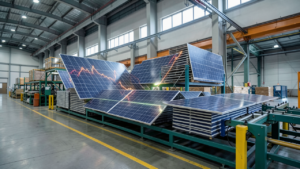
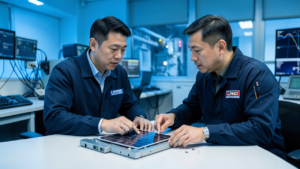
The technical strategies for improving perovskite solar cell stability are diverse. From a materials science perspective, replacing some or all of the A-site cations (typically methylammonium) within the perovskite composition with thermally and chemically more stable formamidinium or cesium is highly effective. This increases the phase stability of the crystal structure and suppresses decomposition caused by heat and humidity. Furthermore, adding organic amines or polymers as additives to the perovskite precursor solution can control crystal growth and reduce defect density. In terms of device architecture, multi-layer encapsulation is paramount. Multi-layer barrier structures using glass or polymers, and encapsulants like epoxy resins, are employed to prevent the ingress of moisture and oxygen. These measures are validated through accelerated aging tests and long-term field trials, directly contributing to enhancing the reliability of future commercial products.
Background & Context
Perovskite solar cells have garnered significant attention as a next-generation photovoltaic technology due to their high power conversion efficiency and potential for low-cost manufacturing. However, the early devices’ vulnerability to environmental factors has been a major obstacle to their commercialization. As conventional silicon solar cells have established decades of proven reliability, it is imperative for perovskites to demonstrate comparable long-term stability to gain market acceptance. Current research and development efforts are intensely focused on overcoming this stability challenge, with rapid advancements observed across material design, process optimization, and device encapsulation technologies. These advancements are expected to enable perovskite solar cells to achieve competitiveness in a broad market and contribute to the further proliferation of solar energy.
Strategic Significance & Outlook
Research into perovskite solar cell stability will be crucial for building sustainable energy systems. Achieving the current target of a 10–15 year demonstrated operational lifespan marks a significant milestone towards commercialization. Furthermore, efforts are intensifying to extend performance guarantees to over 25 years, matching the lifetime of silicon solar cells, while maintaining cost-effective manufacturing processes. Enhancing stability is particularly critical for applications that leverage perovskites’ unique advantages, such as flexible devices, transparent solar cells, and building-integrated photovoltaics (BIPV). These technological advancements will enable perovskite solar cells to establish their position in the energy mix and play an indispensable role in achieving global decarbonization goals, driving us towards a more sustainable future.
Source: https://kec.rs/en/what-are-perovskite-solar/
Get our weekly technology intelligence — free
Receive an infographic that lets you judge at a glance whether each field’s analysis report is worth reading.
Subscribe Free — Weekly Tech Intelligence
By subscribing, you’ll receive Troy-Technical’s weekly technology intelligence newsletter.
- Your email and selected fields are used only to deliver the newsletter.
- We never share your information with third parties.
- You can unsubscribe anytime via the link in each email.
See our Privacy Policy for details.
Takes about a minute · Unsubscribe anytime





Comments