Key Findings
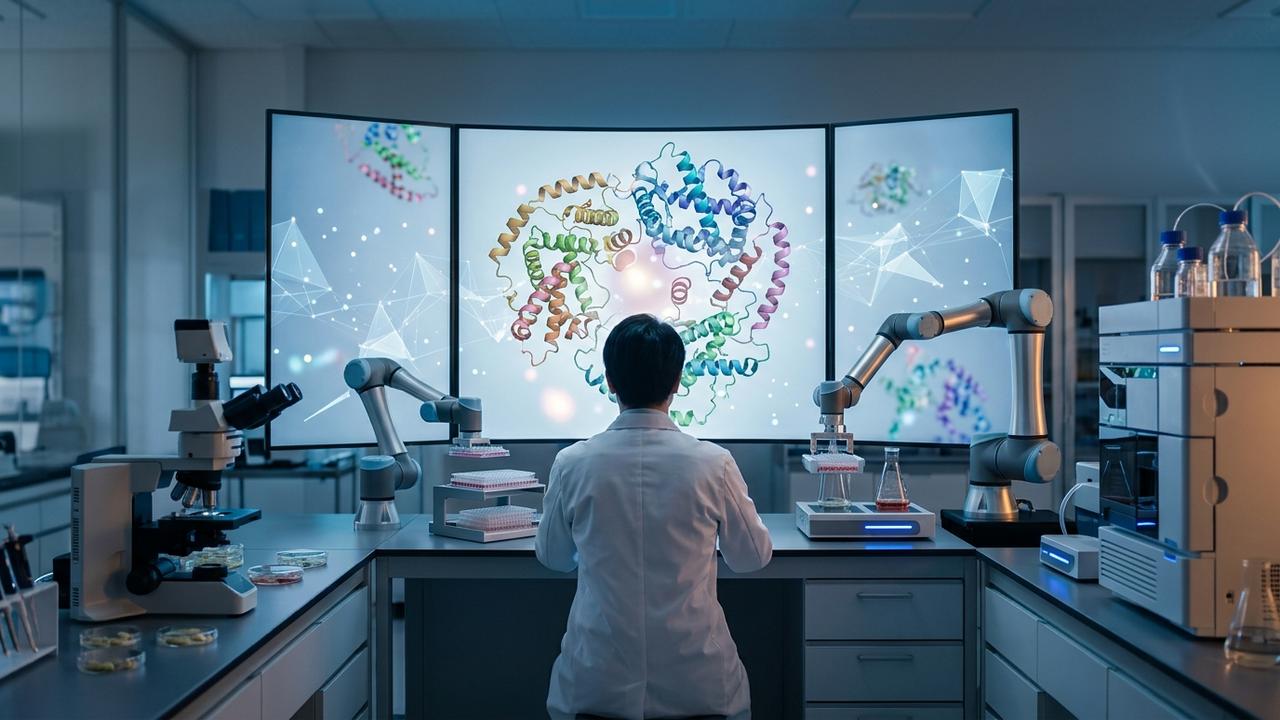
Enzyme engineering has undergone a dramatic transformation from classical strategies to AI-driven biocatalyst design, with the introduction of machine learning (ML) and generative AI models significantly accelerating the predictive exploration of enzyme sequence-structure-function relationships. This allows for the design of novel enzymes optimized for specific industrial applications with unprecedented speed and precision.
Technical and Clinical Details
Traditionally, enzyme engineering relied on methods like site-directed mutagenesis and random mutagenesis to improve specific enzyme properties (e.g., stability, catalytic efficiency, substrate specificity). However, these approaches were often trial-and-error-prone, time-consuming, and costly. The advent of AI and ML fundamentally changes this process. By training AI models on vast datasets of enzyme sequences, structures, and functional data, predictive modifications of amino acid sequences for desired functions, or the design of novel enzymes catalyzing previously unknown reactions, become feasible. Generative AI models, in particular, learn from existing enzyme datasets to create entirely new enzyme sequences and structures, enabling the ‘design’ of enzymes with functions previously considered impossible. For instance, enzymes stable under specific temperature or pH conditions, enzymes with high specificity for non-natural substrates, or enzymes that degrade particular harmful substances can now be computationally designed, dramatically streamlining the experimental validation phase.
Background and Industry Context
Enzymes are utilized as biocatalysts across a wide range of industrial sectors, including pharmaceutical manufacturing, food processing, biofuel production, and environmental remediation. Their efficiency and specificity directly impact process economics and sustainability. However, the functions of naturally occurring enzymes are not always optimally suited for industrial applications. The emergence of AI-driven enzyme engineering bridges this gap, opening new avenues for providing ‘tailor-made enzymes’ to industries. This promises diverse benefits, such as reducing the environmental footprint of chemical synthesis processes, accelerating new drug development, and improving biofuel production efficiency. As the global bioeconomy expands, the demand for high-performance biocatalysts continues to grow.
Strategic Significance and Outlook
AI-driven enzyme engineering is expected to develop rapidly in the coming years, becoming the new standard for biocatalyst design. Integration with quantum chemistry calculations and collaboration with robotic automation platforms for experimentation are anticipated to further accelerate the Design-Build-Test-Analyze (DBTA) cycle. This will enable access to previously inaccessible chemical and functional spaces, leading to the creation of sustainable and innovative solutions across medicine, energy, environment, and agriculture. This technology is poised to dramatically reduce the time from ‘in silico design’ to ‘practical application’ of enzymes, becoming a central driving force for biotechnology innovation.
Get our weekly technology intelligence — free
Receive an infographic that lets you judge at a glance whether each field’s analysis report is worth reading.
Subscribe Free — Weekly Tech Intelligence
By subscribing, you’ll receive Troy-Technical’s weekly technology intelligence newsletter.
- Your email and selected fields are used only to deliver the newsletter.
- We never share your information with third parties.
- You can unsubscribe anytime via the link in each email.
See our Privacy Policy for details.
Takes about a minute · Unsubscribe anytime







Comments