
Background
With the rapid growth of the EV market, effective thermal management of battery packs and power electronics has emerged as one of the most crucial challenges impacting vehicle range, safety, and long-term durability. Efficient heat dissipation is vital to mitigate the risk of battery thermal runaway and maintain high-efficiency operation of critical components like inverters. In this demanding landscape, high-performance Thermal Interface Materials (TIMs), such as thermal putty, are gaining prominence as cost-effective and flexible solutions designed to meet stringent thermal management requirements.
Key Findings
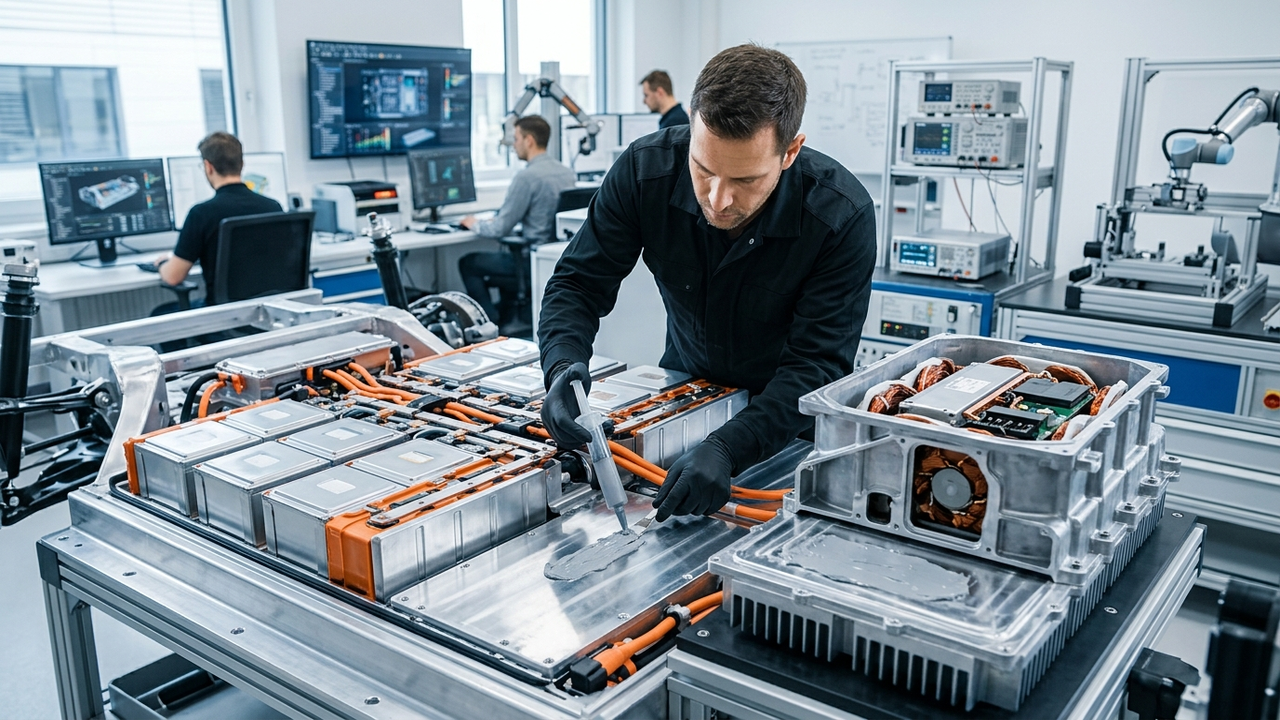
HakTak has highlighted the critical role of thermal putty as an effective Thermal Interface Material (TIM) for optimizing thermal management in Electric Vehicle (EV) battery and inverter systems. Thermal putty excels at conforming to uneven gaps between components, establishing an efficient heat conduction path from the heat source to the cooling surface, thereby significantly improving system performance and reliability.
This functionality stems from thermal putty’s ability to replace the less thermally conductive air gaps between heat sources (e.g., EV battery cells, inverter components) and cooling surfaces (e.g., heat sinks, cooling plates) with a highly conductive material. Air acts as a significant barrier to effective heat transfer, but thermal putty, with its excellent conformability, can fill irregular surface topographies, minimizing thermal resistance across the interface.
To ensure optimal performance and prevent EV battery overheating, HakTak emphasizes that several critical factors must be carefully considered when selecting a thermal putty product:
- Gap Size and Geometry: The precise dimensions and complexity of the gaps the putty needs to fill.
- Applied Pressure: The pressure exerted during component assembly, which affects putty spread and bond line thickness.
- Thermal Path Requirements: The desired thermal conductivity and overall thermal resistance of the interface.
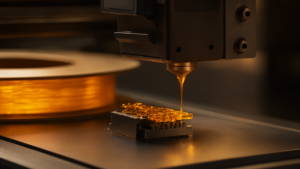
- Curing Mechanism and Application Method: Suitability for manufacturing processes (e.g., thermal cure, UV cure) and the chosen application methods, such as single-shot dispensing or screen printing.
- Material Thickness: The recommended thickness of the putty layer for optimal thermal performance.
- Final Mechanical Properties: The material’s durability and resilience against operational stresses like vibration and thermal cycling.
Proper evaluation of these characteristics is essential to prevent EV battery overheating and ensure the stable, long-term operation of critical EV power electronics.
HakTak’s insights provide practical guidance for EV designers and manufacturers on effectively utilizing thermal putty. As EV technology continues its rapid advancement, leading to higher power output and increased energy density in batteries, the role of high-performance TIMs, including thermal putty, is expected to become even more critical. Appropriate material selection and application will directly contribute to enhancing the safety, performance, and reliability of next-generation EVs, which will be a key differentiator in maintaining market competitiveness.
Source: https://haktak.com/thermal-putty-ev-battery-inverter-systems/
Get our weekly technology intelligence — free
Receive an infographic that lets you judge at a glance whether each field’s analysis report is worth reading.
Subscribe Free — Weekly Tech Intelligence
By subscribing, you’ll receive Troy-Technical’s weekly technology intelligence newsletter.
- Your email and selected fields are used only to deliver the newsletter.
- We never share your information with third parties.
- You can unsubscribe anytime via the link in each email.
See our Privacy Policy for details.
Takes about a minute · Unsubscribe anytime