Key Findings
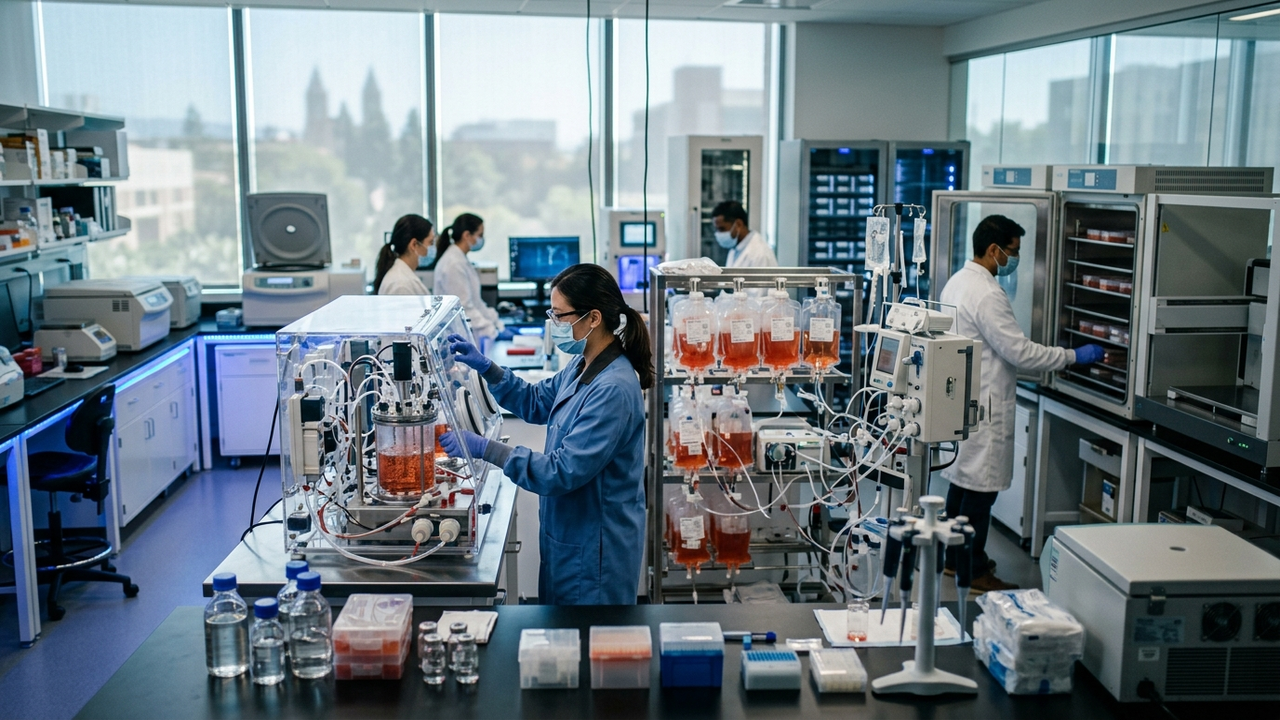
Scientists at UCLA have developed a groundbreaking platform capable of mass-producing ready-to-use CAR-T cells from cord blood stem cells, specifically engineered to target solid tumors. This innovative approach can generate trillions of therapeutic cells, equivalent to thousands of doses, within approximately six weeks, at an estimated cost of just $5,000 per dose. This represents a significant leap in providing a more accessible and affordable alternative to current bespoke CAR-T therapies, while crucially bypassing the risk of graft-versus-host disease (GvHD).
Technical / Clinical Details
- Cord Blood Stem Cell Source: The platform utilizes hematopoietic stem cells derived from healthy donor cord blood. Cord blood is an attractive source due to its abundance of progenitor cells and its immunological immaturity, which contributes to a lower risk of GvHD in allogeneic transplantation settings. This opens avenues for ‘off-the-shelf’ allogeneic CAR-T cell therapies.
- Solid Tumor Targeting: A major challenge for CAR-T therapy has been its limited efficacy in solid tumors. The engineered CAR-T cells are designed to specifically recognize antigens present on solid tumor cells. Genetic modifications further enhance the T cells’ ability to infiltrate, persist, and proliferate within the suppressive solid tumor microenvironment, a critical factor for overcoming resistance.
- Mass Production and Cost-Effectiveness: Unlike conventional autologous CAR-T therapies, which are custom-manufactured for each patient at costs often exceeding hundreds of thousands of dollars and requiring lengthy production times, the UCLA platform enables the rapid generation of trillions of cells (thousands of doses) in about six weeks. The estimated cost of $5,000 per dose is a transformative reduction, dramatically improving the cost-effectiveness and accessibility of CAR-T treatment.
- GvHD Avoidance: The T cells derived from cord blood stem cells are engineered to avoid GvHD, a severe complication associated with allogeneic cell transplants. This design enhances the safety profile of the therapy, making it suitable for a broader patient population.
Background & Context
CAR-T cell therapy has delivered remarkable outcomes in hematological malignancies but faces significant barriers including exorbitant costs, complex individualized manufacturing, and limited applicability to solid tumors. These challenges have restricted widespread access and commercialization. The UCLA research directly addresses these critical bottlenecks, proposing a new manufacturing paradigm in regenerative medicine and cancer immunotherapy. The development of an allogeneic, ‘off-the-shelf’ CAR-T therapy for solid tumors has been a long-standing goal for the industry, and this achievement marks a substantial step towards realizing that objective.
Strategic Significance & Outlook
The UCLA breakthrough vastly improves the feasibility of CAR-T cell therapy for solid tumors and promises to dramatically alter its cost and accessibility landscape. The groundbreaking cost of $5,000 per dose paves the way for CAR-T therapy to become a realistic treatment option for a far greater number of patients globally. Successful clinical translation of CAR-T cells manufactured via this platform could fundamentally reshape cancer treatment, particularly by contributing to more sustainable and equitable access to advanced therapies within global healthcare systems. This innovation stands to be a game-changer for oncological care.
Source: https://www.uclahealth.org/news/release/ucla-scientists-engineer-ready-use-cancer-fighting-t-cells
Get our weekly technology intelligence — free
Receive an infographic that lets you judge at a glance whether each field’s analysis report is worth reading.
Subscribe Free — Weekly Tech Intelligence
By subscribing, you’ll receive Troy-Technical’s weekly technology intelligence newsletter.
- Your email and selected fields are used only to deliver the newsletter.
- We never share your information with third parties.
- You can unsubscribe anytime via the link in each email.
See our Privacy Policy for details.
Takes about a minute · Unsubscribe anytime








Comments