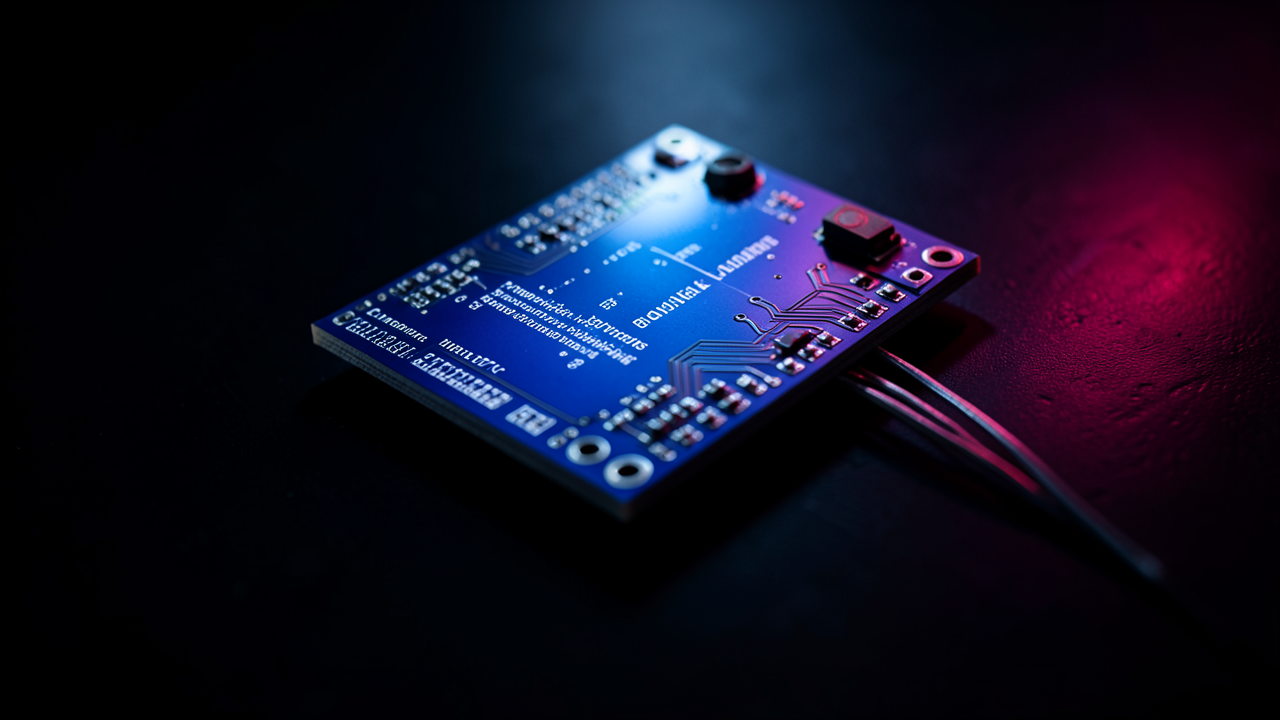
Key Findings
Researchers from Wenzhou University, MIT, the Chinese Academy of Sciences, Caltech, the Hong Kong University of Science and Technology, and Fuzhou University have successfully developed a novel method to grow large-scale, single-crystalline films of two-dimensional metal oxides that are directly compatible with existing silicon technology. This groundbreaking work has led to the production of iron-doped cobalt oxide films exhibiting robust room-temperature ferromagnetic semiconductor behavior, with a Curie temperature reaching 430 K (157°C). This advancement eliminates a critical barrier for the widespread adoption of spintronic, ferroelectric, and neuromorphic components.
Technical Details
The core innovation lies in the reconstruction of the oxygen atomic plane on mica surfaces, which provides an ideal template for the epitaxial growth of these advanced oxide films. This precise atomic engineering enables the production of centimeter-scale films with exceptional uniformity and crystalline quality. Unlike previous methods often limited to microscale dimensions or requiring complex fabrication, this technique offers a scalable pathway to large-area functional materials. The specific iron-doped cobalt oxide composition was critical for achieving the desired ferromagnetic properties above room temperature.
Background & Context
The quest for room-temperature ferromagnetic semiconductors has been a long-standing challenge in materials science, primarily due to difficulties in achieving both magnetic order and semiconducting properties simultaneously at practical temperatures, or integrating such materials with conventional silicon platforms. Current spintronic devices often rely on exotic materials or require cryogenic cooling, limiting their practical applications. This new development offers a pathway to overcome these limitations, potentially enabling more energy-efficient and faster computing architectures than purely charge-based electronics.
Strategic Significance & Outlook
This breakthrough holds immense potential for revolutionizing various fields, including data storage, advanced computing, and sensor technologies. By enabling the seamless integration of ferromagnetic semiconductors with silicon, it paves the way for commercialization of high-density, non-volatile memory devices and ultra-low-power neuromorphic systems that mimic the human brain. The research team plans further work on optimizing the film properties and exploring integration into prototype devices, positioning this technology as a cornerstone for future generations of electronic components.
Source: https://www.spintronics-info.com/reconstructed-mica-surface-yields-centimeter-scale-room-temperature
Get our weekly technology intelligence — free
Receive an infographic that lets you judge at a glance whether each field’s analysis report is worth reading.
Subscribe Free — Weekly Tech Intelligence
By subscribing, you’ll receive Troy-Technical’s weekly technology intelligence newsletter.
- Your email and selected fields are used only to deliver the newsletter.
- We never share your information with third parties.
- You can unsubscribe anytime via the link in each email.
See our Privacy Policy for details.
Takes about a minute · Unsubscribe anytime







Comments