
Key Findings
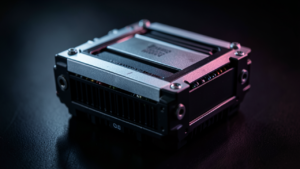
NovoLINC, a spin-out from Carnegie Mellon University, has announced MaxLINC, a next-generation thermal interface material (TIM) specifically engineered for multi-kilowatt AI chips. Leveraging its proprietary nanostructured composite architecture, MaxLINC achieves an industry-leading ultra-low thermal resistance of 0.7 mm²•K/W. This groundbreaking performance is projected to deliver over 20% cooling energy savings for AI servers, offering a critical solution to long-standing thermal bottlenecks in high-performance computing (HPC).
Technical Details
MaxLINC’s exceptional thermal conductivity performance is attributed to its precisely engineered nanostructured composite architecture. This TIM efficiently arranges highly conductive nanomaterials within a polymer matrix, creating optimized pathways for heat transfer from the chip to the heatsink. A key success lies in minimizing interfacial thermal resistance (contact thermal resistance), a critical factor in TIM performance. Compared to conventional TIMs, MaxLINC significantly reduces voids and microscopic non-uniformities at the contact interface, ensuring uniform and efficient heat transfer. This effectively manages the enormous heat generated by AI chips under heavy load, preventing performance degradation and damage.
Background and Industry Context
With the rapid advancement of AI, machine learning, and high-performance computing, processors like CPUs and GPUs are consuming increasing amounts of power and generating more heat. The heat dissipation from multi-kilowatt AI chips, in particular, has become one of the most severe challenges in data center operations. Effective thermal management is crucial for maintaining stable chip performance, extending lifespan, and improving the overall energy efficiency (PUE) of data centers. NovoLINC’s MaxLINC is specifically developed to meet these demands for high-heat-flux chips, pushing the boundaries of existing thermal management solutions.
Strategic Significance and Outlook
The introduction of MaxLINC is expected to have a profound impact on the AI data center and high-performance computing industries. Achieving over 20% reduction in cooling energy will not only lower operational costs but also contribute to the realization of sustainable IT infrastructure. Furthermore, effective chip temperature management will enable faster training of AI models and execution of larger-scale computations, fostering further advancements in AI technology. NovoLINC is expected to strengthen its partnerships with server manufacturers and chip vendors, establishing itself as a leading company in the HPC market. This technology is poised to become a critical enabler for future performance enhancements of semiconductor devices and the realization of Green IT initiatives.
Get our weekly technology intelligence — free
Receive an infographic that lets you judge at a glance whether each field’s analysis report is worth reading.
Subscribe Free — Weekly Tech Intelligence
By subscribing, you’ll receive Troy-Technical’s weekly technology intelligence newsletter.
- Your email and selected fields are used only to deliver the newsletter.
- We never share your information with third parties.
- You can unsubscribe anytime via the link in each email.
See our Privacy Policy for details.
Takes about a minute · Unsubscribe anytime








Comments