Key Findings
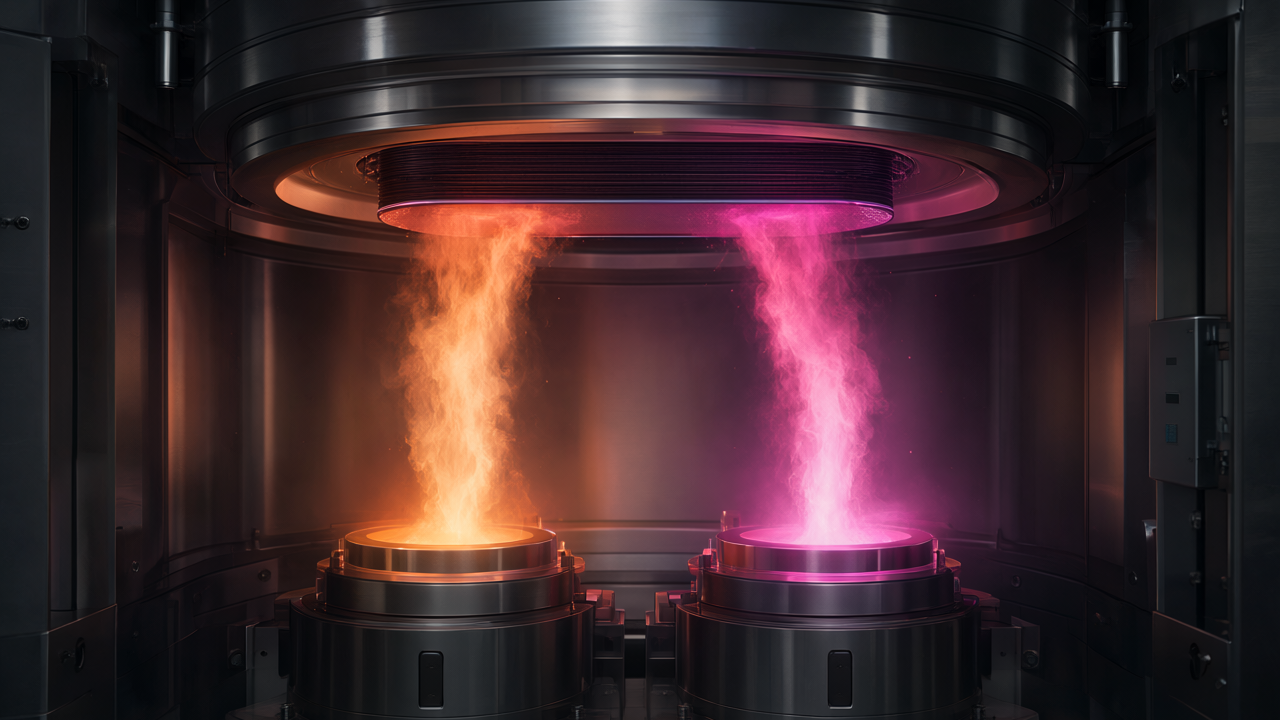
A recent research paper, published as a preprint on the academic platform arXiv, reveals that in all-perovskite tandem solar cells fabricated using evaporation methods, the solid-state conversion pathways of the bottom cell critically influence the performance of the top cell. This study identified multiple solid-state conversion processes and discovered that a specific, undisclosed pathway maximizes overall efficiency and stability.
Technical / Clinical Details
Researchers meticulously investigated various solid-state conversion pathways of iodide perovskite precursor layers during the fabrication of the bottom cell in all-perovskite tandem solar cells. They found that the bottom cell’s solid-state conversion process directly impacts the evaporated growth of the top cell, altering its crystallinity, morphology, and resultant electronic properties. Specifically, a certain solid-state conversion pathway, indicated as [undisclosed specific name], was found to minimize charge carrier recombination and significantly improve the top cell’s performance and the overall tandem stability. This discovery is key to forming high-quality perovskite layers in evaporation methods, which are often challenging for achieving uniform film formation compared to traditional solution processes.
Background & Context
All-perovskite tandem solar cells are garnering significant attention as a next-generation photovoltaic technology due to their potential to achieve high efficiencies without using silicon. However, major challenges have included interface issues when stacking upper and lower perovskite sub-cells, compatibility of manufacturing processes for each layer, and ensuring long-term stability. While evaporation methods are suitable for large-scale production, controlling crystallinity has been difficult, and the solid-state conversion of the bottom cell affecting the top cell’s performance was a known problem. This research elucidates critical interactions within this complex process, providing a scientific basis for the design and manufacturing of high-efficiency, high-stability all-perovskite tandem solar cells.
Strategic Significance & Outlook
These research findings will serve as crucial guidelines for optimizing the design and manufacturing processes of all-perovskite tandem solar cells. Particularly for companies aiming for commercialization using evaporation methods, precisely controlling the bottom cell’s solid-state conversion pathways will create opportunities to dramatically enhance device performance and stability. This could enable perovskite solar cells to further surpass the efficiency of conventional silicon solar cells and be adopted in a wider range of application fields. This technological innovation is expected to play a vital role in improving the cost-effectiveness of solar power and accelerating the global clean energy transition.
Source: https://arxiv.org/abs/2609.20326
Get our weekly technology intelligence — free
Receive an infographic that lets you judge at a glance whether each field’s analysis report is worth reading.
Subscribe Free — Weekly Tech Intelligence
By subscribing, you’ll receive Troy-Technical’s weekly technology intelligence newsletter.
- Your email and selected fields are used only to deliver the newsletter.
- We never share your information with third parties.
- You can unsubscribe anytime via the link in each email.
See our Privacy Policy for details.
Takes about a minute · Unsubscribe anytime








Comments