Key Findings
Ibiden is significantly reinforcing its market dominance, driven by a critical shortage of qualified high-end Ajinomoto Build-up Film (ABF) substrates, which are failing to keep pace with the increasing area and layer counts demanded by AI silicon. This scarcity has emerged as a severe bottleneck in the production of AI-specific semiconductors, particularly high-performance GPUs and CPUs, leading to a surge in demand for Ibiden’s products.
Technical / Clinical Details
As AI technologies evolve, advanced AI chip packages, integrating chiplets and High Bandwidth Memory (HBM), require increasingly larger and multi-layered ABF substrates. Projections indicate that Intel’s and AMD’s server CPU shipments will see substantial increases—36% and 62% respectively—by 2027. This growth is driven by new platforms that will demand 56%-63% larger substrate areas compared to existing models, exacerbating the ABF substrate supply gap for CPUs. Furthermore, high-end GPUs are consuming a disproportionate share of premium ABF capacity. For instance, NVIDIA’s Rubin architecture is reported to yield only 12 units per panel, while Google’s TPU V9 and Trainium 4 achieve only 4 units. This highlights the extreme complexity and extended manufacturing cycles required for these high-performance chips.
Background & Context
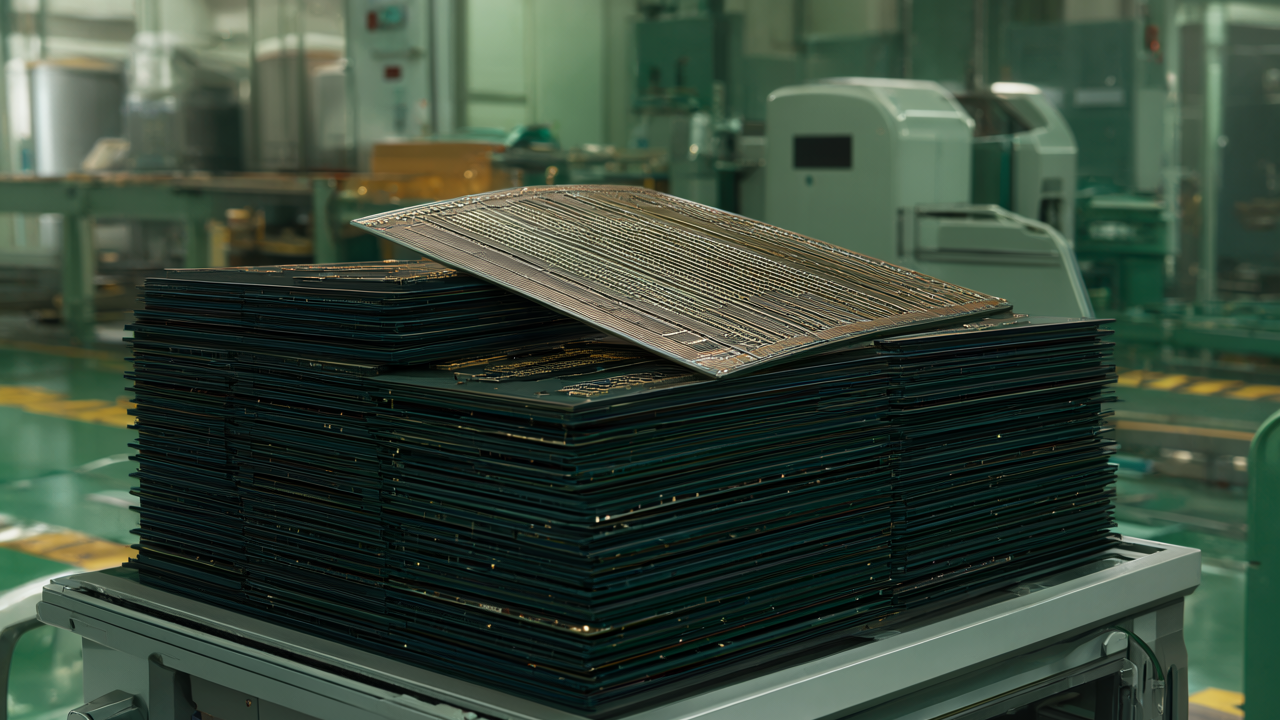
ABF substrates are indispensable materials for establishing electrical connections between dies and Printed Circuit Boards (PCBs) in complex semiconductor packages for high-performance CPUs and GPUs. The exponential growth of AI has led to a surge in demand for advanced packaging solutions like CoWoS, which integrate HBM and chiplets, thereby creating an unprecedented demand for supporting ABF substrates. Manufacturing high-end ABF substrates, which require stringent yield and reliability, involves highly sophisticated technology and lengthy qualification processes, intensifying the supply shortage.
Strategic Significance & Outlook
The shortage of ABF substrates is anticipated to persist as a major bottleneck, constraining the expansion of AI chip production capacity in the short term. Key suppliers like Ibiden are expected to maintain strong pricing power and profitability in this market environment. Moving forward, while suppliers will likely invest in capacity expansion, AI chip manufacturers may pursue strategies such as qualifying multiple suppliers, optimizing substrate designs, or exploring alternative materials to secure stable supplies. This supply-demand imbalance will continue to have a significant impact across the entire semiconductor supply chain, dictating the pace of AI hardware innovation and deployment.
Source: https://fundaai.substack.com/p/deepibiden-the-substrate-sellers
Get our weekly technology intelligence — free
Receive an infographic that lets you judge at a glance whether each field’s analysis report is worth reading.
Subscribe Free — Weekly Tech Intelligence
By subscribing, you’ll receive Troy-Technical’s weekly technology intelligence newsletter.
- Your email and selected fields are used only to deliver the newsletter.
- We never share your information with third parties.
- You can unsubscribe anytime via the link in each email.
See our Privacy Policy for details.
Takes about a minute · Unsubscribe anytime