
Key Findings
The research identified three critical miRNAs—miR-340, miR-382 (tumor-suppressive), and miR-17 (oncogenic)—that significantly inhibit glioblastoma cell proliferation, invasion, and self-renewal. In vivo testing in mice demonstrated that manipulating these miRNAs reduced tumor growth. Furthermore, the delivery of miR-340 or miR-382 via nanoparticles, paired with MB-FUS to open the blood-brain barrier, significantly reduced tumor burden and extended survival compared to controls.
Technical Details
The researchers employed a multistep computational and experimental pipeline to identify effective miRNA candidates:
- Target Mapping: Used PAR-CLIP to map gene targets for 611 miRNAs expressed in glioblastoma cells.
- Comparative Analysis: Compared gene expression data between glioblastoma tumors and normal brain samples to isolate abnormal expressions.
- Ranking Algorithm: A computational algorithm ranked miRNAs based on the biological significance, frequency of deregulation, and associations with patient survival.
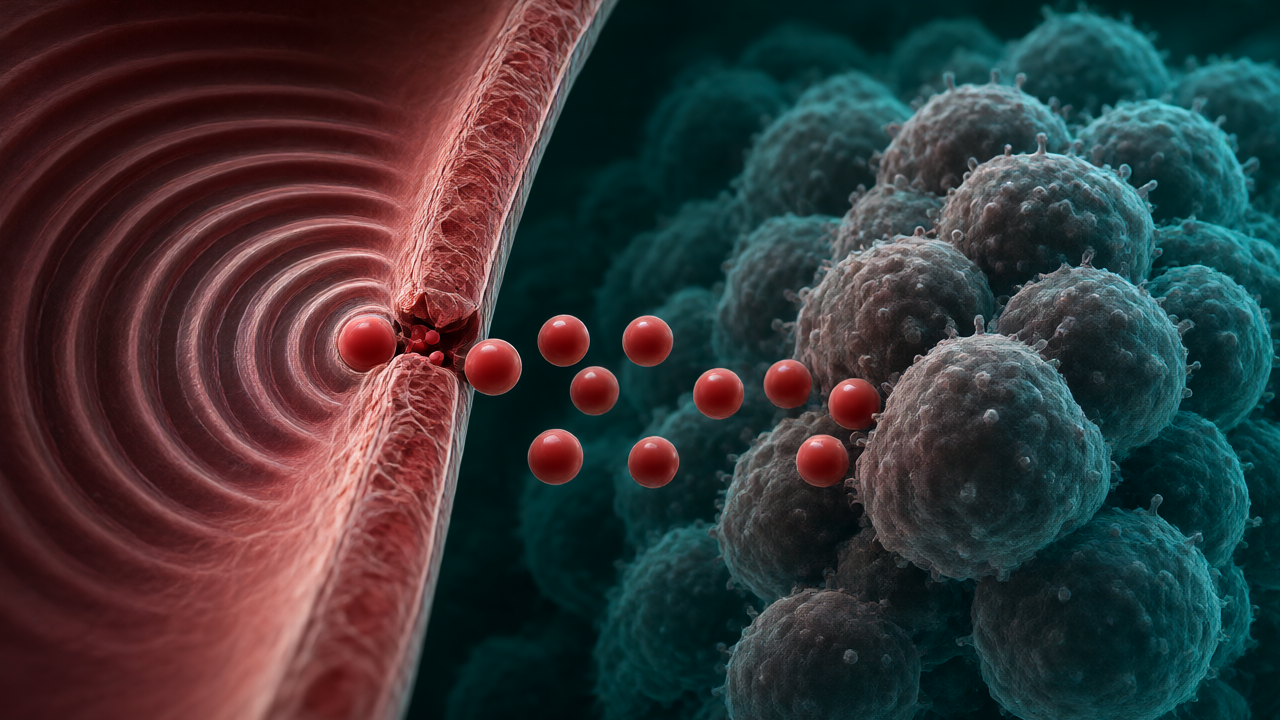
To overcome delivery barriers, the team used microbubble-enhanced transcranial focused ultrasound (MB-FUS) to temporarily open the blood-brain barrier, allowing brain-penetrating nanoparticles carrying the miRNA genetic material to reach the tumor. Results showed that without MB-FUS, nanoparticles alone did not substantially reduce tumor burden.
Background & Context
Glioblastoma remains difficult to treat, with median survival around 15 months. Primary challenges include the infiltration of cells into surrounding tissue, the blood-brain barrier, and the fact that multiple genes are deregulated across different patients and cells within a single tumor. While targeting multiple molecules is a potential solution, combining multiple drugs often increases toxicity.
Significance & Outlook
This approach addresses two major hurdles: the need for multitarget therapy and the difficulty of drug delivery across the blood-brain barrier. The researchers suggest this identification method could be applied to other cancers. Future work is required to evaluate safety, dosing, and repeated treatment across broader patient-derived models before proceeding to human clinical trials.
Source: https://www.uvahealth.com/healthy-practice/glioblastoma-mirna-treatment-research
Get our weekly technology intelligence — free
Receive an infographic that lets you judge at a glance whether each field’s analysis report is worth reading.
Subscribe Free — Weekly Tech Intelligence
By subscribing, you’ll receive Troy-Technical’s weekly technology intelligence newsletter.
- Your email and selected fields are used only to deliver the newsletter.
- We never share your information with third parties.
- You can unsubscribe anytime via the link in each email.
See our Privacy Policy for details.
Takes about a minute · Unsubscribe anytime