
Key Findings
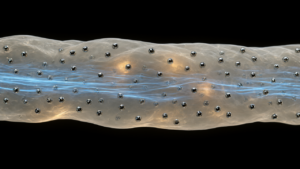
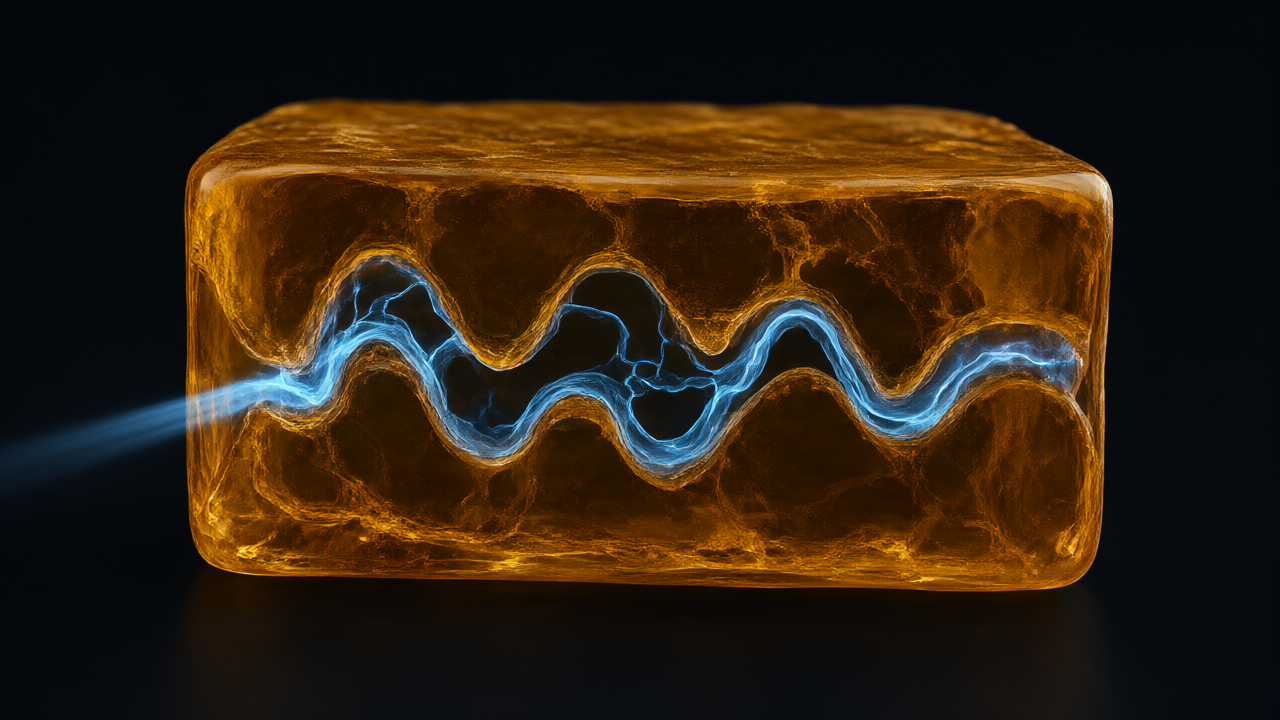
A research team led by Menachem Elimelech at Rice University has provided experimental and computational evidence that dense polymer membranes are not featureless solids, but instead contain interconnected networks of subnanometer pores. The study, published in Frontiers in Membrane Science and Technology, argues that these hidden pathways, rather than concentration-driven diffusion, govern the movement of water, solvents, and gases through the membranes.
Technical Details
The researchers challenged the traditional “stacked-membrane” experiments used to support the solution–diffusion model. By using Nafion 117 ion-exchange membranes, the team found that the observed concentration gradient is actually a mechanical artifact of membrane compaction. Key evidence includes:
- A pronounced porosity gradient remained after 24 hours of permeation and 10 minutes of relaxation, and persisted even after soaking layers in deionized water for three hours.
- Flux–pressure cycling between 30 and 120 bar resulted in a roughly 20 percent irreversible loss in water permeance.
- Short 15-minute permeation runs produced essentially no gradient.
Structural evidence was further supported by positron annihilation lifetime spectroscopy, small-angle neutron and X-ray scattering, and synchrotron-based X-ray absorption and emission spectroscopy. Molecular dynamics simulations mapped three-dimensional, solvent-accessible free volume, confirming that pathways connect across the membrane.
Background & Context
Since the 1960s, the solution–diffusion model has been the foundational assumption for desalination and gas separation. It posits that molecules dissolve into the polymer and diffuse across it, assuming that free volume exists only as isolated, transient cavities created by thermal fluctuations. This model was adopted because early researchers lacked the instruments to resolve subnanometer structures.
Significance & Outlook
This shift in understanding reframes processes such as pervaporation. The researchers suggest that liquid-like and vapor-like domains coexist within the membrane interior, meaning the liquid–vapor transition occurs inside the material rather than exclusively at the downstream boundary. This implies that selectivity is determined by how this phase change unfolds within the pore network.
Get our weekly technology intelligence — free
Receive an infographic that lets you judge at a glance whether each field’s analysis report is worth reading.
Subscribe Free — Weekly Tech Intelligence
By subscribing, you’ll receive Troy-Technical’s weekly technology intelligence newsletter.
- Your email and selected fields are used only to deliver the newsletter.
- We never share your information with third parties.
- You can unsubscribe anytime via the link in each email.
See our Privacy Policy for details.
Takes about a minute · Unsubscribe anytime