

Key Findings
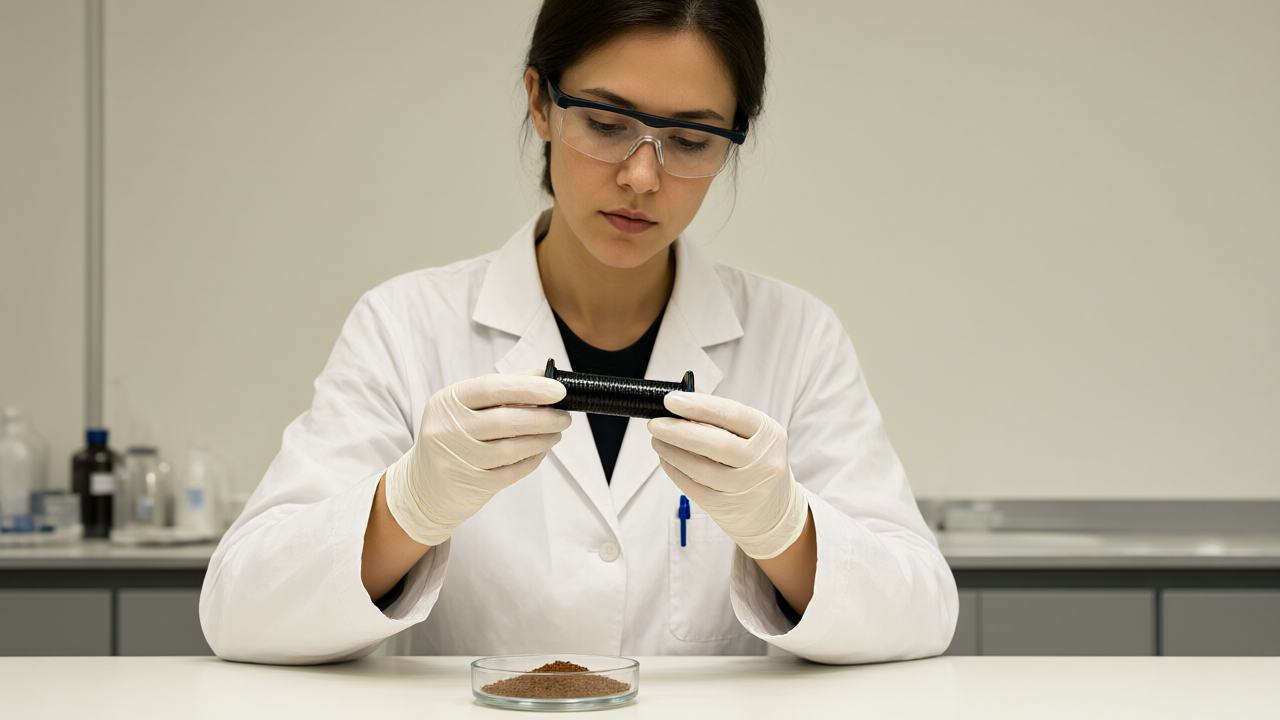
A research group led by Professor Xianglan Bai at Iowa State University has developed a method to produce bio-based carbon fiber that rivals petroleum-based materials in performance while significantly reducing costs. The resulting fiber achieves a tensile strength of up to 2.45 gigapascals and a tensile modulus of up to 236 gigapascals. These figures exceed the U.S. Department of Energy’s recommended benchmarks for automotive applications, which require a minimum tensile strength of 1.72 gigapascals and a tensile modulus of 172 gigapascals. Furthermore, the production cost is reported to be below five dollars per pound, undercutting the target cost of five to seven dollars per pound.
Technical Details
The breakthrough relies on two primary innovations:
- Thermo-mechanochemistry: Unlike conventional heat treatments, this process introduces mechanical stress by heating the spun fiber while subjecting it to increasing mechanical load. This alters the chemical transformations and internal structures during carbonization, resulting in higher strength.
- Chemical Modification via Bio-oil: To resolve the stabilization bottleneck, the team uses a watery fraction of fast-pyrolysis bio-oil to modify non-softening lignin into a melt-spinnable precursor. This reduces the stabilization time from tens of hours to just two to four hours.
Background & Context
Conventional carbon fiber relies on petroleum-derived precursors, most commonly polyacrylonitrile, which are energy-intensive and expensive. While lignin-based fibers have been researched since the 1960s, they historically lacked the tensile strength and stiffness required for structural use, leading pulp mills to use lignin primarily as boiler fuel. Bai’s group has pursued bio-based alternatives since 2015 with support from the U.S. Department of Agriculture.
Significance & Outlook
By utilizing abundant, low-value coproducts from paper manufacturing and biofuel production, this technology provides a renewable alternative to petroleum-based fibers. For the automotive industry, these commodity-like prices and structural specifications could accelerate the adoption of lightweighting strategies to improve fuel efficiency and extend the range of electric vehicles.
Source: https://bioengineer.org/paper-and-biofuel-leftovers-become-high-strength-low-cost-carbon-fiber/
Get our weekly technology intelligence — free
Receive an infographic that lets you judge at a glance whether each field’s analysis report is worth reading.
Subscribe Free — Weekly Tech Intelligence
By subscribing, you’ll receive Troy-Technical’s weekly technology intelligence newsletter.
- Your email and selected fields are used only to deliver the newsletter.
- We never share your information with third parties.
- You can unsubscribe anytime via the link in each email.
See our Privacy Policy for details.
Takes about a minute · Unsubscribe anytime