

Key Findings
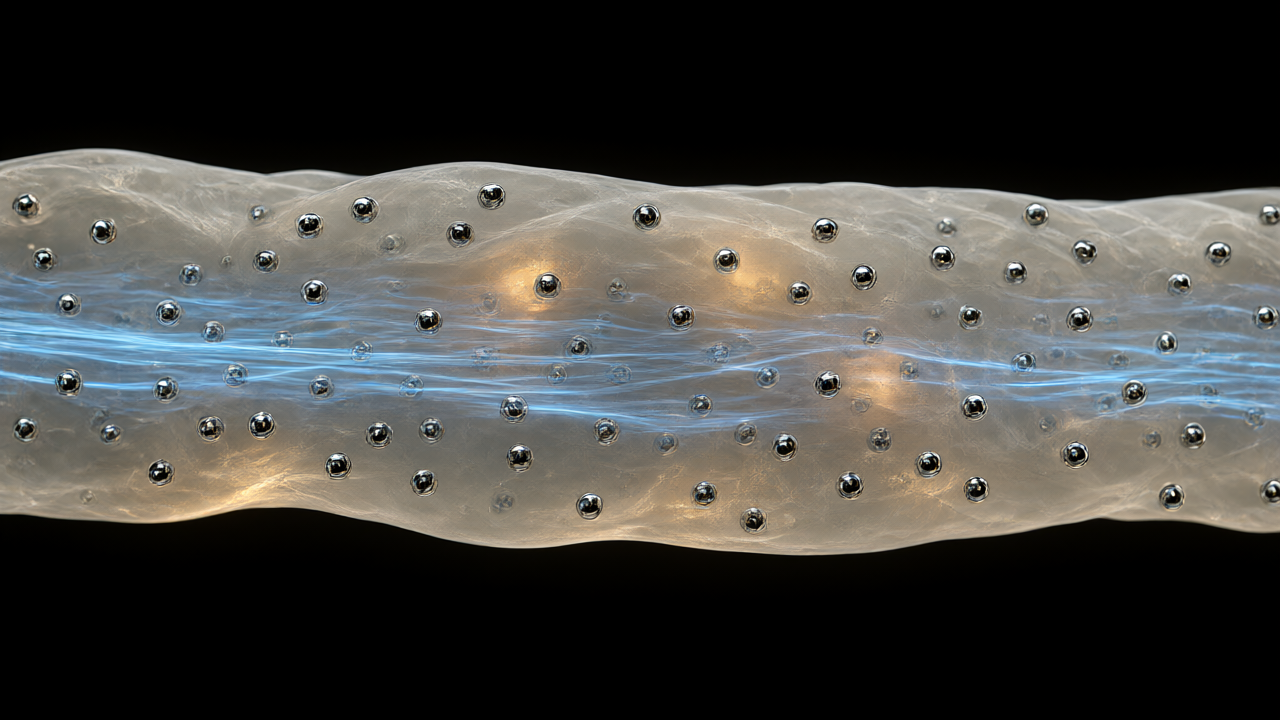
The integration of sulfonated polystyrene nanoparticles into PEBAX block copolymers significantly enhances carbon capture performance. In freestanding membranes approximately 100 micrometers thick, a 10 weight percent loading of nanoparticles resulted in a 54 percent increase in CO2 permeability (reaching 198.6 Barrer) and a 31 percent increase in CO2/N2 selectivity (reaching 41.4). These results indicate a partial mitigation of the Robeson upper bound trade-off. However, performance declined beyond 10 weight percent due to particle aggregation and interfacial rigidification.
Technical Details
The nanoparticles were functionalized with sulfonic acid groups to improve compatibility with the polar PEBAX matrix via hydrogen bonding and dipole-dipole interactions. Analysis via Fourier transform infrared spectroscopy showed a C-O-C stretching band shift toward 1105 cm-1, while X-ray diffraction and differential scanning calorimetry confirmed that the nanoparticles reduce crystallinity and crystallite size without altering the fundamental crystal lattice.
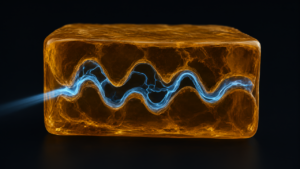
- Transport Mechanism: Time-lag method analysis showed that CO2 diffusivity increased steadily with polystyrene loading, indicating that structural loosening—rather than changes in gas affinity—is the primary driver.
- Solubility: CO2 solubility rose moderately up to 10 weight percent, while nitrogen solubility remained nearly constant.
- Morphology: In thin-film composite membranes (approximately 250 nanometers thick), shear forces during coating induced a self-organized, interfacial diffusion-controlled structure where nanoparticles remained evenly dispersed up to 20 weight percent.
Background & Context
Conventional CO2 separation methods like cryogenic distillation and absorption are energy-intensive. Membrane-based separation is a low-energy alternative. PEBAX is a promising material due to its CO2-philic poly(ethylene oxide) segments and mechanically robust polyamide segments; however, the crystalline polyamide domains typically restrict gas diffusion, creating a trade-off between permeability and selectivity.
Significance & Outlook
While polystyrene was previously dismissed as a “dead end” for gas separation due to its hydrophobicity and impermeability, this research demonstrates its utility as a morphology-modulating additive. The findings highlight that the dominant transport mechanism varies critically depending on whether the membrane is a thick freestanding film or an ultrathin composite layer.
Get our weekly technology intelligence — free
Receive an infographic that lets you judge at a glance whether each field’s analysis report is worth reading.
Subscribe Free — Weekly Tech Intelligence
By subscribing, you’ll receive Troy-Technical’s weekly technology intelligence newsletter.
- Your email and selected fields are used only to deliver the newsletter.
- We never share your information with third parties.
- You can unsubscribe anytime via the link in each email.
See our Privacy Policy for details.
Takes about a minute · Unsubscribe anytime