


Key Findings
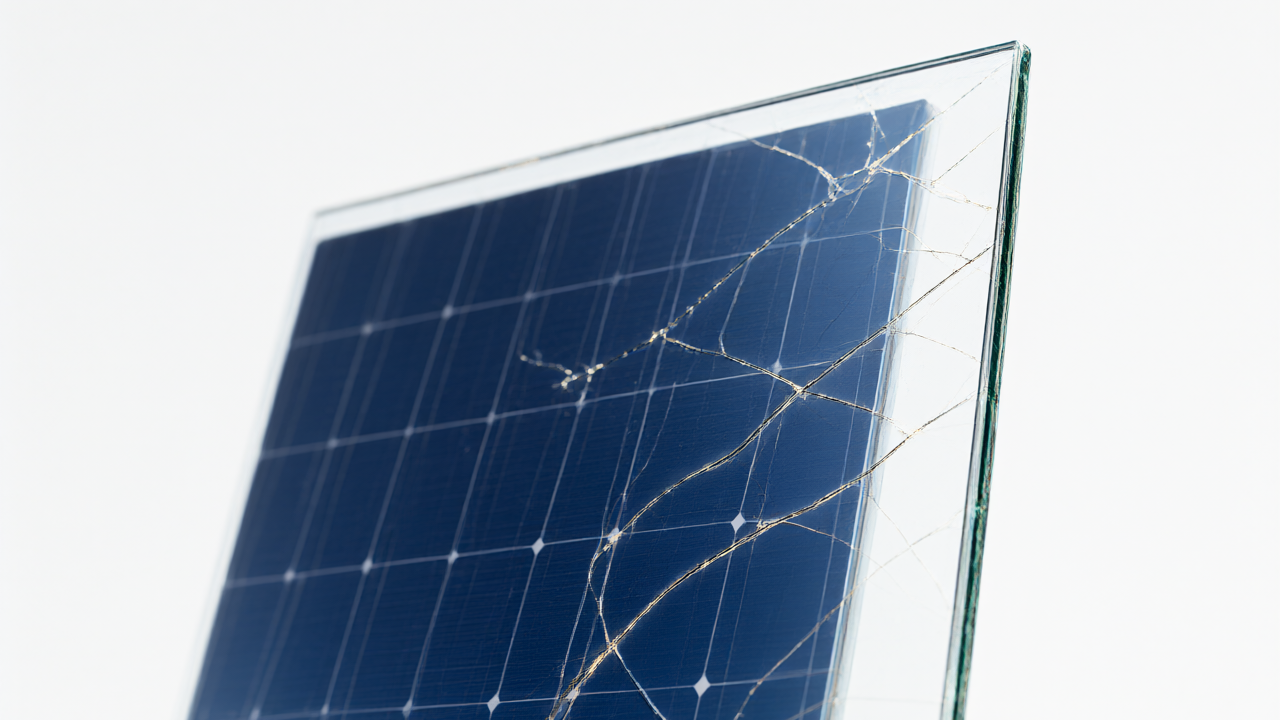
A new self-healing coating developed by EXXERGY and its subsidiary EXXOSQEL, in collaboration with the Fraunhofer Institute for Silicate Research ISC, significantly enhances the mechanical properties of solar glass. Lab tests demonstrate that the coating increases the strength of 0.08-inch (two-millimeter) glass samples by up to four times. For thinner 0.04-inch (one-millimeter) samples, the strength increase is up to seven times compared to untreated, non-tempered glass.
Technical Details
The coating addresses the limitations of conventional thermal tempering, which becomes difficult when glass thickness drops to 0.08 inches or less. The material forms a three-dimensionally cross-linked composite structure that creates covalent bridges within microcracks at the molecular level. These chemical bonds increase the energy required to break the glass, allowing for a 40 percent reduction in glass mass. This reduction in glass weight can lower the total weight of certain solar panels by 30 percent.
Background & Context
Glass is a critical protective component of solar panels, accounting for up to 80 percent of a panel’s total weight. Standard panels typically weigh between 2.3 and 2.7 lbs per square foot (11 to 13 kilograms per square meter), with heavier designs reaching 3.3 lbs per square foot (16 kilograms per square meter). While thinner glass reduces weight, it traditionally increases the risk of damage, a trade-off this coating aims to eliminate.
Significance & Outlook
The technology is currently nearing Technology Readiness Level 6 (TRL 6), with initial prototypes produced in standard dimensions and subjected to stress tests. To reach TRL 7, the team is working with the Fraunhofer Center for Silicon Photovoltaics CSP to test the coating on larger modules and is automating the application process for mass production. Fraunhofer ISC is currently producing the coating in batches of up to 100 liters. A demonstration of the technology is scheduled for Glasstec 2026 in Düsseldorf from 20 to 23 October.
Source: https://interestingengineering.com/energy/crack-healing-coating-boosts-solar-glass
Get our weekly technology intelligence — free
Receive an infographic that lets you judge at a glance whether each field’s analysis report is worth reading.
Subscribe Free — Weekly Tech Intelligence
By subscribing, you’ll receive Troy-Technical’s weekly technology intelligence newsletter.
- Your email and selected fields are used only to deliver the newsletter.
- We never share your information with third parties.
- You can unsubscribe anytime via the link in each email.
See our Privacy Policy for details.
Takes about a minute · Unsubscribe anytime