
Key Findings
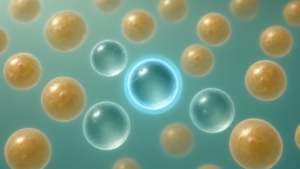
The study identifies that productive and unsuccessful reprogramming trajectories exhibit distinct molecular remodeling and spatial organization. A critical discovery is that cell-fate conversion involves separable transcriptional progression and epigenomic changes. Spatial profiling indicates that productive and unsuccessful populations are organized before overt iPSC colonies emerge, with productive hotspots becoming evident by day 3.
Technical Details
The research utilized integrated paired single-nucleus measurements across human fibroblast reprogramming time courses from four individuals. The data integration included:
- Gene expression and chromatin accessibility.
- Gene expression and DNA methylation.
- DNA methylation and three-dimensional (3D) genome organization.
- Spatial transcriptomics.
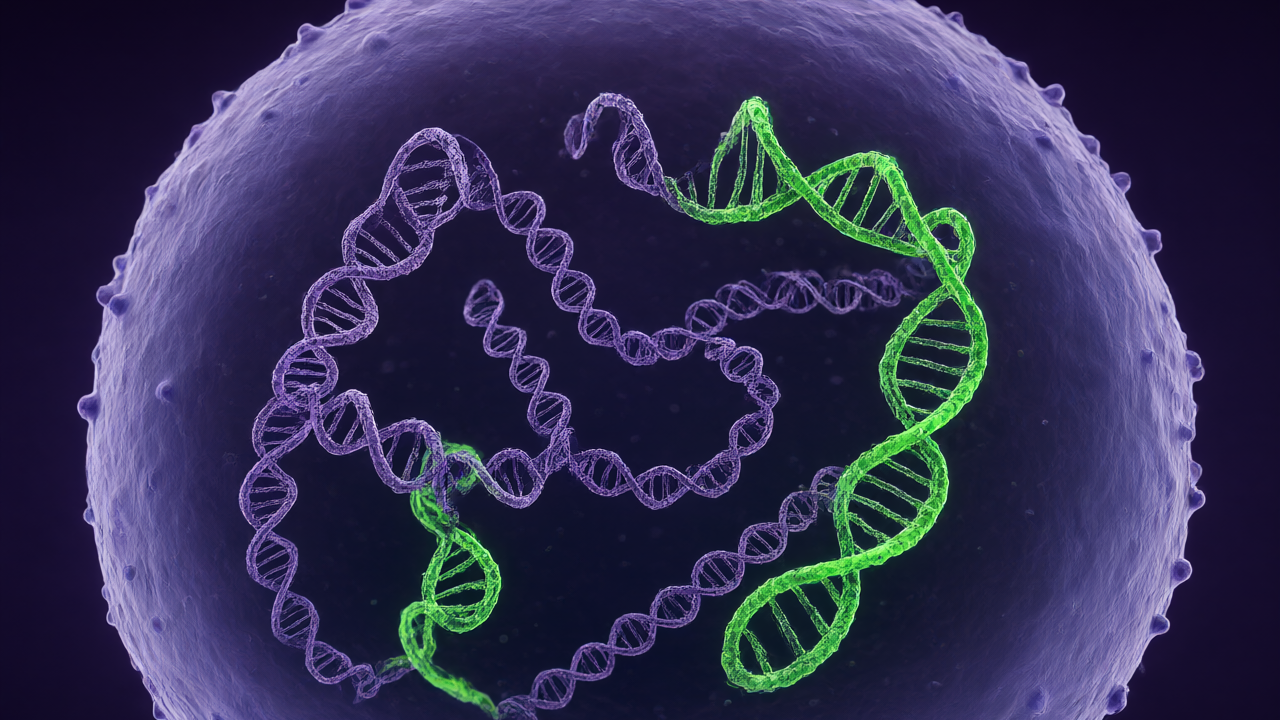
Analysis showed that starting fibroblasts possess DNA methylation heterogeneity within and between individuals, primarily concentrated in broad repressive domains. While this heterogeneity diminishes during productive reprogramming, unsuccessful populations diverge into two groups: one that retains a fibroblast-like methylome despite reduced fibroblast-associated gene expression, and another that undergoes substantial chromatin opening and demethylation but fails to fully establish the iPSC regulatory state.
Background & Context
Reprogramming somatic cells into iPSCs requires extensive transcriptional and epigenomic remodeling. While the general process is known, the specific relationship between these changes along productive versus unsuccessful trajectories has remained unclear. This study addresses this gap by examining how DNA methylation and 3D genome configurations vary even among early-iPSCs that exhibit similar pluripotency-associated expression.
Significance & Outlook
The results highlight that gene expression within specific states varies based on morphology and neighborhood composition. By demonstrating that some early-iPSCs more closely resemble mature iPSCs in their DNA methylation and 3D genome configurations than others, the research provides a deeper understanding of the epigenetic barriers and spatial requirements necessary for successful cell-fate conversion.
Source: https://www.biorxiv.org/content/10.64898/2026.10.15.757424v1
Get our weekly technology intelligence — free
Receive an infographic that lets you judge at a glance whether each field’s analysis report is worth reading.
Subscribe Free — Weekly Tech Intelligence
By subscribing, you’ll receive Troy-Technical’s weekly technology intelligence newsletter.
- Your email and selected fields are used only to deliver the newsletter.
- We never share your information with third parties.
- You can unsubscribe anytime via the link in each email.
See our Privacy Policy for details.
Takes about a minute · Unsubscribe anytime