


Key Findings
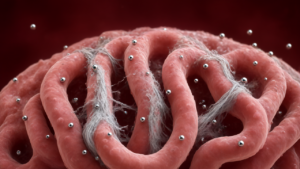
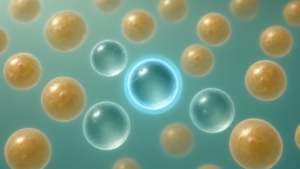
The study demonstrates the emergence of self-organized heart/foregut-like structures derived from human pluripotent stem cells (hPSCs). These structures develop into chambered human cardiac organoids (hCOs) that incorporate multiple cell types, including cardiomyocytes (CMs), epicardial cells, cardiac fibroblasts, and endothelial cells. The researchers found that optimizing the induction system further improves the maturation and vascularization of these organoids.
Technical Details
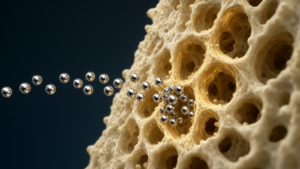
The development process utilizes a “Soil-Seed” architecture to simulate early human development:
- The Seed: Initial heart/foregut-like structures that serve as the core of the organoid.
- The Soil: Surrounding supportive cells that encase the Seed and provide the necessary matrix microenvironment.
This configuration allows the Seed to progressively evolve into complex, chambered hCOs containing the aforementioned cardiac and vascular cell populations.
Background & Context
The methodology is based on the biological observation that during early cardiogenesis, heart regions maintain close contact with foregut endoderm. This proximity is critical because the foregut endoderm supplies essential nutrients and signaling cues required to orchestrate the assembly of the primitive heart tube.
Significance & Outlook
By recreating the spatial and signaling relationship between the heart and foregut, the Soil-Seed system provides a functional model to dissect the self-organization of the human heart and foregut during early development. The ability to produce vascularized and chambered organoids represents a step forward in mimicking human cardiac architecture in vitro.
Source: https://www.biorxiv.org/content/10.64898/2026.10.21.758395v1
Get our weekly technology intelligence — free
Receive an infographic that lets you judge at a glance whether each field’s analysis report is worth reading.
Subscribe Free — Weekly Tech Intelligence
By subscribing, you’ll receive Troy-Technical’s weekly technology intelligence newsletter.
- Your email and selected fields are used only to deliver the newsletter.
- We never share your information with third parties.
- You can unsubscribe anytime via the link in each email.
See our Privacy Policy for details.
Takes about a minute · Unsubscribe anytime