


Key Findings
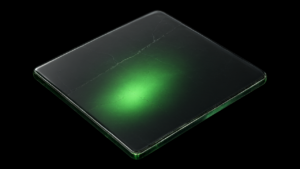
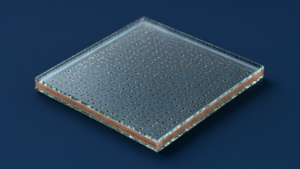
Researchers at UC San Diego have developed a production process that utilizes briefly melted salts to reach power conversion efficiencies of 24 to 26 percent under standard simulated sunlight. This method eliminates microscopic energy traps within the semiconductor material, preventing premature charge recombination and ensuring that photo-generated electrical current flows directly to collection contacts.
Technical Details
The process involves mixing zinc bromide and methylammonium chloride in a liquid precursor. Key technical steps include:
- Liquid Eutectic Phase: Heating the mixture creates a temporary molten salt phase that fills microscopic crystal interface boundaries, allowing misplaced atoms to rearrange into perfect crystalline structures.
- Evaporation and Solidification: Volatile methylammonium chloride evaporates from the baking membrane, causing the molten material to transform instantaneously into an organized crystal form.
- Defect Passivation: Zinc ions concentrate at the crystal edges, occupying empty electronic traps within grain interfaces.
- Verification: X-ray imaging was used to record the transition of boundaries from ordered solids to liquid phases and back again.
Background & Context
Standard halide perovskite films often feature small crystal grains with structural defects at the interfaces, which inhibit electrical charge flow and absorb moisture from the environment. These defects typically lead to rapid chemical decomposition and efficiency loss. In contrast, the liquid-grown films produced via this method feature dense packing of crystals that inhibits chemical breakdown when exposed to extended lighting.
Significance & Outlook
The ability to maintain power output for eight weeks of simulated sunlight indicates that this temporary liquid processing method solves significant perovskite operation stability problems. While laboratory experiments on small-scale samples are successful, industrial scaling requires precise monitoring of evaporation speeds to ensure uniformity across large glass substrates. Current trials are investigating the integration of this liquid salt technology into automated production equipment to determine its viability for the commercial market.
Source: https://www.ecoportal.net/en/san-diego-solar-cells-efficiency/43547/
Get our weekly technology intelligence — free
Receive an infographic that lets you judge at a glance whether each field’s analysis report is worth reading.
Subscribe Free — Weekly Tech Intelligence
By subscribing, you’ll receive Troy-Technical’s weekly technology intelligence newsletter.
- Your email and selected fields are used only to deliver the newsletter.
- We never share your information with third parties.
- You can unsubscribe anytime via the link in each email.
See our Privacy Policy for details.
Takes about a minute · Unsubscribe anytime