

Key Findings
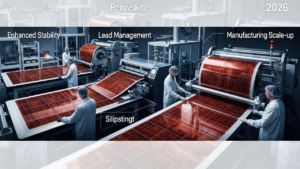
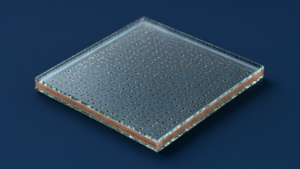
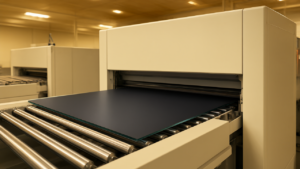
The research team, led by Academician Li Yongfang, Professor Li Yaowen, and Associate Professor Xu Guiying, has developed a method to produce high-performance flexible perovskite solar cells. The team achieved a certified power conversion efficiency of 26.9% for small-area flexible cells and 20.2% for large-area flexible modules with a substrate area of 1050 cm². These modules demonstrated high stability, maintaining over 92% of their initial efficiency after 1000 hours of operation at 85°C and passing reliability tests based on IEC TS 63163:2021.
Technical Details
The researchers identified a kinetic competition between the rapid desorption of hydroxyl groups on flexible PET/ITO substrates and the slow anchoring of SAM molecules. To address this, they introduced a decoupled co-deposition strategy using a 3,5-bis(methanesulfonyl)phenylammonium iodide (BSAI) molecule. BSAI possesses dual interaction sites that weaken the interaction between the perovskite precursor and the SAM molecule (Me-4PACz), allowing the SAM to anchor more quickly to the ITO surface before hydroxyl groups are lost.
- Interface Optimization: BSAI prioritizes binding with the Pb-I framework (binding energy of -1.43 eV vs -0.60 eV for Me-4PACz), facilitating a more uniform and continuous SAM layer of 1–2 nm.
- Crystallization Control: The strategy delayed the nucleation start time of the perovskite intermediate phase from 22.1 seconds to 30.5 seconds, suppressing the δ-phase and promoting α-phase (001) preferred orientation.
- Scaling Performance: While traditional co-deposition resulted in a 7.95% efficiency for 1050 cm² modules, the new strategy achieved 20.2%.
Significance and Outlook
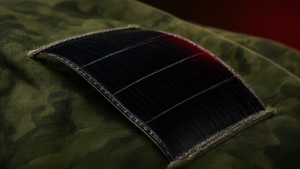
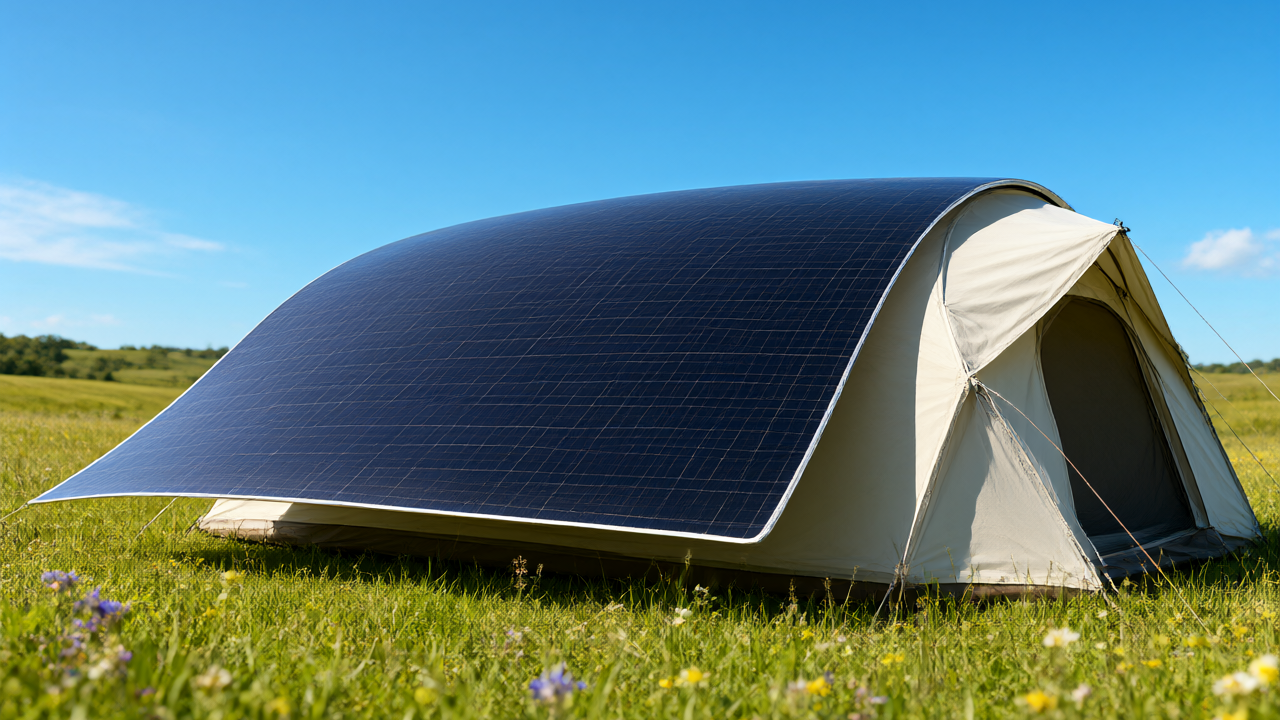
The flexible modules demonstrated mechanical durability, retaining 92.1% efficiency after 10,000 bending cycles. Practical applications were demonstrated via a 20.31 g flexible component capable of outputting 20.5 W in sunny weather. When integrated into a remote-controlled drone’s curved wings, the flight endurance increased from 8 minutes to 19 minutes, and the flight distance extended from approximately 4 km to 9.5 km.
Source: https://m.163.com/dy/article/L9TMREI605329TW8.html
Get our weekly technology intelligence — free
Receive an infographic that lets you judge at a glance whether each field’s analysis report is worth reading.
Subscribe Free — Weekly Tech Intelligence
By subscribing, you’ll receive Troy-Technical’s weekly technology intelligence newsletter.
- Your email and selected fields are used only to deliver the newsletter.
- We never share your information with third parties.
- You can unsubscribe anytime via the link in each email.
See our Privacy Policy for details.
Takes about a minute · Unsubscribe anytime