


Key Findings
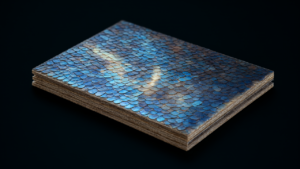
Prof. Zibin Chen and his team at The Hong Kong Polytechnic University (PolyU) have developed two breakthroughs in cryogenic materials published in Nature Communications. The first, a multi-principal element alloy (MPEA) using a “Negative-Curvature Interface” (NCI) strategy, achieves a yield strength of approximately 1.30 GPa, an ultimate tensile strength of approximately 1.80 GPa, a tensile ductility of 50%, and a fracture toughness of approximately 213 MPa·m¹/². The second breakthrough utilizes a “hierarchical nano-orderings” (HNOs) architecture in a NiCoCr-based alloy, delivering a yield strength of approximately 2.0 GPa, an ultimate tensile strength of approximately 2.4 GPa, and a uniform tensile ductility of 22% at liquid-nitrogen temperatures.
Technical Details
The NCI strategy involves adjusting the surface geometry of nanoscale particles within a NiCoCr-AlTa alloy. By constructing NCIs on coherent nanoprecipitates, the team created curved interfaces that influence internal structural response. Under load, this triggers the dynamic formation of partial dislocations and hierarchical stacking faults (SFs), which enhance strain-hardening capacity and damage tolerance. This MPEA can be produced via conventional smelting, rolling, and short-term ageing.
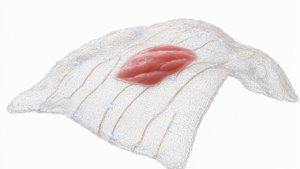
The HNOs strategy integrates additive manufacturing (3D printing) with tailored post-processing. This architecture sequentially activates dislocation sources to enable cooperative strain-hardening, allowing the material to increase in strength as it deforms.
Background & Context
Traditional alloys typically face a trade-off between strength, ductility, and toughness at ultralow temperatures. While metals may gain strength, they often become brittle and prone to sudden fracture—a phenomenon known as “cold brittleness” that has historically hindered deep-sea and deep-space exploration.
Significance & Outlook
The NCI strategy is applicable across various precipitation-hardened systems, including aluminum alloys, age-hardening steels, and superalloys. PolyU intends to validate industrial-scale samples for the NCI material with a goal of commercial application within ten years. For the HNOs-based alloy, the team targets commercial deployment within the next five years.
Source: https://www.miragenews.com/polyu-scholar-develops-cryogenic-metals-to-1768897/
Get our weekly technology intelligence — free
Receive an infographic that lets you judge at a glance whether each field’s analysis report is worth reading.
Subscribe Free — Weekly Tech Intelligence
By subscribing, you’ll receive Troy-Technical’s weekly technology intelligence newsletter.
- Your email and selected fields are used only to deliver the newsletter.
- We never share your information with third parties.
- You can unsubscribe anytime via the link in each email.
See our Privacy Policy for details.
Takes about a minute · Unsubscribe anytime