


Key Findings
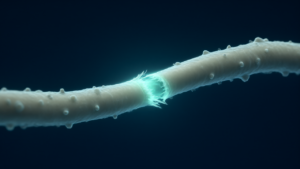
Scientists have demonstrated the feasibility of correcting two specific mutations in the SOD1 gene within human induced pluripotent stem cells (iPSCs), including those derived from patients. Using optimized configurations, the team achieved a precise correction efficiency of approximately 10% for the G93A mutation via prime editing and approximately 25% for the L126S mutation via base editing.
Technical Details
The research employed two distinct genome editing modalities tailored to specific mutations:
- Prime Editing (G93A): The team screened pegRNAs (extended guide RNAs) in human iPSCs. The resulting optimized configuration showed consistent performance across species, yielding similar editing rates in mouse iPSCs derived from ALS model mice.
- Base Editing (L126S): Researchers compared three cytosine base editors—BE4, YE1, and AID2S—in patient-derived iPSCs. BE4 was identified as the most effective, reaching the 25% correction efficiency mark and outperforming both YE1 and AID2S.
Background & Context
Amyotrophic lateral sclerosis (ALS) is a fatal neurodegenerative disorder. While approximately 10% of cases are familial, mutations in the SOD1 gene are a primary genetic cause. Unlike strategies that silence or remove the gene, this research pursued mutation-specific correction to preserve the gene’s normal physiological function. The study focused on G93A, a mutation common in animal models, and L126S, which is enriched among Japanese patients.
Significance & Outlook
By using patient-derived iPSCs, the study utilized a cellular platform that maintains the exact genetic background of the disease, providing a more faithful testing ground than simplified systems. The authors highlight this as a systematic pipeline for comparing editing strategies and optimizing guide designs before clinical translation.
However, the study notes significant limitations: corrections were performed in laboratory cell cultures rather than in patients or animal models of disease progression. Further extensive preclinical work is required to translate these cell-culture efficiencies into therapeutic efficacy for humans.
Get our weekly technology intelligence — free
Receive an infographic that lets you judge at a glance whether each field’s analysis report is worth reading.
Subscribe Free — Weekly Tech Intelligence
By subscribing, you’ll receive Troy-Technical’s weekly technology intelligence newsletter.
- Your email and selected fields are used only to deliver the newsletter.
- We never share your information with third parties.
- You can unsubscribe anytime via the link in each email.
See our Privacy Policy for details.
Takes about a minute · Unsubscribe anytime