Key Findings
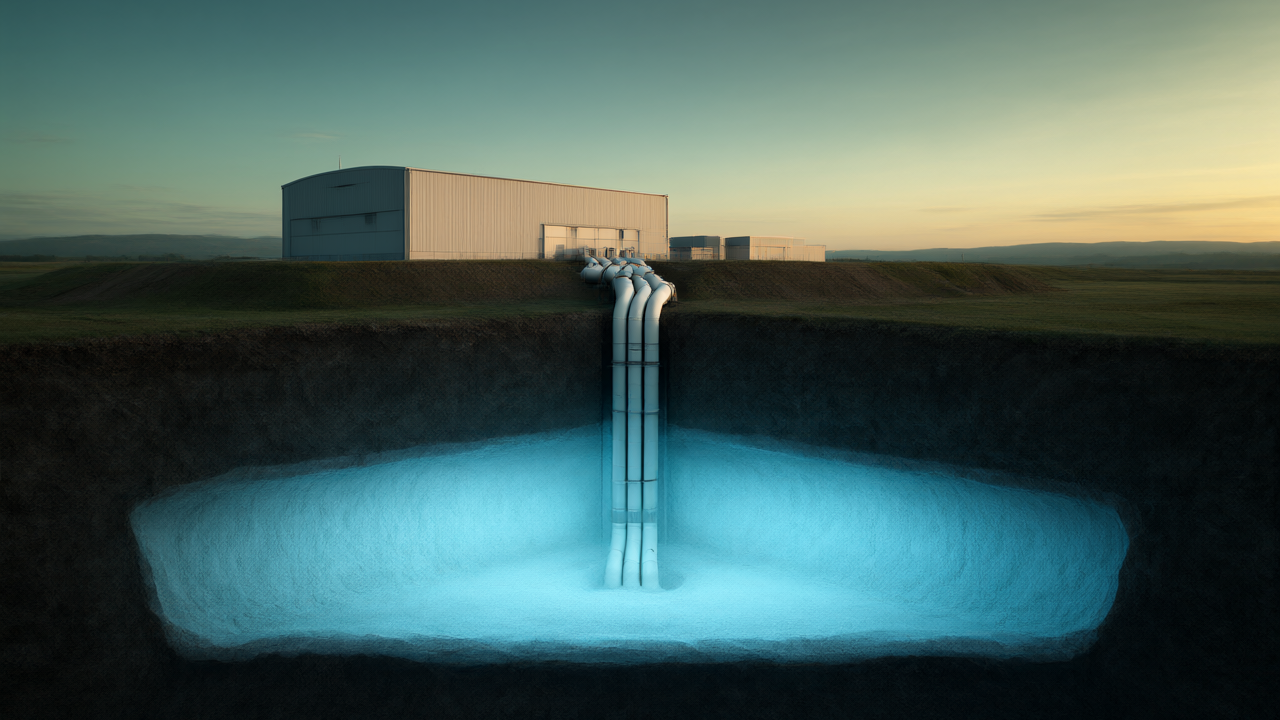
Hydrogen gas turbines may offer lower capital expenditure and a levelized cost of hydrogen storage (LCOHS) of around AUD 0.90/kg ($0.62/kg) compared to fuel cells when used as backup power during low solar availability. This finding stems from a feasibility assessment of solar-driven underground hydrogen storage (UHS) published in Applied Energy.
Technical Details of UHS Modeling
The research modeled an integrated system including hydrogen injection, geological storage, purification, and pipeline delivery. The LCOHS figure was achieved under the following modeled conditions:
- 10% porosity
- 50 mD permeability
- 30-year project lifetime
- 7% discount rate
The study noted that higher permeability improves recovery rates and injectivity but may increase compression and purification needs. Conversely, lower porosity can improve gas displacement but requires higher injection pressures and increases equipment costs.
Global Industry Developments
Corporate and governmental activities in the hydrogen sector show divergent trends:
- Air Products: Recorded pre-tax charges of approximately $3.2 billion in fiscal year 2026 due to project exits, including a clean energy complex in Louisiana and a green hydrogen facility in Casa Grande, Arizona.
- Everfuel: Signed a €245 million grant agreement with the German government for Project Frigg in Denmark, receiving production support of €0.98/kg of renewable hydrogen. The project is designed to scale up to 2 GW of electrolyzer capacity.
- Germany: Awarded contracts for 11 hydrogen-ready combined-cycle gas turbines (CCGTs) totaling 5.1 GW. RWE secured 2.1 GW in the first long-term capacity auction.
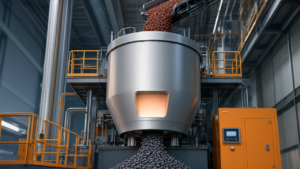
- Nippon Steel: Produced over 1,000 metric tons of direct reduced iron (DRI) using 100% hydrogen at its Hasaki Research and Development Center, operating for over 300 continuous hours.
- Asahi Kasei and Power to Hydrogen (P2H2): Signed an MoU to evaluate the commercialization and scale-up of anion exchange membrane (AEM) water electrolysis systems.
Significance and Outlook
The optimization of integrated reservoir and surface systems is critical for making large-scale UHS commercially viable. While some developers face restructuring charges, the deployment of hydrogen-ready turbines in Germany and the advancement of AEM electrolysis and hydrogen-based iron reduction indicate a continued push toward industrial-scale integration.
Get our weekly technology intelligence — free
Receive an infographic that lets you judge at a glance whether each field’s analysis report is worth reading.
Subscribe Free — Weekly Tech Intelligence
By subscribing, you’ll receive Troy-Technical’s weekly technology intelligence newsletter.
- Your email and selected fields are used only to deliver the newsletter.
- We never share your information with third parties.
- You can unsubscribe anytime via the link in each email.
See our Privacy Policy for details.
Takes about a minute · Unsubscribe anytime