
Key Findings
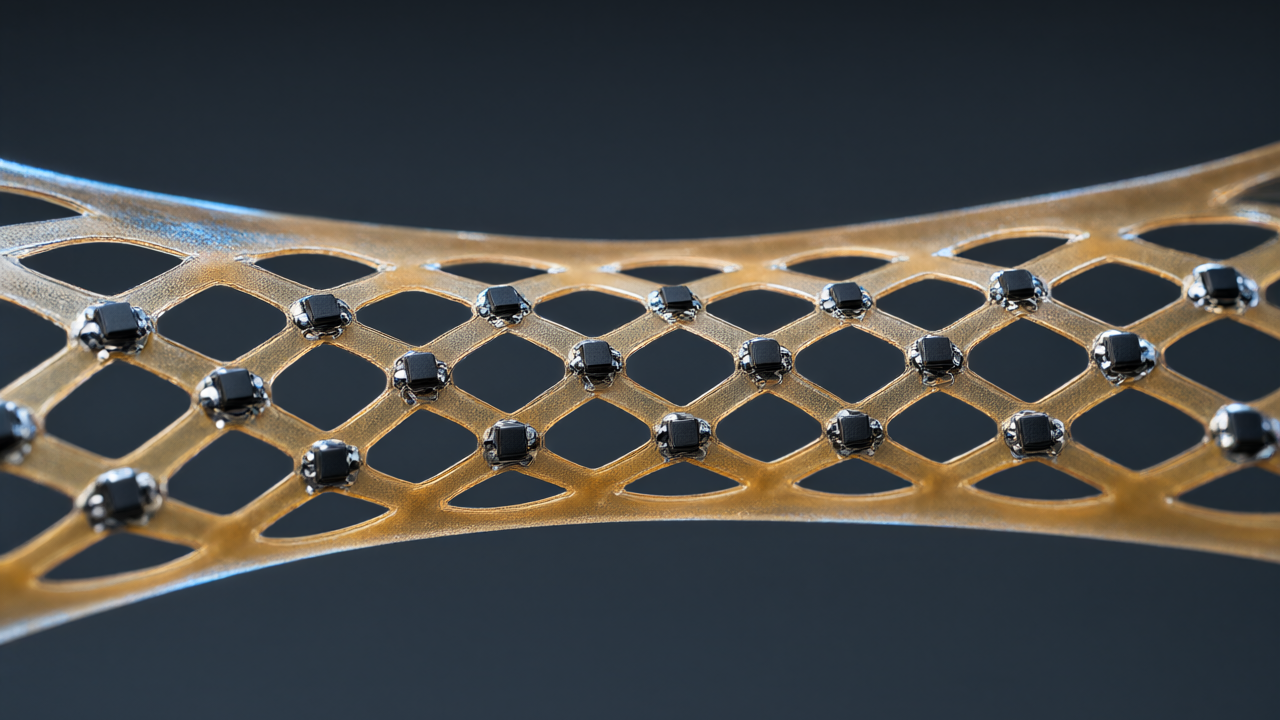
The study demonstrates that using liquid metal as an electrical interface material (LM-EIM) prevents the loss of stretchability typically caused when mounting rigid components on kirigami-based substrates. While traditional mounting materials like solder and conductive adhesives reduce substrate stretch tolerance to 32% and 36% of the original value respectively, the LM-EIM does not reduce this tolerance. In fact, the substrate fracture strain reached 3.99, which is 1.1 times the value of a substrate without components.
Technical Details
The LM-EIM provides significantly higher deformability compared to conventional rigid electrical interface materials. Specifically, its stretch tolerance is 24 times that of solder and 35 times that of conductive adhesives. By reducing mechanical constraints on the kirigami deformation, the LM-EIM suppresses fractures during stretching. The researchers validated this approach by integrating various components:
- A resistor array maintained electrical connectivity up to a device strain of 2.0.
- An LED array operated stably up to a strain of 1.5.
Background and Context
Kirigami structures allow sheets made from materials with low stretchability to achieve high stretch tolerance through local twisting and bending. However, the integration of rigid electronic components usually requires rigid interface materials. These materials mechanically constrain the kirigami deformation, leading to fractures at low strains and neutralizing the inherent advantages of the kirigami architecture.
Significance and Outlook
This interface approach allows for the integration of rigid, high-performance components onto highly stretchable kirigami sheets without sacrificing their mechanical properties. This development enables the creation of high-performance, multifunctional stretchable electronics that can withstand significant deformation while maintaining electrical stability.
Source: https://doi.org/10.1038/s41528-026-00662-1
Get our weekly technology intelligence — free
Receive an infographic that lets you judge at a glance whether each field’s analysis report is worth reading.
Subscribe Free — Weekly Tech Intelligence
By subscribing, you’ll receive Troy-Technical’s weekly technology intelligence newsletter.
- Your email and selected fields are used only to deliver the newsletter.
- We never share your information with third parties.
- You can unsubscribe anytime via the link in each email.
See our Privacy Policy for details.
Takes about a minute · Unsubscribe anytime