

Key Findings
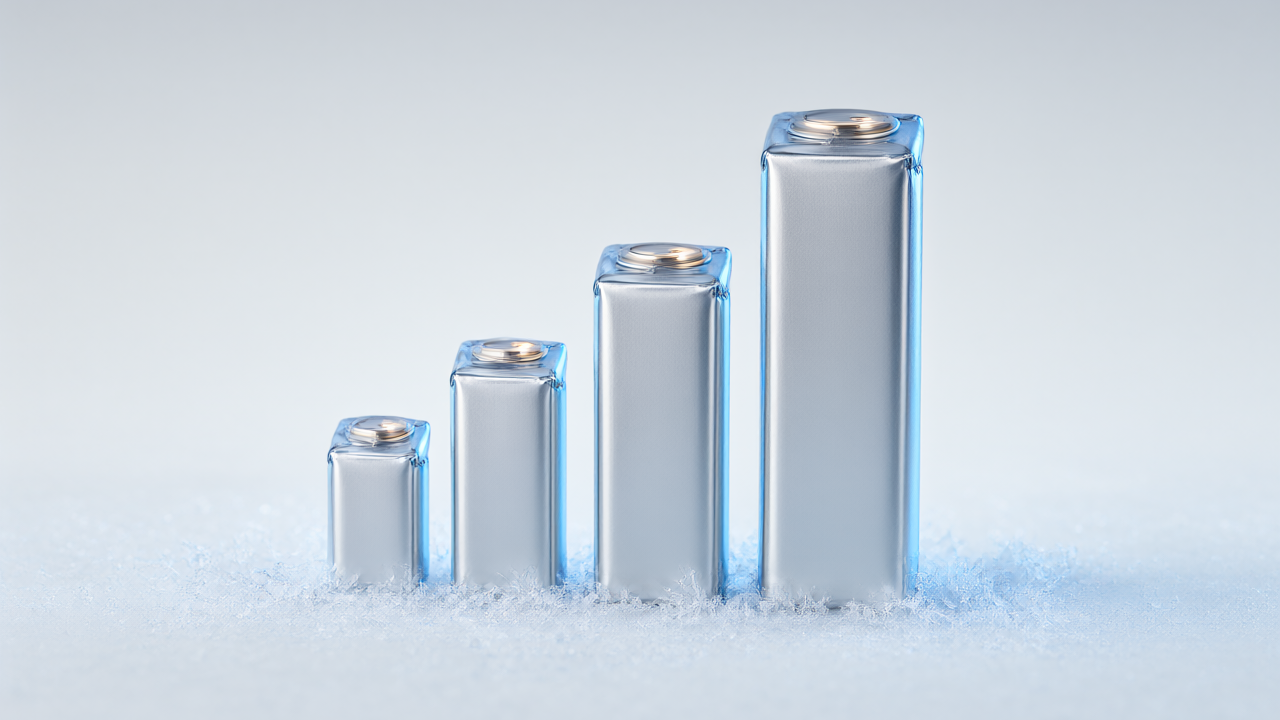
Grepow has transitioned from technical validation to the commercial deployment of a sodium-ion pouch-cell platform. The platform consists of five models with capacities of 2.0 Ah, 3.0 Ah, 3.5 Ah, 6.5 Ah, and 7.0 Ah, all featuring a nominal voltage of 3.0 V. These cells are engineered for high-rate pulse power, flexible integration, and resilience in extreme cold.
Technical Details
The cells support high-power demands, including discharge rates up to 45C for 30 seconds and pulse discharge rates up to 100C for 2 seconds. In internal testing at 25°C (1C charge, 30C discharge), a selected cell retained 94% capacity after 2,000 cycles; current fade curves project the cell will exceed 4,000 cycles before reaching 80% capacity retention.
To validate cold-weather performance, Grepow conducted high-rate pulse discharge trials at -20°C (28C rate). The results showed that the sodium-ion cell possessed stronger low-temperature pulse-discharge capability than the tested lithium iron phosphate (LFP) cell.
Background & Context
Sodium-ion technology is positioned as a complementary route to lithium-ion, rather than a total replacement. By utilizing more abundant sodium resources, the system reduces reliance on critical metals like cobalt and nickel, mitigating supply chain concentration risks and raw material price volatility. Additionally, the electrochemical system is more stable, reducing thermal runaway risks and improving tolerance to over-discharge, allowing cells to recover after deep discharge below the cutoff voltage.
Significance & Outlook
The platform’s ability to maintain capacity and power delivery in sub-zero temperatures reduces the need for auxiliary heating in frigid climates. Grepow identifies several primary application areas for this technology:
- Cold-weather starting for commercial vehicles and construction machinery.
- Backup power for communication base stations and energy storage in cold regions.
- Industrial vehicles, robotics, and light electric vehicles.
- Outdoor power equipment and reliability-critical backup systems.
Get our weekly technology intelligence — free
Receive an infographic that lets you judge at a glance whether each field’s analysis report is worth reading.
Subscribe Free — Weekly Tech Intelligence
By subscribing, you’ll receive Troy-Technical’s weekly technology intelligence newsletter.
- Your email and selected fields are used only to deliver the newsletter.
- We never share your information with third parties.
- You can unsubscribe anytime via the link in each email.
See our Privacy Policy for details.
Takes about a minute · Unsubscribe anytime